Tickets & prices
Entry is free. Shops and workshops – free to browse; pay for purchases and workshops. Workshop experiences (cooking, crafts) – check with individual workshops, typically €10–20.
Pazari i Vjetër i Gjirokastrës
17th-century trading quarter at the heart of the old town – Ottoman architecture and artisan workshops
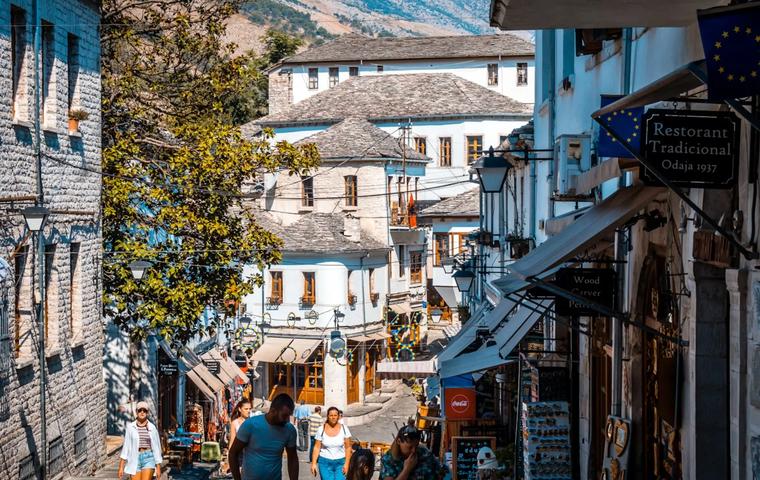
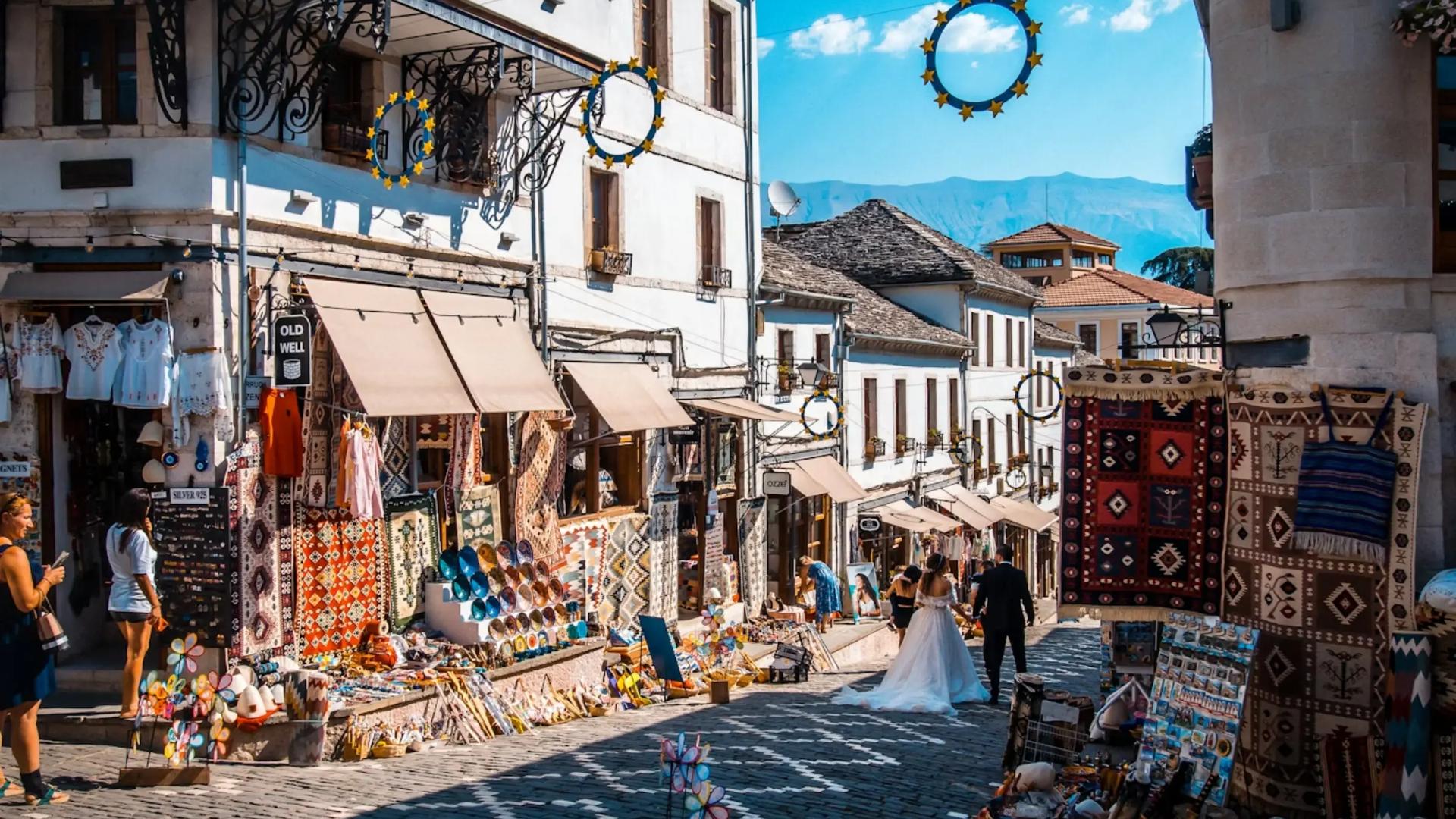
The Old Bazaar of Gjirokastër (Pazari i Vjetër, or Qafa e Pazarit – 'the bazaar's throat') is the historic commercial hub of the Old Town, dating back to the 17th century. It sits at the foot of Gjirokastër Castle, at the intersection of the old town's main streets. Two- and three-story stone buildings with matching architecture line the cobbled streets: workshops on the ground floor, living quarters above.
The bazaar is a 10–15 minute uphill walk from Çerçiz Topulli Square, the gateway to Gjirokastër's old town. The central intersection (Qafa) is the most photographed spot in the city.
A walk through the bazaar takes 1–2 hours. Entry is free. Shops and cafés operate daily with varying hours – most open from 08:00–09:00 until 18:00–20:00, longer in season. The bazaar is especially lively in the evenings.
The bazaar quarter consists of several streets converging at the central Qafa intersection. Gray stone buildings with slate roofs, rebuilt after 19th-century fires, maintain a uniform architectural style. Ground floors open onto the street with artisan workshops, souvenir shops, cafés, and restaurants. Each shop has a stone sidewalk-gallery in front – a rarity for bazaars of that period. Some shops had a separate rear entrance for the owner only.
A few meters from the Qafa stands the Bazaar Mosque (1757) – the only one of 13 mosques in Gjirokastër to survive the atheist campaign of the communist regime. Next to it is a former Bektashi tekke, now a madrasa (Islamic school). Along the bazaar streets, craftsmen work with wood, stone, and textiles. Some workshops offer hands-on experiences: cooking classes, woodcarving, and dressing up in traditional costumes.
Goods include woven carpets, ceramics, copperware, woodcrafts, and local products (honey, herbs, rakia). Prices are mostly fixed, but bargaining is possible when buying multiple items. The Ethnographic Museum of Gjirokastër and Skenduli House are within walking distance of the bazaar.
Central Qafa intersection – the most photographed spot in Gjirokastër, where the main bazaar streets converge
Bazaar Mosque (1757) – the only one of 13 city mosques to survive the communist-era demolitions
Uniform architecture – buildings rebuilt after a 19th-century fire in a consistent style, 2–3 stories of gray stone
Artisan workshops – hands-on classes in cooking, woodcarving, and traditional costumes
History – the trading quarter has existed since the 17th century; its current appearance dates to the 1879 reconstruction
Until the 15th century, Gjirokastër's residents lived mainly within the castle walls. By the 1580s, the town had grown to over 400 dwellings, and in the 17th century, Ottoman governor Memi Pasha laid out a new commercial quarter – the bazaar – with a mosque and radial streets converging at a central point. It was one of the first systematically planned commercial centers in the region. Gjirokastër became an important market for agricultural products, leatherworking, and woodworking, which provided the city's wealth.
The original bazaar was almost entirely destroyed by fire in the third quarter of the 19th century. It was rebuilt around 1879 – this is why the buildings share a uniform architectural style. Another fire in 1912 led to partial reconstruction using steel beams for the first time. Under the communist regime, all mosques in the city except the Bazaar Mosque (1757) were demolished. Today, the bazaar is Gjirokastër's tourist hub: traditional craft workshops sit alongside souvenir shops, restaurants, and cafés. Building restoration continues with the aim of preserving the historic character.
Entry is free. Shops and workshops – free to browse; pay for purchases and workshops. Workshop experiences (cooking, crafts) – check with individual workshops, typically €10–20.
Streets are cobbled and steep – non-slip footwear is essential. Bargaining is possible when buying multiple items, but prices are mostly fixed. Street photography is unrestricted. Be respectful around the Bazaar Mosque – it is an active place of worship.
Numerous cafés and restaurants right in the bazaar. Restrooms in restaurants. Parking near the bazaar is limited (2.5 hours, 500 ALL – fines for exceeding). The bazaar sits on a slope, but it is less steep than the upper Old Town quarters. Wheelchair access is difficult but somewhat better than the rest of the Old Town.
From the new town of Gjirokastër:
From Çerçiz Topulli Square – 10–15 minutes uphill on cobblestone streets. Taxis can drop you at the start of the bazaar quarter.
From Gjirokastër Castle:
Walk downhill from the castle to the bazaar – 5–10 minutes via stone staircases.
From Tirana:
Bus to Gjirokastër (1,200 ALL / ~€12, 4 hours), then from the bus station – 20–25 minutes on foot or 5 minutes by taxi (300 ALL / ~€3) to Çerçiz Topulli Square, then 10 minutes to the bazaar.
From Sarandë:
Bus or taxi to Gjirokastër (55 km, 1–1.5 hours), then walk up.
Season: April–October for the widest selection of goods and open workshops. In winter, some shops may be closed.
Time of day: Morning (09:00–11:00) is quieter and ideal for photography. Evening (after 17:00) is when the bazaar comes alive – lights go on, restaurants open, locals come out. Many travelers combine a morning castle visit with an evening bazaar stroll.
Duration: 1–2 hours for browsing and shopping. Combine with a visit to the Old Town and castle.
Avoid: Early morning off-season (shops may not open until 10:00).
Practical answers about visiting, routes and time on site.
No, walking through the bazaar is free. You only pay for purchases and workshop experiences.
Woven carpets, ceramics, copperware, woodcrafts, local honey, herbs, and rakia. Quality handmade items are the best souvenirs from Gjirokastër.
Most shops and workshops accept cash only (Albanian lek or euros). Some restaurants may accept cards. The nearest ATMs are in the lower town.
Prices are mostly fixed, but sellers often give discounts when you buy multiple items. Polite bargaining is acceptable.
Evenings (after 17:00) – lights come on, restaurants open, and locals come out for walks. In high season (June–September), the bazaar is active all day.
Yes, dozens of cafés and restaurants line the bazaar streets serving traditional Albanian cuisine. Try qifqi (fried rice balls) and tavë kosi (lamb baked with yogurt).
Walk uphill for 15–20 minutes via stone staircases from the central Qafa intersection. Signs are posted.
Yes, some workshops offer cooking classes, woodcarving, and traditional costume try-ons. Ask at individual workshops; prices are typically €10–20.
A week-long driving itinerary covering two UNESCO cities, the Albanian Riviera, Llogara Pass and real prices. Where to sleep, what to skip, and how much fuel costs.
March 15, 2026
Where to find characterful apartments in Albania – from Ottoman stone houses in Berat to sea-view villas on the Riviera. Prices, neighborhoods, and insider tips.
March 05, 2026
Is April a good time to visit Albania? Weather details, sea temperature, prices, top attractions, and practical advice for traveling to Albania.
February 27, 2026