Hero background

Zekate House

Shtëpia Zekate

A fortified tower house from 1811 – the finest example of Ottoman kulla architecture in Gjirokastër with panoramic Drino Valley views

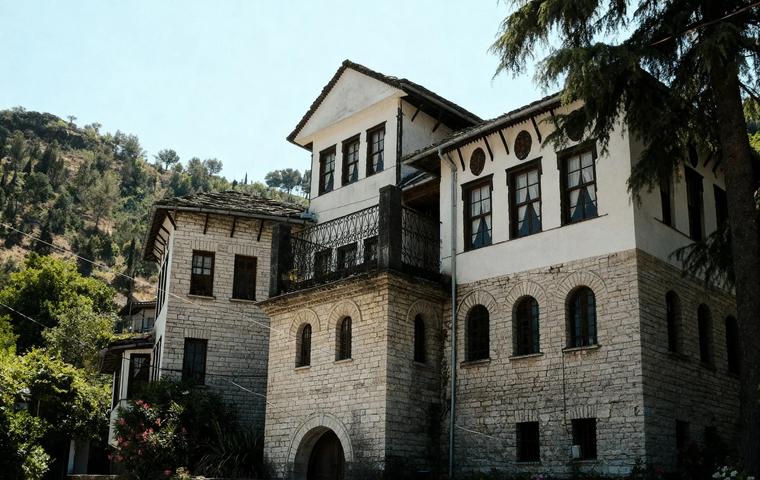
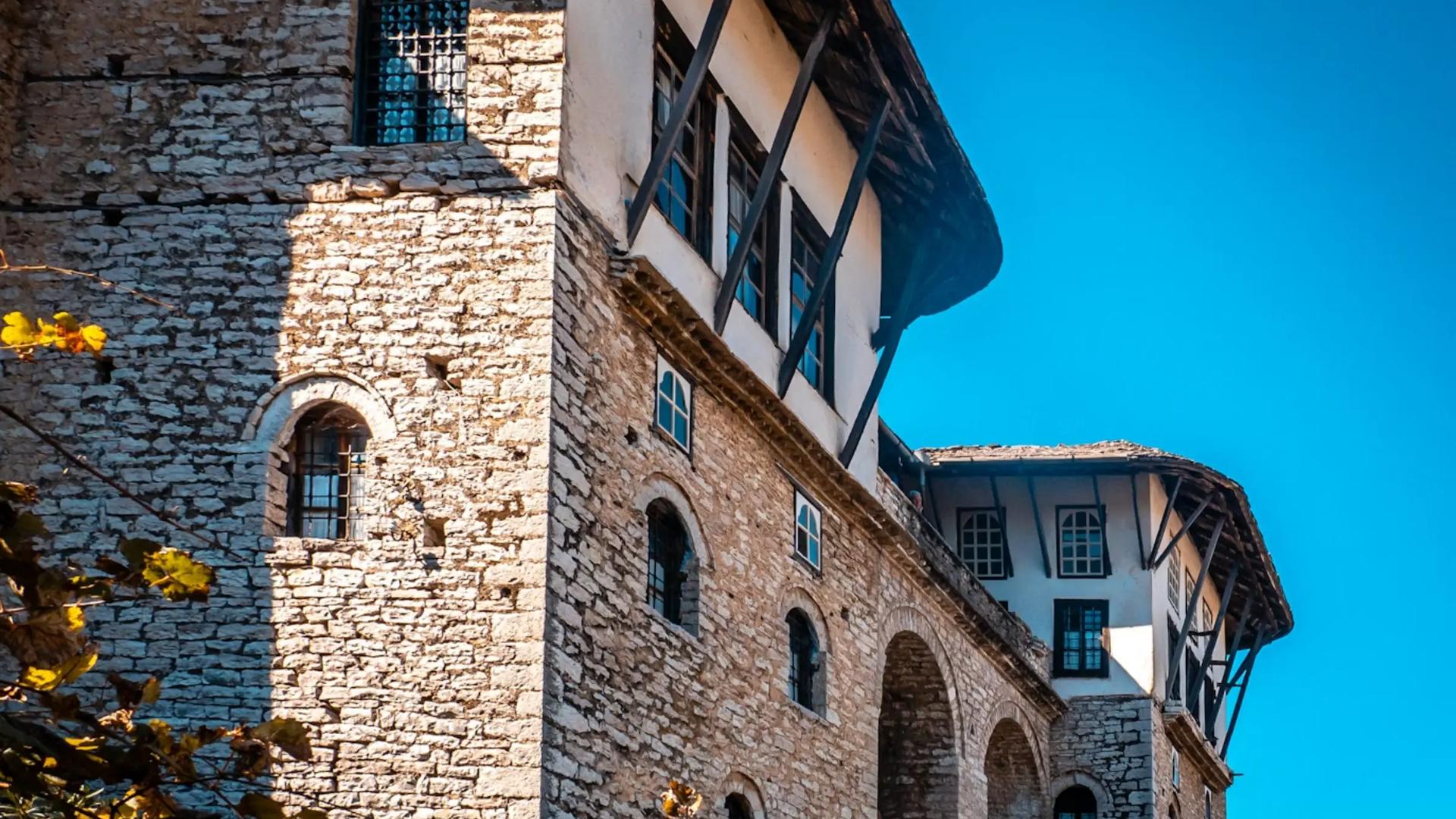
Zekate House is a three-story fortified mansion with twin towers and a distinctive double-arched facade, located in the upper part of the Palorto quarter in Gjirokastër. The building was constructed in 1811–1812 as a gift from Ali Pasha of Tepelena to his trusted administrator Beqir Zeko.

The house stands on Rruga Bashkim Kokona, a 5-minute walk from Skenduli House and 200 m from the Ethnographic Museum. The climb from the center takes 15–20 minutes along steep cobblestone streets.

A visit takes 20–30 minutes. Entry is 200–250 ALL (~$2 USD / ~2 EUR). A family member opens the door and may provide a brief tour.

Location

On the Map

About

What's Here

Zekate House is considered the best-surviving example of an Ottoman tower house (kulla) in Gjirokastër. Two massive stone towers are connected by a central wing with a double arch on the facade. The design serves defensive purposes: thick ground-floor walls, narrow loopholes, and fortified entrances. The ground floor held storage rooms, a kitchen with a high ceiling, and a water cistern. The first floor contained living quarters for two branches of the family. The third floor features a grand reception room and two additional chambers.

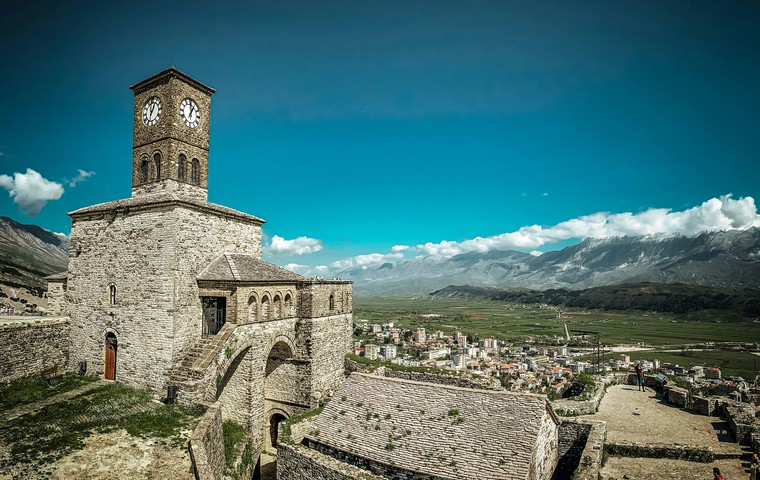
The highlight is the reception room situated between the two towers. Its walls are painted with colorful floral frescoes, the ceiling is carved wood, and the fireplace is ornately decorated. Tinted windows cast colored light across the space. A traditional sofa (divan) lines the walls, and a large rug covers the floor. A balcony from this room opens to a 180° panorama of Gjirokastër Castle and the Drino River Valley.

Beyond the stonework, the house is remarkable for the preservation of its wooden elements: the central staircase, built-in wardrobes, lattice woodwork, ceilings, and the intricate roof structure – all original from the early 19th century. Every room has a fireplace with a chimney, plus toilets connected to a sewage system and a hammam – a level of domestic engineering ahead of its time.

Why Visit

The Highlights

Architecture – tower-house type (kulla) with twin fortified towers and a double-arched facade

Date – built 1811–1812, a gift from Ali Pasha of Tepelena to the city administrator Beqir Zeko

Frescoes – original early 19th-century floral wall paintings in the reception room

Panorama – third-floor balcony with 180° views of Gjirokastër Castle and the Drino Valley

Woodwork – original staircase, carved ceilings, and built-in wardrobes preserved for over 200 years

Engineering – sewage system, water cistern, and hammam in a building from 1812

History

Past & Present

The house was built in 1811–1812 by order of Ali Pasha of Tepelena, one of the most powerful rulers in the Ottoman Empire's Rumelia region. Ali Pasha gifted the completed house to Beqir Zeko, the chief administrator of Gjirokastër. The building was designed as a fortified residence with defensive features – towers, thick walls, and narrow windows on lower floors. At the time, such fortress-houses were built by wealthy officials and merchants for protection against bandits and political rivals.

After Ali Pasha's downfall in 1822 and throughout the 19th–20th centuries, the house remained in the possession of Zeko family descendants. Unlike many of Gjirokastër's historic buildings, the house was not confiscated during the communist period, though it suffered from a lack of maintenance funds. Today, family descendants live nearby and open the house to visitors. A small bar with a terrace operates on the premises. The building is recognized as one of the finest examples of Ottoman residential architecture in Albania and falls within the UNESCO-listed Historic Centre of Gjirokastër.

For Visitors

Visitor Information

Tickets & Prices

Entry fee:

– 200–250 ALL (~$2 USD / ~2 EUR)

– Cash only

Guided tour:

– A family member opens the door and may offer a brief tour

– Information panels in rooms are available in 3 languages (Albanian, English, Italian)

– An on-site bar with terrace – drinks charged separately

Rules & Restrictions

– Photography allowed in all rooms

– Steep 15–20 minute uphill walk on cobblestones to reach the house

– Interior staircase is narrow and steep – use caution with children and elderly visitors

– Sturdy, non-slip footwear essential

– No fixed schedule – the house may be closed during off-peak hours

On-Site Facilities

– Bar with terrace on-site (drinks, light snacks)

– Restroom available

– Parking: limited street parking below, then walk uphill

– Not wheelchair accessible: steep climb, stairs, narrow passages

– Mobile phone signal available

Getting There

Transport & Directions

From central Gjirokastër (on foot, 15–20 minutes):

– Walk uphill from the bazaar through the Palorto quarter

– Follow Rruga Bashkim Kokona

– The climb is steep – allow extra time and wear sturdy shoes

From Tirana (227 km, 3.5–4 hours):

– Bus: 11 daily departures, 1,200 ALL (~$13 USD / ~12 EUR)

Car rental: from $22–27 USD / 20–25 EUR per day, route via Fier and Tepelenë

From Sarandë (49 km, 1–1.5 hours):

– Bus: 500 ALL (~$5 USD), several departures daily

– By car via SH8 highway

On the ground:

From Gjirokastër bus station – 20–25 minutes on foot or a taxi for 300–500 ALL to the base of the Palorto quarter, then 10 minutes uphill on foot

When to go

Best time to visit

Season: April–October. In July–August, the uphill walk in the heat can be exhausting – go in the morning. In winter, the house may be closed without notice.

Time of day: Morning (before 11:00) or late afternoon (after 4 PM) – soft light for photographing frescoes and the panorama. Sunset from the balcony is one of the best views in the city.

Duration: 20–30 minutes for the house itself, plus time at the terrace bar.

Avoid: Rainy days – cobblestone streets become slippery. Winter months without confirming opening hours.

FAQ

Common Questions

200–250 ALL (~$2 USD / ~2 EUR). Cash only. The terrace bar charges separately for drinks.

No strict schedule. The family opens the house for visitors, generally from 7:00 AM to 9:00–9:30 PM. In winter, check ahead.

20–30 minutes for the house. Add 15–20 minutes for the uphill walk from the center and time for the panoramic terrace bar.

Yes, photography is unrestricted in all rooms.

Significant. It's a 15–20 minute climb on steep cobblestone streets from the bazaar. Sturdy, non-slip shoes are essential. Strollers cannot be used.

Skenduli House is older (early 1700s) and has more original furnishings. Zekate House is architecturally more striking: twin towers, double arch, frescoes. They're 300 m apart – visit both.

A family member may provide a brief tour when available. Rooms have information panels in Albanian, English, and Italian.

Yes, there's a bar with a terrace and city views on the premises. Drinks and light snacks at separate cost.

With limitations. The main challenge is the steep uphill walk on cobblestones. Inside, stairs are narrow and steep without handrails.

Skenduli House – 5-minute walk. Ethnographic Museum – 3 minutes. Gjirokastër Castle – 10 minutes.

Distance

Travel Time

On foot from Gjirokastra center 6-9 min.
From Saranda by car ~38 min.
From Himara by car ~49 min.
From VLO airport (Vlora Airport (VLO)) by car ~2 h 5 min.
From TIA airport (Tirana Airport (TIA) ) by car ~3 h 46 min.
Social

Share