Some links are affiliate links. You pay the same, and we may earn a commission.
Adjara is mainly pebbly, while Guria brings grey-black sand. Compare the coast from Sarpi to Anaklia without stale prices or blanket promises.
Choosing a beach
Best beaches in Georgia: how to choose
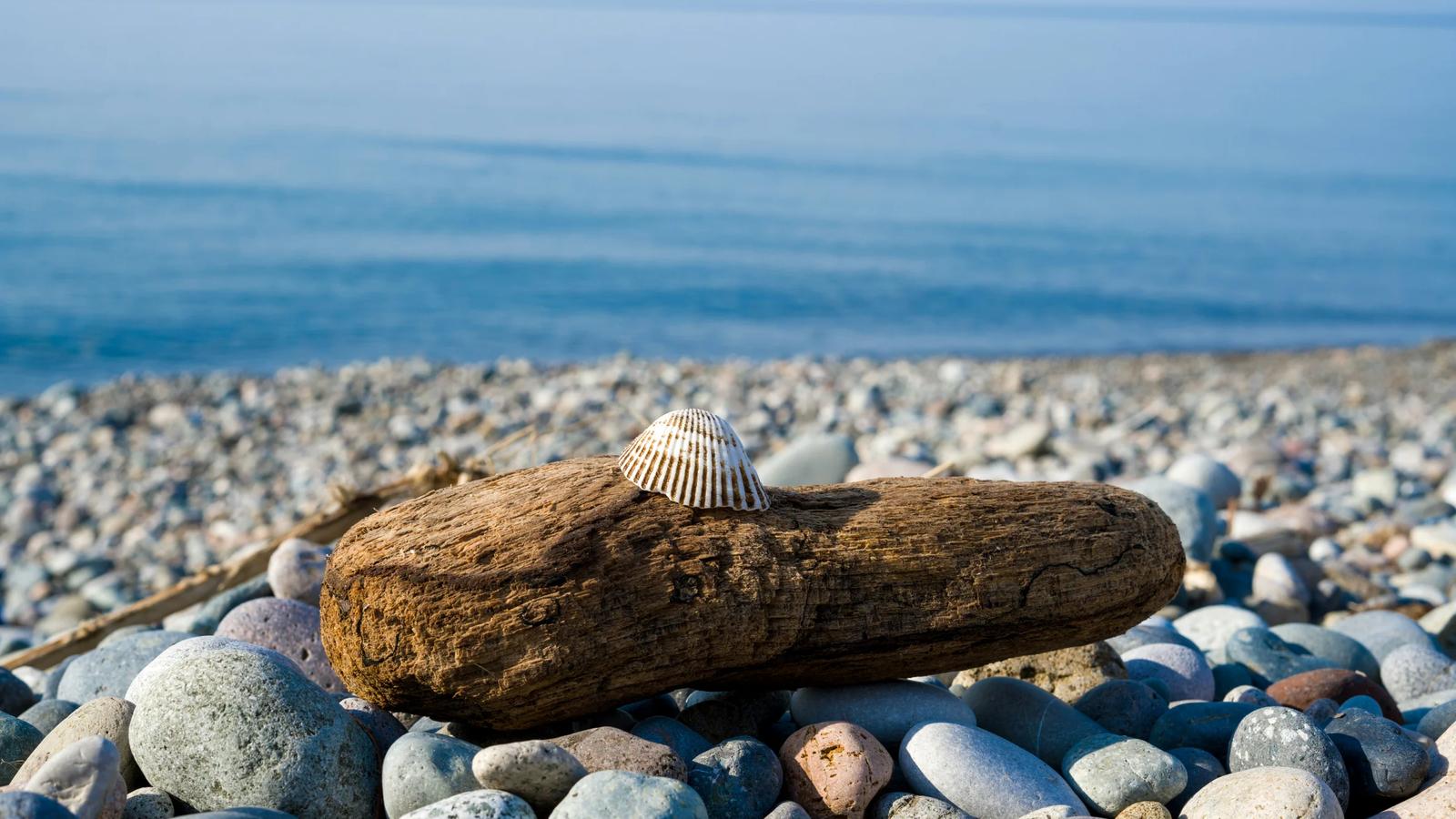
The best beaches in Georgia differ first by surface and setting: Adjara is mainly rocky, while the sandy beaches of Guria begin farther north. A five-kilometre stretch through Ureki and Grigoleti is covered in grey-black magnetite sand. Choose Batumi for an urban pebbly beach, Sarpi, Gonio, or Kvariati for pebbles beside the mountains, and Ureki or Grigoleti for sand.
The route can continue to Anaklia and Ganmukhuri, where both surfaces occur. Your choice is clearer when based on an urban setting, mountain scenery, sand, or a more distant section of coast instead of a single overall ranking.
The official road estimate from Batumi exceeds two hours
Kobuleti sits between those choices: it is a beach resort beside a well-known seaside pine grove and a greener alternative to urban Batumi. Kvariati adds a diving centre to its pebbly shore, while a pedestrian bridge links Anaklia and Ganmukhuri.
Coastal geography
Beach route from south to north
The route starts at Sarpi on the Georgian-Turkish border. It then passes Gonio and Kvariati, Batumi, the green areas around Mtsvane Kontskhi, Chakvi, and Tsikhisdziri, Kobuleti, sandy Ureki and Grigoleti, and finally Anaklia and Ganmukhuri.
This order reveals the coast's main change: rocky Adjara gradually gives way to sandy Guria. Consider more than one base if you do not want to return to the same city after every outing.
Southern Adjara
Sarpi, Gonio, and Kvariati: pebbles and mountains
Sarpi sits directly on the Georgian-Turkish border south of Batumi; the official road estimate from the city is about 35 minutes. The sea meets mountainous terrain here, making Sarpi a logical stop on the southern route.
Gonio is 12 km from Batumi, with an official driving estimate of about 25 minutes. Its wide beach lies below forested mountains.
Kvariati is a pebbly resort between Gonio and Sarpi, about a 30-minute drive from Batumi. A diving centre operates at the resort for exploring the Black Sea underwater environment.
Urban coast
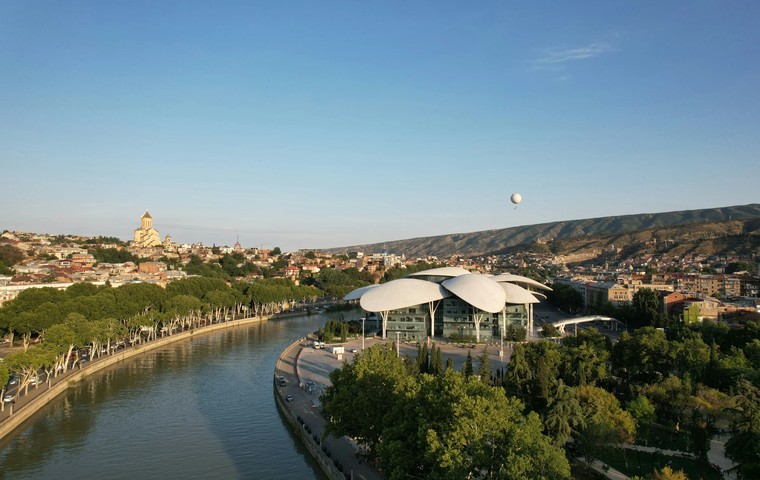
Batumi beaches
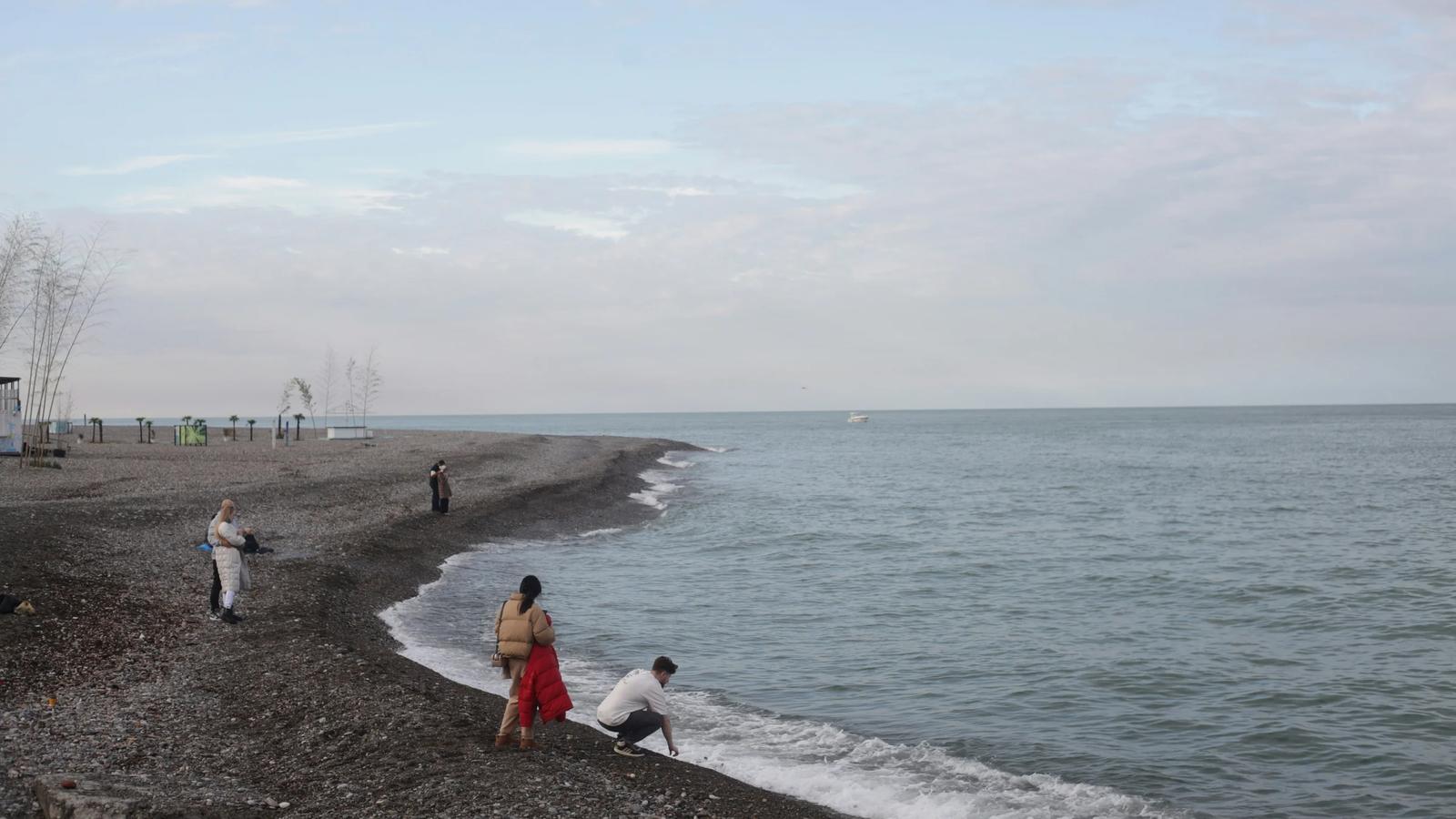
The main Batumi Beach strip runs for about 7 km and is predominantly pebbly. Beach shoes or thick-soled flip-flops are useful for walking along the shore.
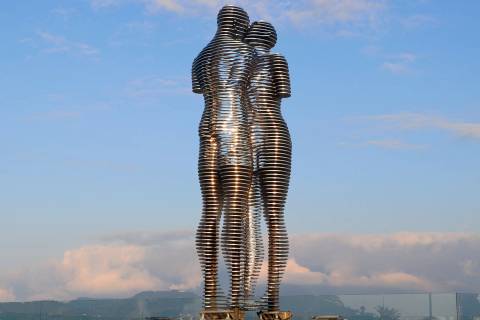
As of 22 August 2026, several sections in Batumi were listed with an adapted walkway, shower, changing room, and floating wheelchairs. The most prominent section was in the old part of Batumi Boulevard.
Gio
Batumi's peak beach season runs from July to mid-September. Mid-April to mid-June and late September to late October are quieter, though some seasonal services may be closed. For time away from the beach, see the guide to things to do in Batumi.
Green coast
Green Cape, Chakvi, and Tsikhisdziri
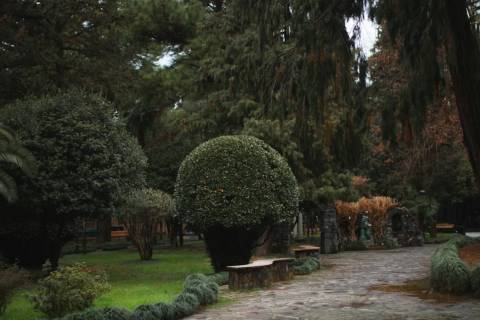
Tsikhisdziri, Mtsvane Kontskhi, or Green Cape, and Chakvi are green subtropical coastal areas surrounded by rare plants. Choose this direction for the combination of sea and vegetation, but do not transfer one beach's characteristics to every nearby section.
Vitalii Onyshchuk
Resort by the pines
Kobuleti
Kobuleti is a beach resort beside a well-known seaside pine grove. Compared with urban Batumi, it is a greener option.
Sandy Guria
Ureki and Grigoleti: magnetic sand
Ureki's beach strip is about 1.5 km long and covered in magnetic sand. Its summer season usually runs from June to mid-September; official road estimates are 55 minutes from Batumi and 1 hour 40 minutes from Kutaisi.
Grigoleti combines a wide beach with fine magnetic sand and seaside pines. The nearest railway station is 6 km away in Ureki, while Batumi Airport is about 50 km away.
Northern route
Anaklia and Ganmukhuri
Anaklia and Ganmukhuri have both fine-sand and pebble sections, and a pedestrian bridge connects the resorts. Official road estimates are 2 hours 35 minutes from Batumi and 2 hours 10 minutes from Kutaisi.
Treat this as a separate destination rather than a short outing from Batumi. Plan it as a separate part of the route.
Seasonality
When to visit Georgia's beaches
In Batumi, peak season runs from July to mid-September. The quieter periods are mid-April to mid-June and late September to late October, but seasonal services may operate only partially. Ureki's summer season usually lasts from June to mid-September.
For early summer, use the separate guide to Georgia in June; for the peak month, see Georgia in July. Check temperatures and local conditions closer to your dates.
Nick Osipov
Logistics
How to get there and choose a base
If your route passes through Batumi Airport, Kutaisi Airport, or Tbilisi Airport, plan transport to your chosen resort separately. For the overland leg from the capital, use the separate comparison of how to get from Tbilisi to Batumi.
For an urban base, consider Batumi; for a stay beside a sandy shore, consider Ureki or Grigoleti. Accommodation roundups are kept in the guide to Georgia's seaside resort hotels.
On the main Batumi beach strip, bring beach shoes or footwear with thick soles.
Since 1 January 2026, tourists entering Georgia must hold medical and accident insurance for their entire stay. Government Resolution No. 602 defines excluded categories, so check whether an exemption applies to you before travel.
Beach questions
Frequently asked questions
Where are the sandy beaches in Georgia?
The sandy zone begins in Guria. Ureki and Grigoleti form a five-kilometre stretch of grey-black magnetite sand; Anaklia and Ganmukhuri have both sandy and pebbly sections.
Choose the main Batumi strip for the city, or Gonio, Kvariati, and Sarpi for pebbles beside the mountains. Official road estimates from Batumi are about 25, 30, and 35 minutes respectively.
The official road estimate from Kutaisi to Ureki is 1 hour 40 minutes. Allow extra time when planning the trip.
Is insurance required to enter Georgia?
Yes. Since 1 January 2026, tourists need medical and accident insurance for their entire stay, with exceptions for categories explicitly excluded by Resolution No. 602.
Choice by beach type
Which beach should you choose?
Choose Batumi for an introduction to the urban coast. Sarpi, Gonio, and Kvariati fit a southern route of pebbles and mountains; Ureki and Grigoleti are the sand choice; Anaklia and Ganmukhuri warrant a separate journey for mixed surfaces. That decision is more useful than any single ranking of the best beaches in Georgia.