Some links are affiliate links. You pay the same, and we may earn a commission.
Compare the two driving approaches and the cable car, which still leaves 6 km to the mausoleum. Ticket costs checked on 14 August 2026.
Route to the summit
Njegoš Mausoleum Lovćen: how to get there, tickets and 461 steps
To work out how to get to Njegoš Mausoleum Lovćen, choose between two driving approaches: from Kotor or via Cetinje. The cable car covers part of the journey from the Kotor area, but it does not reach the steps: its upper station is another 6 km from the mausoleum.
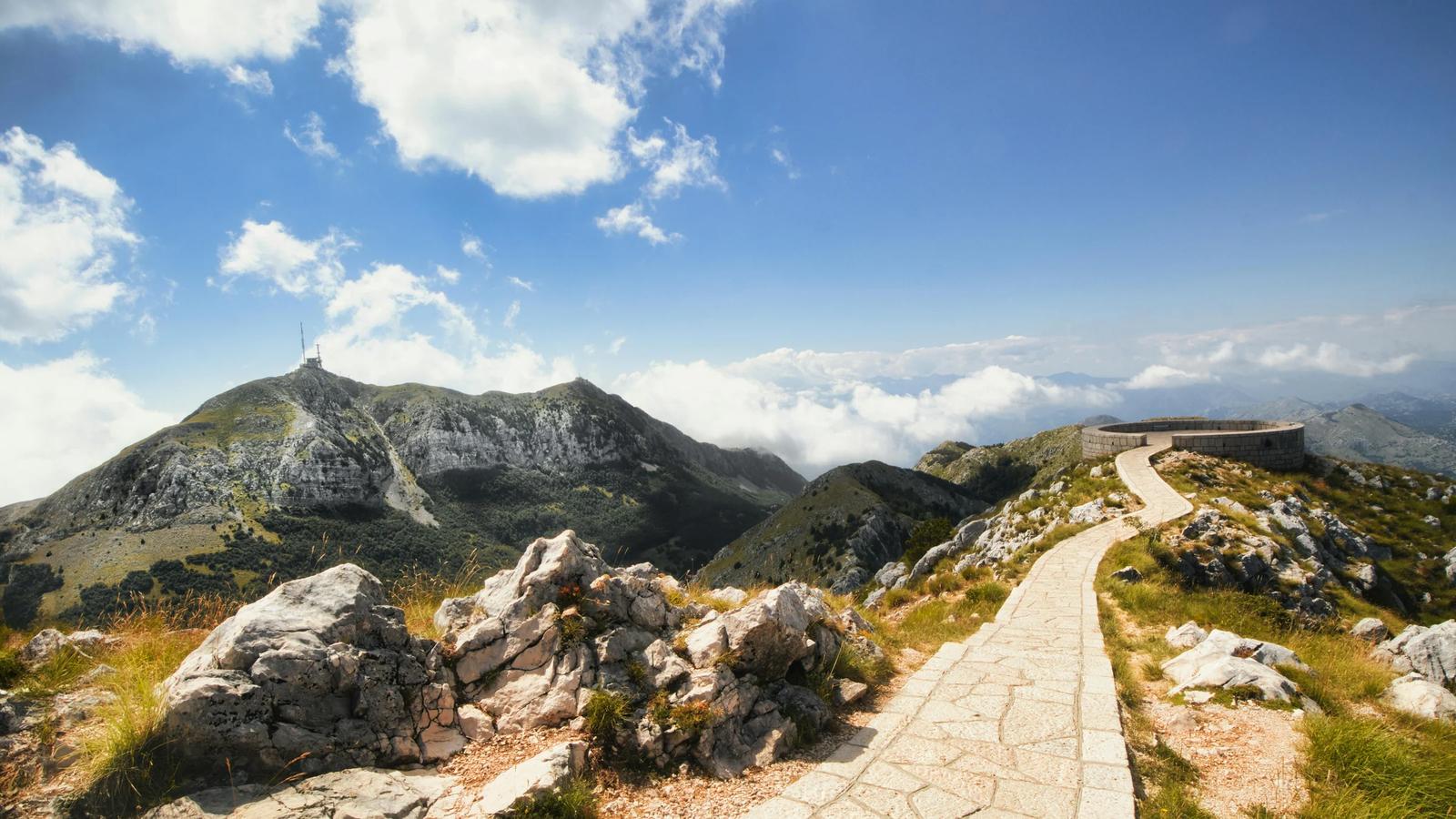
The mausoleum is on the 1 657 m Jezerski vrh summit, and 461 steps lead to it. Those figures shape the plan: arrange the ground connection first, then account for the climb and separate admission charges.
The route in numbers
1 657 m
Jezerski vrh elevation
461
steps to the mausoleum
6 km
from the upper station
21 km
road from Cetinje
Conditions before the trip
Tickets, child exemptions and parking
As of 14 August 2026, a day ticket for Lovćen National Park costs €3 per person and includes the visitor centre and educational trails. Children under 15 do not pay admission to Montenegro's national parks.
The Njegoš Mausoleum uses different rules. A combined ticket for the mausoleum and Njegoš's birth house costs €8 for an adult and €4 for a school pupil or student; children under 12 enter free. Do not apply the park's age exemption to the museum ticket.
The official parking rate for a passenger car in Lovćen National Park is €1 per hour. Check current opening arrangements with the National Museum before travelling.
Choosing the route
How to get there: comparing the options
Montenegro's national tourism organisation identifies two driving approaches to Lovćen: from Kotor and by the route through Cetinje. Treat the cable car as one leg of the journey, not as transport to the entrance.
Do not choose solely by the first ticket price. With the cable car, the deciding issue is the onward leg from the upper station; when driving, it is which approach fits your plan.
Two road approaches
Driving from Kotor or Cetinje
From Kotor, the old Kotor–Njeguši–Cetinje road climbs the slope through 25 hairpin bends.
From Cetinje, a 21 km paved road leads to the Njegoš Mausoleum. This approach fits naturally if you already plan to stop in the city.
As of 14 August 2026, the official Kotor–Lovćen cable car shop lists an adult fare of €14 one way and €25 return. The ride takes 11 minutes, and operations may change because of weather.
The cable car's upper station is 6 km from the Njegoš Mausoleum, so the gondola does not take you directly to the mausoleum steps. Check and arrange the ground connection in advance.
No self-driving
Without a car: transfer or tour
Without a car, choose a format in advance that includes transport to the Njegoš Mausoleum: an agreed transfer or a tour. Do not treat the cable car as a complete journey because its upper station is 6 km from the mausoleum.
The prices below were checked on 14 August 2026. Charges are separate, so the total depends on group composition, visitor ages and parking time.
Current official rates
€3
park day ticket
€8
adult, mausoleum and house
€4
school pupil or student
€1/hour
passenger car parking
The day ticket for Lovćen National Park includes the visitor centre and educational trails. The museum ticket covers the Njegoš Mausoleum and Njegoš's birth house. Children under 15 enter the park free, while children under 12 enter the mausoleum and birth house free.
The climb to the entrance
461 steps: what to consider
There are 461 steps to the Njegoš Mausoleum. This is a separate physical stage after the drive, transfer or cable car leg.
If stairs may be a barrier, assess the climb before departure and ask the site about a suitable access option in advance.
No. The upper station is 6 km from the Njegoš Mausoleum, followed by the staircase to the entrance.
How can I approach Lovćen by car?
Two approaches are identified officially: from Kotor and via Cetinje. The old road from Kotor has 25 hairpin bends, while a 21 km paved road runs from Cetinje to the mausoleum.
How much are admission and parking?
As of 14 August 2026, park admission is €3 per person, the museum ticket is €8 for an adult and €4 for a school pupil or student, and passenger car parking is €1 per hour. Children under 15 enter the park free; children under 12 enter the mausoleum and birth house free.
How many steps lead to the mausoleum?
There are 461 steps to the entrance. The climb remains part of the route whichever transport option you use.
What should a traveller without a car do?
Arrange a transfer or a tour that includes the journey to the mausoleum in advance.
Decision by starting point
In short: which route to choose
From Kotor, either drive the old road with 25 hairpin bends or use the cable car for part of the journey. From Cetinje, a 21 km paved road leads to the Njegoš Mausoleum. Without a car, agree a transfer or tour in advance.
Before leaving, check museum opening arrangements and weather-related cable car operations. For the gondola, plan the separate 6 km ground leg; for every route, account for the 461 steps.