Hero background

Onufri National Iconographic Museum

Muzeu Kombëtar Ikonografik Onufri

16th-century Byzantine icon collection in an 18th-century cathedral inside Berat Castle

The Onufri National Iconographic Museum holds 200 icons and liturgical objects from the 14th–20th centuries inside the Cathedral of the Dormition of St. Mary within Berat Castle. Named after Onufri – Albania's preeminent 16th-century icon painter who created a unique red pigment whose formula was lost after his death.

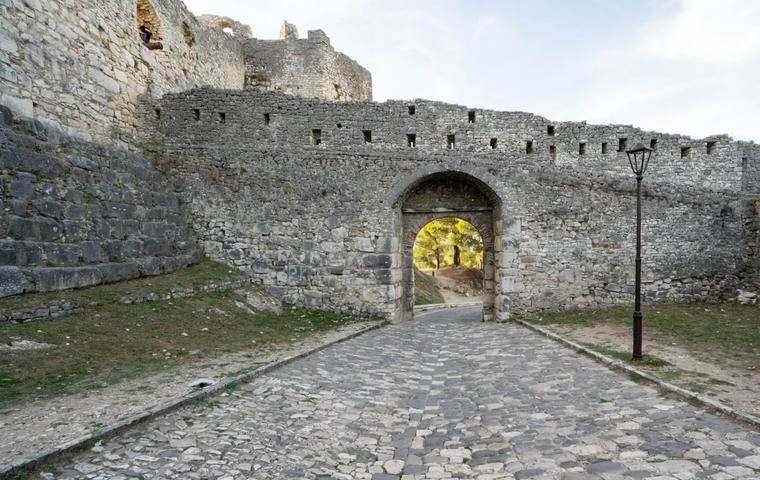
The museum sits at the highest point of the Kala quarter in Berat, 93 km south of Tirana. From the castle entrance, it's a 5–7 minute walk uphill along cobbled lanes.

Allow 45–60 minutes for your visit. Three exhibition halls, a carved iconostasis from 1807, and the cathedral itself. Audio guide available in three languages.

Location

On the Map

About

What's Here

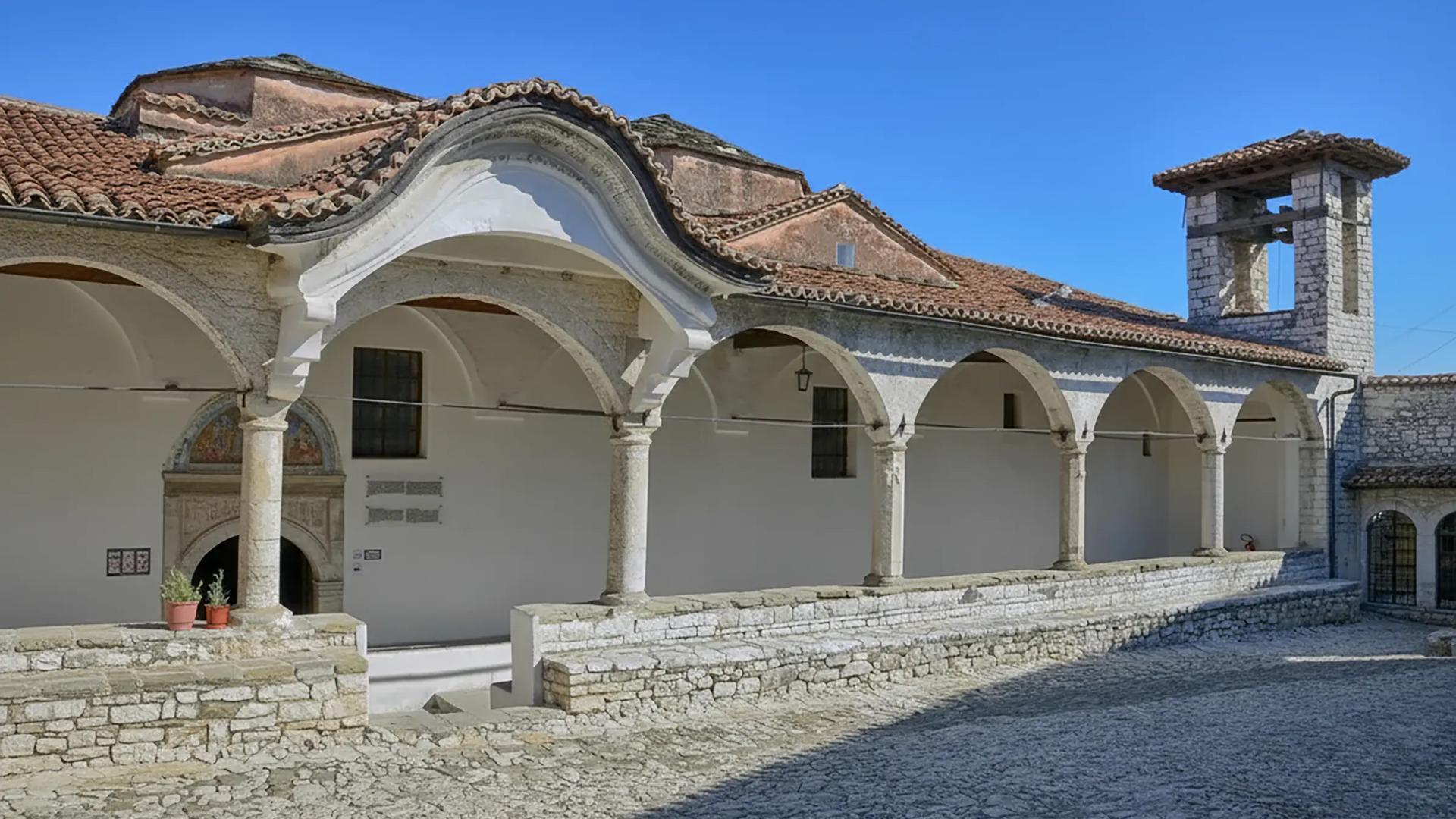
The museum occupies the Cathedral of the Dormition of St. Mary, built in 1797 in post-Byzantine style. From outside, it's a modest white-plastered façade behind a stone enclosure. Inside, the contrast is striking: a gilded wooden iconostasis from 1807 stretches the full width of the interior. Carved by masters Stefan Barka and Naum Ngjela from the Opari region in the early 19th century, it's considered the finest example of Albanian church woodcarving. The iconostasis features 12 royal icons and 27 smaller festive icons with Baroque-style elements.

The collection spans three halls. The centerpieces are Onufri's icons: 'Jesus' Appearance in the Temple,' 'Mary with Child,' and 'John the Baptist.' They're distinguished by the characteristic red pigment – known as 'Onufri's Red' – whose formula the master never revealed. Alongside are works by his son Nikolla, David Selenica, Kostandin Shpataraku, and the Çetiri family of painters. Silver liturgical items by local artisans complement the icon collection.

The museum also holds the Purple Codex of Berat (6th century) and the Golden Codex of Anthimos (9th century) – manuscripts inscribed in UNESCO's Memory of the World Register.

Why Visit

The Highlights

Collection – 200 works: icons, liturgical items, and silverwork from the 14th–20th centuries, gathered from regional churches and monasteries

Onufri's Red – a unique pigment first used by Onufri in the 16th century; the formula was lost after his death

Iconostasis – gilded wooden iconostasis from 1807 spanning the full width of the cathedral, with 12 royal and 27 festive icons

UNESCO manuscripts – the Purple Codex of Berat (6th c.) and Golden Codex of Anthimos (9th c.) in the Memory of the World Register

Building – the 1797 Cathedral of the Dormition of St. Mary, the largest post-Byzantine monument in Berat

History

Past & Present

The Cathedral of the Dormition of St. Mary was built in 1797 within Berat Castle, becoming the main church of the Kala quarter. Under Ottoman rule, Christians were permitted to build churches inside the castle walls, and the cathedral became the center of the Orthodox community's religious life. The iconostasis was created in 1807 by craftsmen from the villages of Misrasi and Lavdari in the Opari region, exemplifying a blend of traditional Orthodox and Baroque styles.

In 1967, Albania was declared an atheist state and most of the country's religious buildings were destroyed or shuttered. The cathedral survived – likely due to the value of its icon collection. In 1986, the National Iconographic Museum was established here, assembling icons and liturgical objects from churches and monasteries throughout the region. The museum operates under the Berat Museum Center, administered by Albania's Ministry of Culture.

For Visitors

Visitor Information

Tickets & Prices

Admission:

– Check on-site for current price (separate from castle entry)

– Discounts available for students and groups

– Select Sundays may offer free entry

Audio guide:

– Free QR audio guide in Albanian, English, and Italian

– Standard audio guide in Albanian, English, and German

Rules & Restrictions

Photography inside the museum is prohibited. Comfortable shoes recommended – the approach involves steep cobbled paths within the castle. No strict dress code, but it's an active cathedral – covered shoulders are appreciated. Guided tour duration is approximately 55 minutes.

On-Site Facilities

Brochures available in 16 languages including English, German, French, Spanish, Russian, and Japanese. Restrooms in the castle (outside the museum). Cafés within 2–3 minutes' walk in the castle quarter. No parking at the museum; nearest lot at the castle gate. Wheelchair access is very limited due to steps and terrain.

Getting There

Transport & Directions

From central Berat:

– Walk to the castle: 15–20 minutes uphill, then 5–7 minutes through castle lanes to the cathedral

– Taxi to castle gate: 300–500 ALL (~$3–5), then walk

From Tirana (93 km):

– Bus: every 30–40 minutes, 400–500 ALL (~$5–6 / €4–5), 2–2.5 hours

– From Berat bus station to the museum: taxi + walk totals about 25 minutes

On site:

The museum is at the highest point of the castle. Signs within the castle lead to the cathedral.

When to go

Best time to visit

Season: May–September for full hours (9:00–18:00 daily). November–April: reduced schedule (Tue–Sat 9:00–16:00, Sun 10:00–15:00), closed Mondays.

Time of day: mornings for fewer visitors and a cooler climb in summer.

Duration: 45–60 minutes including the audio guide.

Avoid: Mondays in winter (museum closed). Midday in summer – the uphill walk is punishing in the heat.

FAQ

Common Questions

Admission is separate from Berat Castle entry. Check the ticket office for the current price. Select Sundays may offer free entry.

No, photography is prohibited inside the museum. You can freely photograph the castle grounds around the cathedral.

QR audio guide in Albanian, English, and Italian. Standard audio guide in Albanian, English, and German. Printed brochures in 16 languages including Russian and Japanese.

45–60 minutes with the audio guide. Three halls of icons plus the cathedral's iconostasis. An hour is sufficient.

A unique red-pink pigment that Onufri first introduced to icon painting in the 16th century. He never shared the formula – it was lost after his death. The French called it 'Onufri's Red.'

November–April: closed Mondays. May–September: open daily 9:00–18:00.

No. You must first enter Berat Castle, which has its own entry fee of 300 ALL (~$3 / €3) when the booth is staffed.

The collection is geared toward adults, but children may enjoy the ornate carved iconostasis and the atmosphere of the historic cathedral. The visit takes under an hour.

Distance

Travel Time

On foot from Berat center 11-17 min.
From Vlora by car ~1 h 9 min.
From Himara by car ~1 h 42 min.
From VLO airport (Vlora Airport (VLO)) by car ~1 h 6 min.
From TIA airport (Tirana Airport (TIA) ) by car ~2 h
Social

Share