Hero background

Berat Castle

Kalaja e Beratit

A lived-in 4th-century BC fortress at 214 m elevation – UNESCO site with a residential quarter still inside its walls

Berat Castle (Kalaja) is a fortified citadel on a rocky hill 214 m above the Osum River in central Albania. The earliest fortifications date to the 4th century BC; the current walls are from the 13th century. The perimeter walls are fully intact. Inside you'll find around 20 churches, mosque ruins, the Onufri National Iconographic Museum, and roughly 100 families who have lived here for generations.

The castle is located in Berat, 93 km south of Tirana. Buses from the capital depart every 30–40 minutes; the ride takes 2–2.5 hours. From the Berat bus station, it's a 15–20 minute uphill walk to the castle entrance along Rruga Mihal Komnena.

Allow 2–3 hours for your visit. The site is well-suited for self-guided exploration: cobbled lanes, viewpoints, cafés, and souvenir shops inside the walls. Entry is 300 ALL (~$3 / €3).

Location

On the Map

About

What's Here

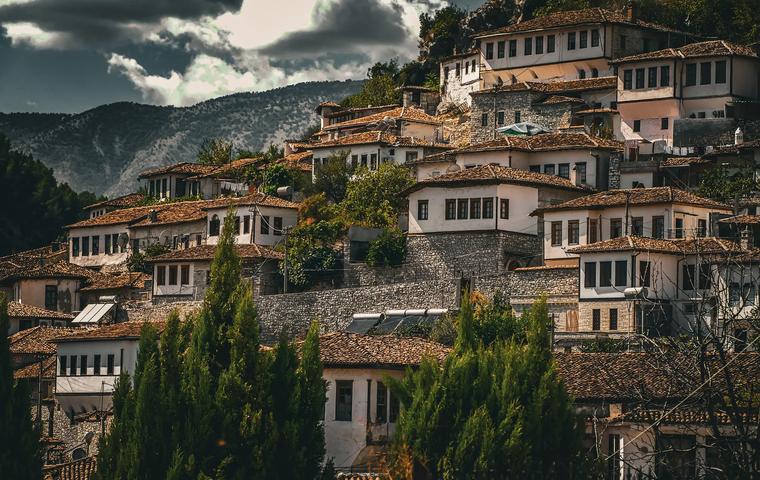
The castle occupies the summit of a rocky hill with a drop of over 100 m to the river. The climb from Mangalem quarter takes about 15 minutes up a stone road. At the entrance arch you'll find the ticket booth and first souvenir shops. Inside the walls is the Kala quarter – a full residential neighborhood: stone houses with wooden shutters, laundry lines strung between medieval towers, cats sleeping on Byzantine walls. The main viewing platform with its flagpole and Albanian flag offers a panorama of Berat's old town, the Osum River, and Mount Tomorr in the distance.

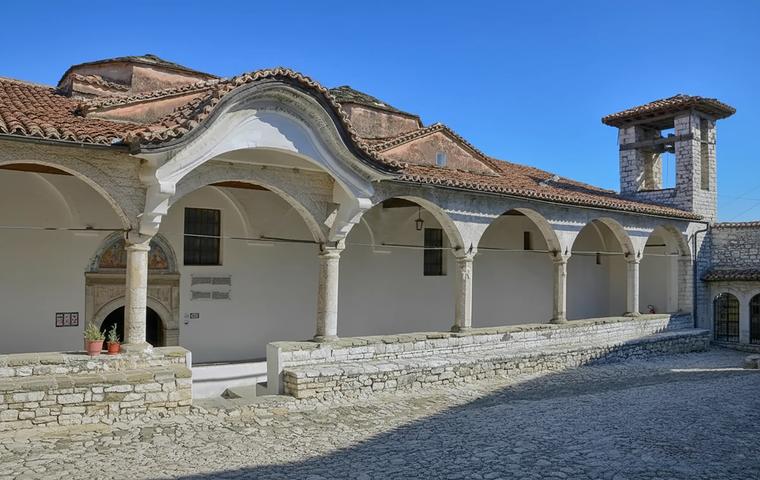
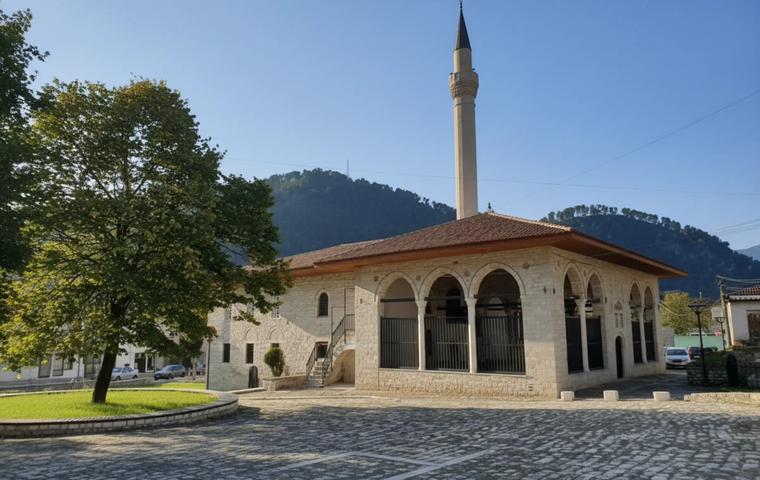
The grounds contain the ruins of the Red Mosque with its standalone minaret (climbable), the 14th-century Church of the Holy Trinity with its distinctive red-brick dome, and roughly 20 more Orthodox churches from various periods. At the center stands the 18th-century Cathedral of the Dormition of St. Mary, housing the Onufri National Iconographic Museum with 200 icons and liturgical objects from the 14th–20th centuries.

Also notable is the medieval cistern at the center of the castle – a dark stone chamber with water still pooled at its base. Residents sell homemade jam, raki, knitwear, and rugs from their doorsteps. In the evening, after tour groups descend, the castle returns to daily life: families emerge onto terraces, children play by church walls.

Why Visit

The Highlights

Age – earliest fortifications date to the 4th century BC; current walls built in the 13th century under Byzantine rule, expanded under the Ottomans

Elevation – 214 m above sea level, 100+ m drop to the Osum River, 360° panoramic views

Living quarter – roughly 100 families permanently reside within the castle walls, some for five centuries

Religious heritage – over 20 churches and mosque ruins on site, blending Byzantine and Ottoman architecture

UNESCO status – inscribed in 2008 as part of 'Historic Centres of Berat and Gjirokastra'

Red Mosque – one of Albania's oldest mosques with a preserved minaret open for climbing

History

Past & Present

The hilltop was settled and fortified as early as the 4th century BC. Romans captured the fortress in 200 BC. Over the following centuries, fortifications were repeatedly rebuilt – by the Byzantines in the 5th, 6th, and 13th centuries, and by Bulgarian and Serbian rulers. The last major reconstruction of the perimeter dates to the 13th century, producing the walls that survive today. At its peak, the castle served as the center of the Despotate of Berat and an important religious hub with dozens of churches.

After the Ottoman conquest in the 15th century, a Turkish garrison was stationed inside and two mosques were built. The Christian population continued to live in the fortress and construct churches. In 1961, Berat was designated a museum city by the Albanian government, and in 2008 the castle was inscribed on the UNESCO World Heritage List as part of the 'Historic Centres of Berat and Gjirokastra.' Ongoing restoration continues with UNESCO support, but the castle remains a residential quarter – one of the last of its kind in Europe.

For Visitors

Visitor Information

Tickets & Prices

Castle entry:

– Adults: 300 ALL (~$3 / €3). Cash only

– Ticket booth open 9:00–18:00

– Before 9:00 and after 18:00, entry is often free – the castle is not fully enclosed

Onufri Museum:

– Separate admission (check on-site for current price)

– Audio guide available in Albanian, English, and German

Rules & Restrictions

The approach to the castle is a steep, cobbled path – wear comfortable shoes with good grip. Summer heat can be intense (35°C+ / 95°F+) – bring water and a hat. Interior paths are uneven: cobblestones, steps, and slopes throughout. Access is difficult for visitors with limited mobility. Photography is free on castle grounds; prohibited inside the Onufri Museum.

On-Site Facilities

Several cafés and souvenir shops operate inside the castle. Restrooms available but limited. Free parking near the entrance gate (small lot, fills quickly). Mobile reception works throughout. Wi-Fi in select cafés and guesthouses. Wheelchair accessibility is extremely limited due to terrain and stone steps.

Getting There

Transport & Directions

From Tirana (93 km, 2–2.5 hours):

– Bus: every 30–40 minutes from South/North Bus Terminal, 400–500 ALL (~$5–6 / €4–5). Departures 5:30–17:30

– Taxi: ~8,000 ALL (~$70 / €68), 1 hour 40 minutes

– By car: via SH4 through Lushnja, road in good condition

From Berat bus station to the castle:

– On foot: 15–20 minutes uphill via Rruga Mihal Komnena through Mangalem quarter

– Taxi: 300–500 ALL (~$3–5), 3–5 minutes to the castle gate

– By car: you can drive to the gate, free parking

On site:

All movement within the castle is on foot. Cobbled paths with slopes and steps. A full loop of the grounds covers 1.5–2 km.

When to go

Best time to visit

Season: April–June and September–October offer comfortable temperatures and fewer crowds. July–August is hot (35°C+ / 95°F+), making the climb exhausting.

Time of day: early morning (before 10:00) for minimal crowds and soft light. Sunset provides golden views but draws more visitors.

Duration: 2–3 hours for the castle, +1 hour for the Onufri Museum.

Avoid: midday in summer (12:00–15:00) – no shade on the approach. Mondays – Onufri Museum is closed (November–April).

FAQ

Common Questions

300 ALL (~$3 / €3), cash only. The ticket booth operates 9:00–18:00. Outside these hours, entry is often free since the castle isn't fully enclosed.

2–3 hours for the castle grounds. Add 1 hour if visiting the Onufri National Iconographic Museum.

From central Berat, walk 15–20 minutes uphill from the suspension bridge through Mangalem quarter. Alternatively, take a taxi for 300–500 ALL (~$3–5).

Yes, but note the steep climb and unguarded drop-offs. A taxi to the gate is recommended for small children. Strollers are impractical due to cobblestones and steps.

Comfortable sneakers or hiking shoes. The path is rocky, and interior walkways are cobbled with slopes. Flip-flops and heels are not suitable.

Yes, several cafés and restaurants with city views operate inside the walls. Residents also sell homemade goods: jam, raki, and fresh fruit.

The grounds are technically open 24/7 since the walls aren't fully sealed. The castle is lit externally at night, but interior lighting is minimal. Bring a flashlight.

Berat's old town with Mangalem and Gorica quarters is a 10-minute walk downhill. Gorica Bridge over the Osum River is 20 minutes from the gate. The Ethnographic Museum is in Mangalem quarter.

Distance

Travel Time

On foot from Berat center 11-17 min.
From Vlora by car ~1 h 9 min.
From Himara by car ~1 h 42 min.
From VLO airport (Vlora Airport (VLO)) by car ~1 h 6 min.
From TIA airport (Tirana Airport (TIA) ) by car ~2 h
Social

Share