Tickets & prices
Free entry. The wall and towers are open 24/7.
სიღნაღის გალავანი
An 18th-century defensive wall stretching 4.5 km with 23 towers – Kakheti's largest fortification
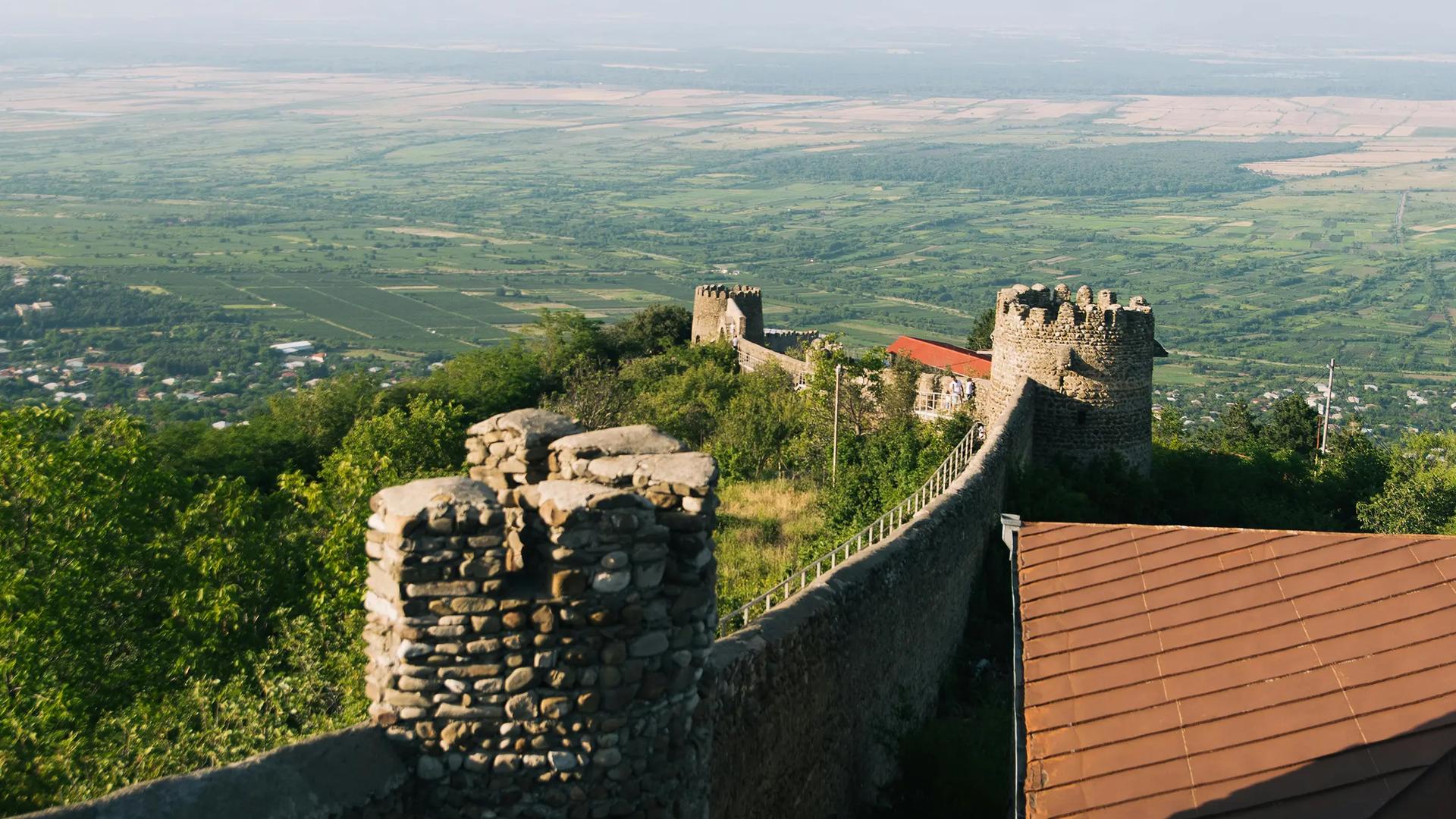
The Sighnaghi Fortress Wall is the longest fortification in Georgia. Spanning approximately 4.5 km, the wall encircles the historic hilltop town at 790 m above sea level. Built in the 1770s by order of King Erekle II of Kartli-Kakheti to shelter the Kiziki region's population from Dagestani tribal raids.
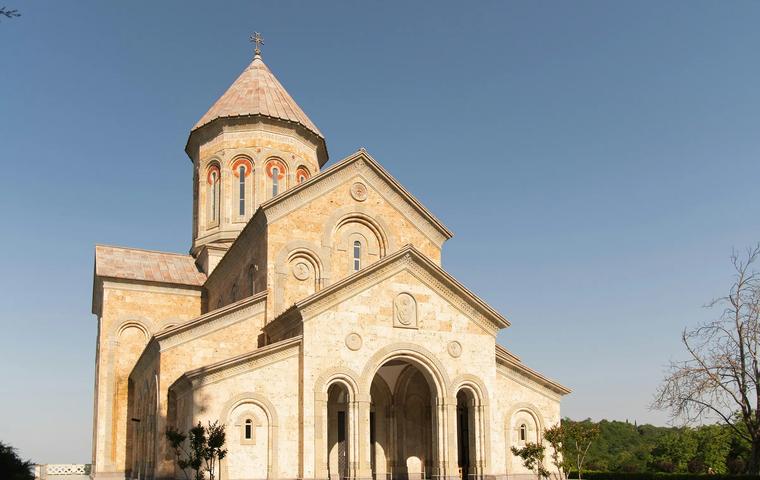
The town lies 110 km from Tbilisi, in the heart of Kakheti – Georgia's main wine-producing region. Shared minibuses (marshrutkas) depart from Samgori metro station every 2 hours; the ride takes 1.5–2 hours. Easy to combine with a visit to Bodbe Monastery (2 km from town).
Entry is free and the wall is accessible around the clock. Allow 1–1.5 hours for the restored section and towers. Suitable for all ages, though some sections have narrow paths without railings.
The wall follows the hill's natural contours – rising, dipping, and bending around outcrops. It is not a straight line but an organic structure shaped by terrain. Built from local cobblestone with red brick accents, a construction style typical of late 18th-century Kakhetian architecture. The wall thickness allowed for two tiers of defensive positions. Each of the 23 towers was built by residents of a specific village and bore its name. Six gates with quick-open mechanisms facilitated rapid evacuation.
The restored tourist section begins near the town's central square. Stone staircases lead up to the walkway along the battlements, from where you can reach several towers. From the upper points, the view opens onto the Alazani Valley – a flat green plain divided by vineyards, backed by the solid wall of the Greater Caucasus range. On clear days, snow-capped peaks are visible 60–80 km away.
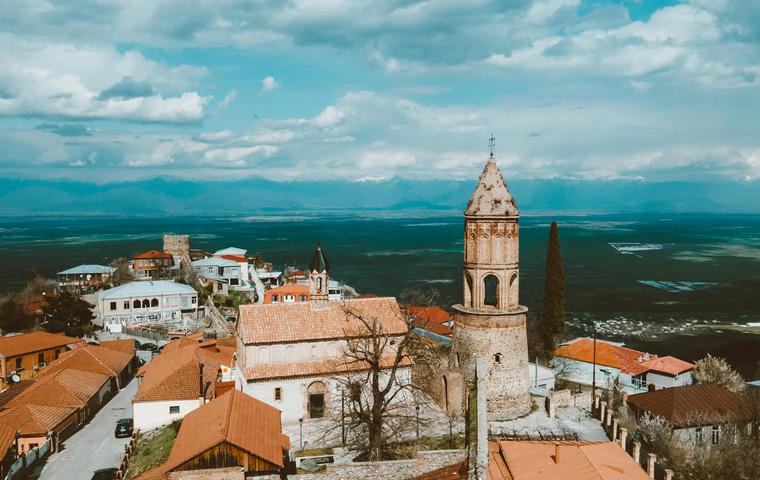
Inside the largest tower – the King's Tower (Kiziqi Bulwark) – stands the Basilica of St. Stephen, built in 1762 directly within the fortification. This is a rare example of a fortress-church: from outside it looks like a military tower, inside it is a functioning church with 18th-century frescoes. In the lower part of town near the wall stands St. George Church with its separate bell tower.
Length – approximately 4.5 km, one of the longest fortress walls in the Caucasus
Towers – 23 watchtowers and 6 gates, each tower named after the village that built it
Elevation – town sits at 790 m, the wall follows the terrain with drops of up to 100 m
St. Stephen Basilica – a 1762 church built inside the fortress's largest tower
Panorama – 180° views of the Alazani Valley and Greater Caucasus range
Construction – cobblestone with brick accents, typical 18th-century Kakhetian masonry
Construction began in the 1770s on the orders of King Erekle II of the Kartli-Kakheti kingdom. Eastern Georgia at that time faced constant Lekianoba raids – devastating incursions by Dagestani tribes who captured slaves and plundered villages. Sighnaghi (from the Turkic 'signak' meaning shelter/refuge) was designed as a fortress-haven for the entire Kiziki region's population. Each of the 23 towers was built by residents of a particular village and carried its name. The wall enclosed the hilltop perimeter, creating a fortress-city of 40 hectares.
After the Treaty of Georgievsk (1783) and Georgia's subsequent annexation by the Russian Empire (1801), the fortress lost its defensive purpose. Through the 19th and 20th centuries, the wall gradually deteriorated. Large-scale restoration took place in the 2000s–2010s as part of a national tourism development program: several wall sections and towers were rebuilt, cobblestone streets repaired, and historic building facades renovated. Today the fortress is Sighnaghi's main landmark and a cultural heritage monument of national significance.
Free entry. The wall and towers are open 24/7.
No special restrictions. Some wall sections have narrow paths (under 1 m wide) without railings – exercise caution, especially with children. When visiting St. Stephen Basilica – cover shoulders and knees; women are advised to wear a headscarf. Photography is permitted everywhere except during church services inside the basilica.
On site:
Cafés and restaurants are in central Sighnaghi, 5–10 minutes' walk from the wall entrance. Average meal 25–40 GEL ($9–15).
Public toilets near the central square (free).
Souvenir shops along the main street.
Parking: Free lot at the town entrance. Can fill up on weekends and holidays.
Wi-Fi: Available in town cafés. Mobile 4G coverage is stable.
Accessibility: Access to the wall is via steep, uneven stone steps. Not suitable for visitors with limited mobility. Sturdy footwear recommended for walking on the wall.
From Tbilisi (110 km, 1.5–2 hours):
– Shared minibus (marshrutka) from Samgori metro station – 10 GEL (~$3.50), every 2 hours from 07:00 to 18:00, journey 1.5–2 hours
– Alternative: marshrutka to Tsnori from Isani metro (hourly from 07:40), then transfer to Sighnaghi – total 12 GEL (~$4.50)
– Taxi (Bolt) – 100–150 GEL (~$35–55)
– Car rental – good road, last 5 km are switchbacks
From Telavi (60 km, 1.5 hours):
– Marshrutka – 10 GEL (~$3.50), 1 departure per day (morning)
– Taxi – 50–70 GEL (~$18–25)
Within Sighnaghi:
From the bus station to the fortress wall – 5–10 minutes on foot. The town is compact; all sights are within walking distance.
Season: April–June and September–October offer comfortable temperatures for walking the wall. September is rtveli (grape harvest) season, when the valley is especially scenic. The wall is accessible in winter but can be slippery.
Time of day: Sunset (18:00–19:30 in summer) provides the best light for photos. Early morning (before 10:00) means fewer tourists.
Duration: 1–1.5 hours for the restored wall section. With a town stroll and lunch – 3–4 hours. With a visit to Bodbe Monastery – a full day.
Avoid: Weekends in July–August – hot (+35°C) and crowded. Steps on the wall get slippery in rain.
Practical answers about visiting, routes and time on site.
Entry is completely free. The wall and towers are open 24/7 – no tickets needed.
1–1.5 hours for the restored wall section and towers. With exploring the town, lunch, and wine tasting – 3–4 hours.
Shared minibus (marshrutka) from Samgori metro station – 10 GEL (~$3.50), every 2 hours from 07:00 to 18:00. The ride takes 1.5–2 hours. Buy return tickets in advance as buses fill up.
Yes, though some wall sections have narrow paths without guardrails. With small children, stick to the central section near the square where steps are wider.
Bodbe Monastery is 2 km away (20 min walk or 5 min by taxi). Kakheti wineries Pheasant's Tears and Okro's Wines are right in Sighnaghi.
Sighnaghi's center has dozens of restaurants and cafés. Average meal 25–40 GEL ($9–15). Try chakapuli (lamb in white wine with herbs) and local qvevri wine.
Yes. Stone steps are steep and uneven in places. Trainers or hiking shoes are essential. Flip-flops or heels are unsafe for the climb.
Yes – on sunny winter days the snow-capped Caucasus peaks are visible from the wall. Few tourists around. But steps can be icy, so wear shoes with good grip.
The best Georgia road trip depends on days available: 3 days covers the Military Highway to Kazbegi, 7 days adds Kakheti and the west, 10+ reach Svaneti. Actual 2026 prices, winter closures, and pitfalls explained.
April 24, 2026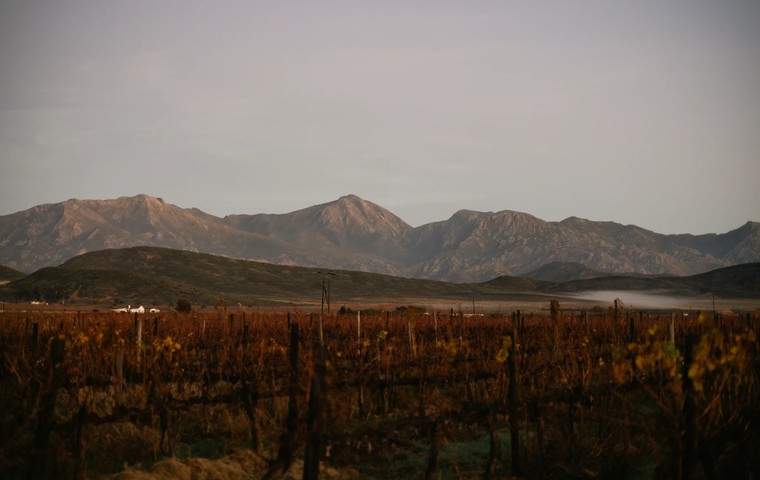
Complete guide to Telavi and Kakheti – Georgia's wine heartland. Qvevri tastings, monasteries, routes from Tbilisi, accommodation and food costs, practical tips.
February 20, 2026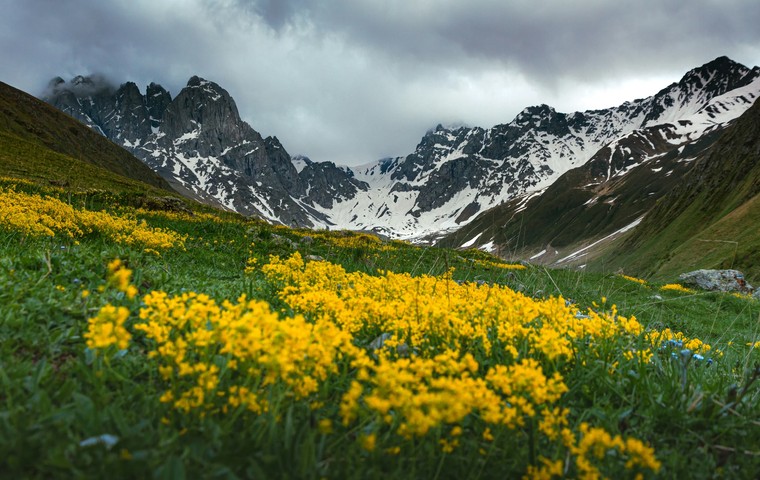
Georgia in April brings warm spring weather up to 18 °C, blooming landscapes, off-season prices, and crowd-free sightseeing. A practical guide to weather, costs, and activities.
February 19, 2026A 24/7 wedding chapel, 28 fortress towers and Alazani Valley views – sounds dreamy, but reality is more nuanced. Here's what to expect and what to skip.
March 28, 2026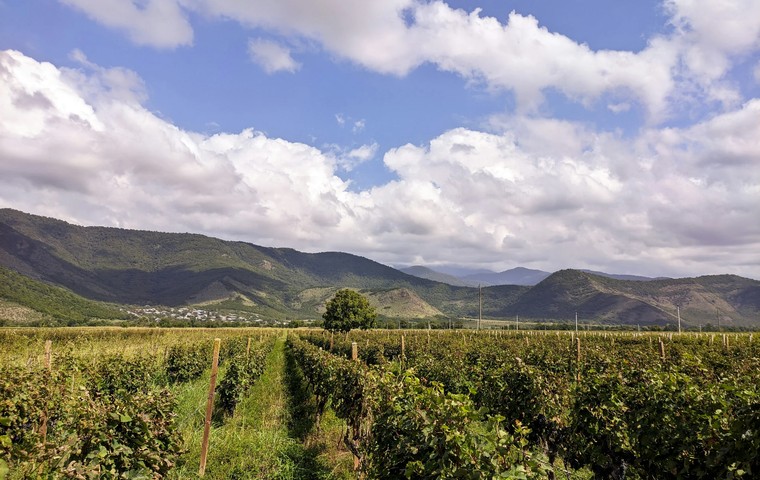
Complete guide to Kakheti and Telavi: wineries, monasteries, transport from Tbilisi, accommodation prices, wine tastings, and practical tips for independent travelers.
March 06, 2026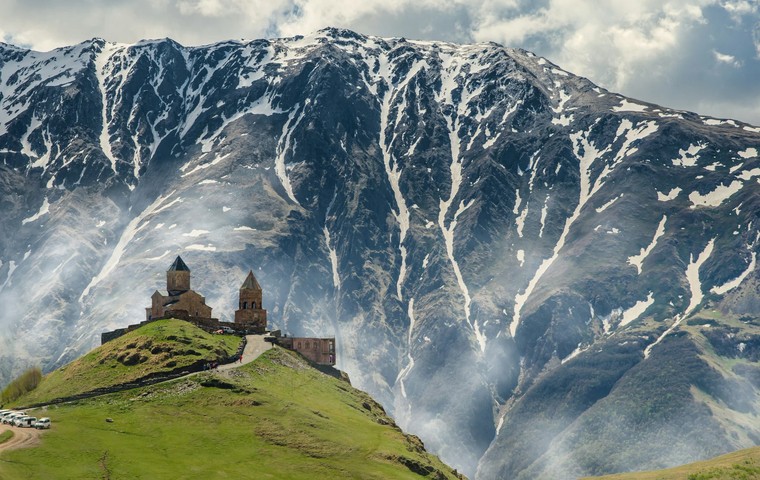
March in Georgia: 10–13°C in Tbilisi, peak freeride snow in Gudauri, low-season prices and no crowds. Weather by region, costs and what to do.
February 19, 2026