Tickets & prices
Free entry. The monastery accepts voluntary donations.
ბოდბის მონასტერი
Burial site of St. Nino – a 9th-century nunnery overlooking the Alazani Valley
Bodbe Monastery (Monastery of St. Nino at Bodbe) is one of Georgia's most important pilgrimage sites. Set on a wooded hillside 2 km from Sighnaghi in the Kakheti region, it houses the relics of St. Nino – the evangelist who converted Georgia to Christianity in the 4th century.
From central Sighnaghi, it's a 20–25 minute walk or a 5-minute taxi ride. From Tbilisi, shared minibuses (marshrutkas) to Sighnaghi depart every 2 hours from Samgori metro (10 GEL / ~$3.50, 1.5–2 hours). Combines well with the Sighnaghi Fortress Wall.
Free entry. Open daily 10:00–18:30 (last entry at 18:00). Allow 1–1.5 hours for the complex, or 2–2.5 hours if visiting the holy spring below.
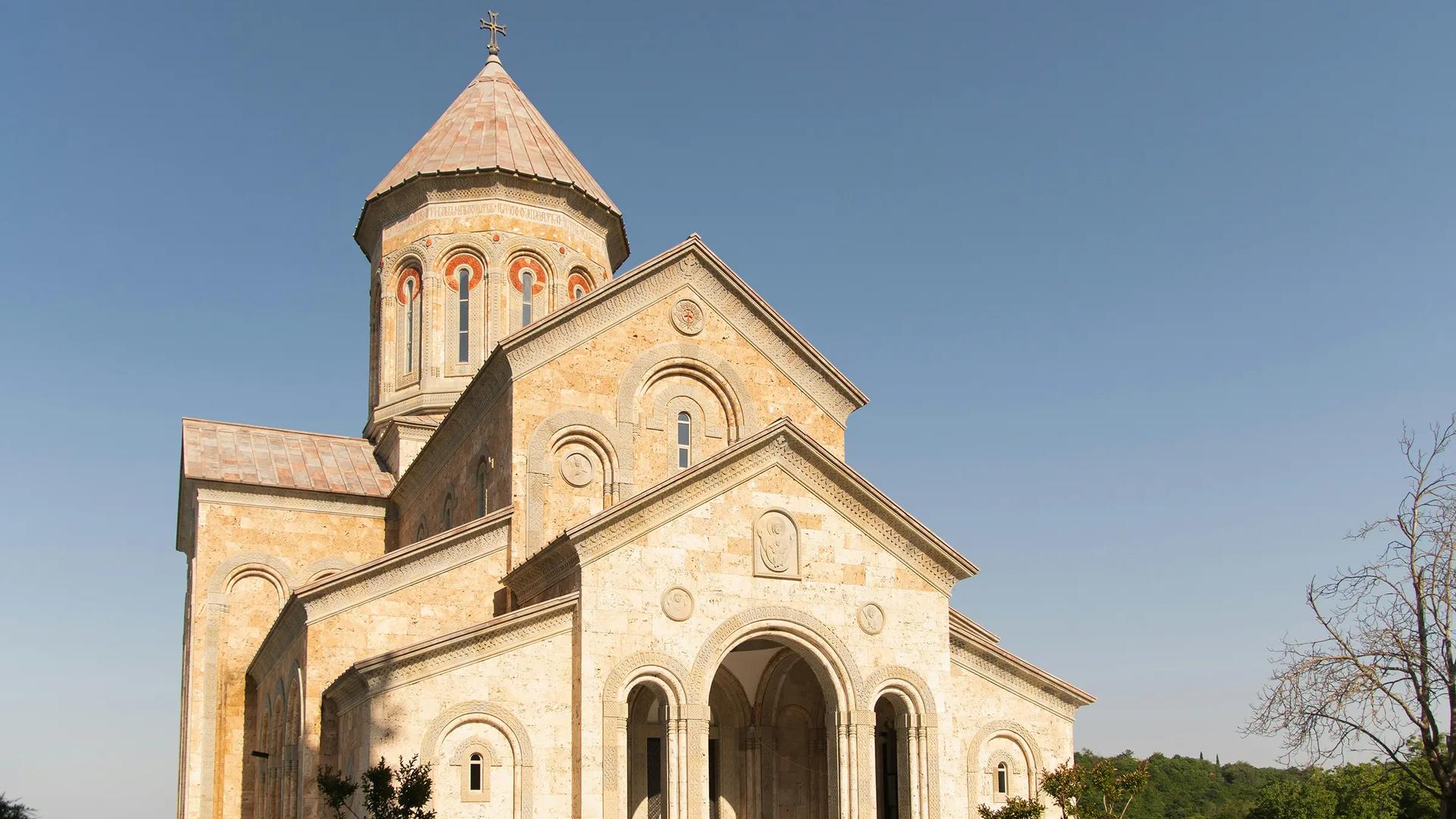
The monastery complex sits among tall cypress trees on a steep slope with views over the Alazani Valley. The main building is the Cathedral of St. George, a 9th–11th-century three-nave basilica with brick walls and a truncated dome. Inside are frescoes, icons, and in the southeastern chapel – St. Nino's tomb: a silver sarcophagus with a jewelled turquoise cloisonné halo. The cathedral also holds the myrrh-streaming Iveron Icon of the Holy Mother – its surface bears visible scalpel cuts from the Soviet era, when it was used as an operating table in a hospital X-ray room.
Opposite the cathedral stands a three-storey 19th-century bell tower in a Russian-European style. To the right is the new Cathedral of St. Nino (2011–2019), a triconch structure architecturally echoing the Bagrati Cathedral in Kutaisi. The grounds are well-maintained: flower beds, hedges, and a vineyard. From the eastern viewing platform – a panorama of the Alazani Valley and the Caucasus range.
A staircase from the viewing platform descends to St. Nino's Holy Spring – 600 m by footpath (or 3 km by car road). At the spring is the Chapel of St. Zabulon and St. Sosana (Nino's parents), built in the 1990s, and a baptismal pool where pilgrims immerse themselves. The water is ice-cold year-round.
St. Nino's Tomb – relics of Georgia's 4th-century evangelist in a silver sarcophagus with cloisonné halo
St. George Cathedral – 9th–11th-century basilica with frescoes and the Iveron Icon of the Holy Mother
Holy Spring – a healing spring 600 m below the monastery, with a baptismal pool for pilgrims
New Cathedral – Cathedral of St. Nino (2019), triconch architecture modelled after Bagrati Cathedral
Panorama – Alazani Valley and Greater Caucasus views from the eastern terrace
Royal coronations – Kakhetian kings were crowned here during the late Middle Ages
According to Georgian tradition, St. Nino withdrew to the Bodbe gorge after witnessing Georgia's conversion to Christianity, and died there around 338–340. King Mirian III ordered a small church built over her burial site. Over the following centuries, the monastery became a religious and cultural center of Kakheti. In the late Middle Ages, the kings of the Kakhetian kingdom chose it as their coronation site. In 1615, Shah Abbas I of Persia pillaged the monastery; King Teimuraz I later restored it.
After Georgia's annexation by the Russian Empire (1801), the monastery thrived for a time. In 1837, the Russian exarchate abolished the convent and converted it to a parish church. In 1889, Tsar Alexander III decreed its reopening as a nunnery. In 1924, Soviet authorities closed the monastery and repurposed it as a hospital. Monastic life resumed in 1991. Restoration was carried out between 1990 and 2003, and the new Cathedral of St. Nino was built between 2011 and 2019.
Free entry. The monastery accepts voluntary donations.
Dress code: Shoulders and knees must be covered. Women should wear a headscarf (available at the entrance if you don't have one). Men should wear long trousers.
Photography: Prohibited inside the churches and at St. Nino's tomb. On the grounds and from the viewing platform – unrestricted.
Conduct: Maintain silence on the monastery grounds. This is an active nunnery.
Spring: A white robe is needed for immersion in the baptismal pool (available for purchase on site). Men and women bathe separately. The water is ice-cold year-round.
On site:
Café with cold drinks and light snacks
Souvenir shop (icons, candles, religious books)
Free toilets (clean)
Parking: Free lot at the monastery entrance.
Wi-Fi: None. Mobile 4G works.
Accessibility: The monastery grounds are relatively flat and manageable for strollers. The descent to the spring is 600 m down a steep staircase (approximately 800 steps) – not accessible for those with limited mobility. Alternative: drive to the spring via a 3 km detour road.
From Sighnaghi (2 km):
– On foot – 20–25 minutes via the road through Bodbe village
– Taxi – 5–10 GEL (~$2–4), 5 minutes
From Tbilisi (112 km, 1.5–2 hours):
– Marshrutka to Sighnaghi from Samgori metro – 10 GEL (~$3.50), then walk or take a taxi
– Direct taxi – 100–150 GEL (~$35–55)
– Car rental – free parking at the monastery
– Organized tour – most Kakheti day tours include Bodbe
To the spring:
– On foot from the monastery down the staircase – 600 m, 15–20 min descent (25–30 min back up)
– By car via detour road – 3 km
Season: Year-round. Spring (April–May) – blooming gardens on the grounds. Autumn (September–October) – warm weather and grape harvest season in Kakheti.
Time of day: Morning (10:00–12:00) – fewer visitors. Afternoons see pilgrim and tour groups.
Duration: 1–1.5 hours for the monastery complex. With the spring – 2–2.5 hours.
Avoid: January 14 (St. Nino's Day) – massive pilgrim crowds. Summer weekends – tour buses from Tbilisi.
Practical answers about visiting, routes and time on site.
No, entry is free. The monastery accepts voluntary donations.
Cover shoulders and knees. Women should wear a headscarf (provided at the entrance if needed). Men should wear long trousers.
1–1.5 hours for the monastery and viewing platform. Add another hour if descending to the holy spring (15–20 min down, 25–30 min back up).
On the grounds and from the viewpoint – yes. Inside the churches and at St. Nino's tomb – photography is strictly prohibited.
Walk 20–25 minutes along the road through Bodbe village. Or take a taxi for 5–10 GEL (~$2–4), 5 minutes.
A spring 600 m below the monastery, believed to have appeared through St. Nino's prayers. Pilgrims immerse themselves in an ice-cold baptismal pool. You'll need a white robe (sold on site). Men and women bathe separately.
The monastery grounds – yes, children can explore the gardens freely. The descent to the spring is a steep staircase (around 800 steps), tiring for young children.
There's a small café on the grounds with drinks and snacks. For a full meal, head to restaurants in Sighnaghi (10 min by taxi). Average meal 25–40 GEL ($9–15).
The best Georgia road trip depends on days available: 3 days covers the Military Highway to Kazbegi, 7 days adds Kakheti and the west, 10+ reach Svaneti. Actual 2026 prices, winter closures, and pitfalls explained.
April 24, 2026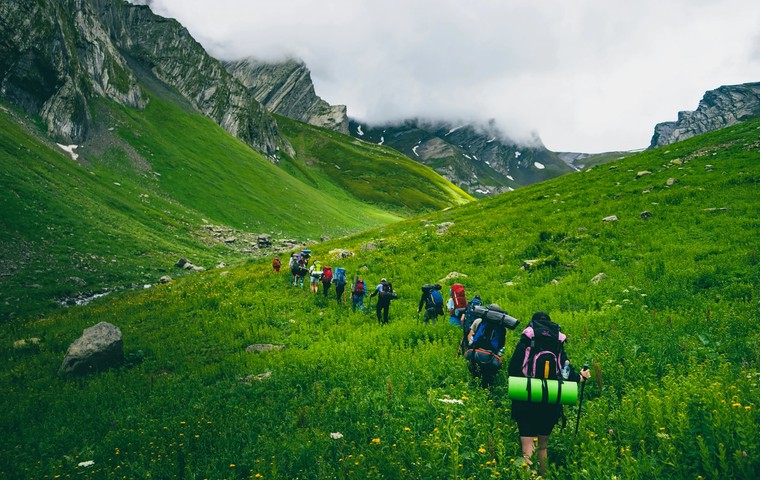
Tbilisi hits +34 °C, Batumi gets thunderstorms, and mountain snow cleared a week ago. Where to actually go, what it costs in 2026, and what to skip.
April 21, 2026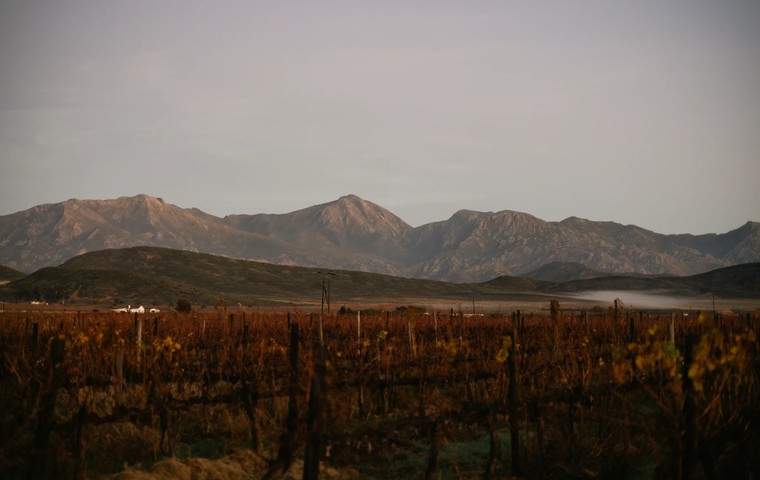
A 24/7 wedding chapel, 28 fortress towers and Alazani Valley views – sounds dreamy, but reality is more nuanced. Here's what to expect and what to skip.
March 28, 2026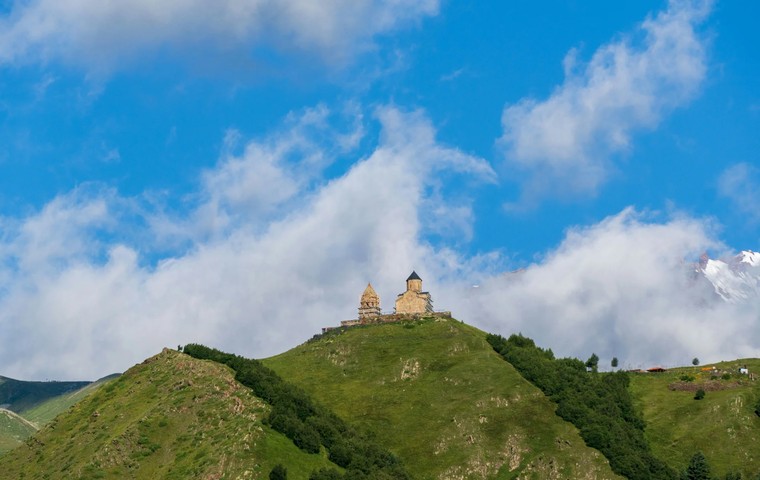
Kazbegi, Kakheti wine country, Mtskheta, Vardzia – the day trips locals actually recommend, with honest prices, timing and pitfalls most guides skip.
April 21, 2026
Where to take your family in Georgia – from Batumi's coast to Borjomi's parks and mountain day trips. Mandatory insurance since 2026, family-friendly tours, honest pricing.
March 28, 2026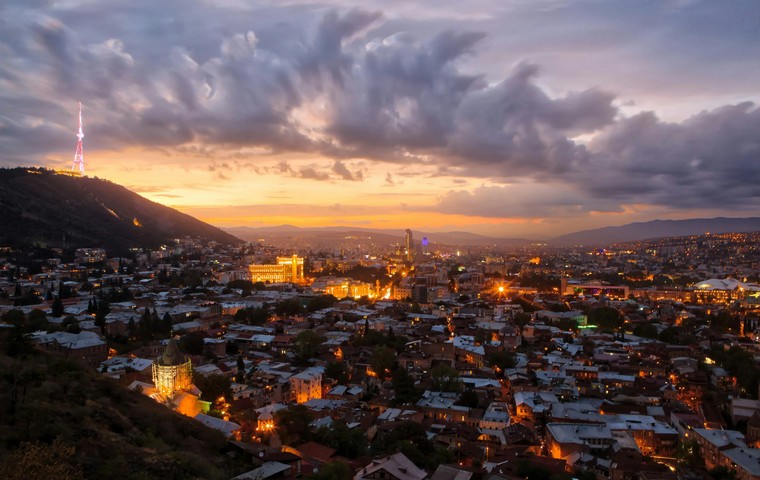
June is Georgia's sweet spot – warm weather without peak crowds, Batumi sea reaching 23°C, and hotel prices 20–30% below midsummer peaks. Here's the honest picture.
March 20, 2026