St. George Island
Sveti Đorđe Island
A green islet with a Benedictine monastery and old cemetery.
About
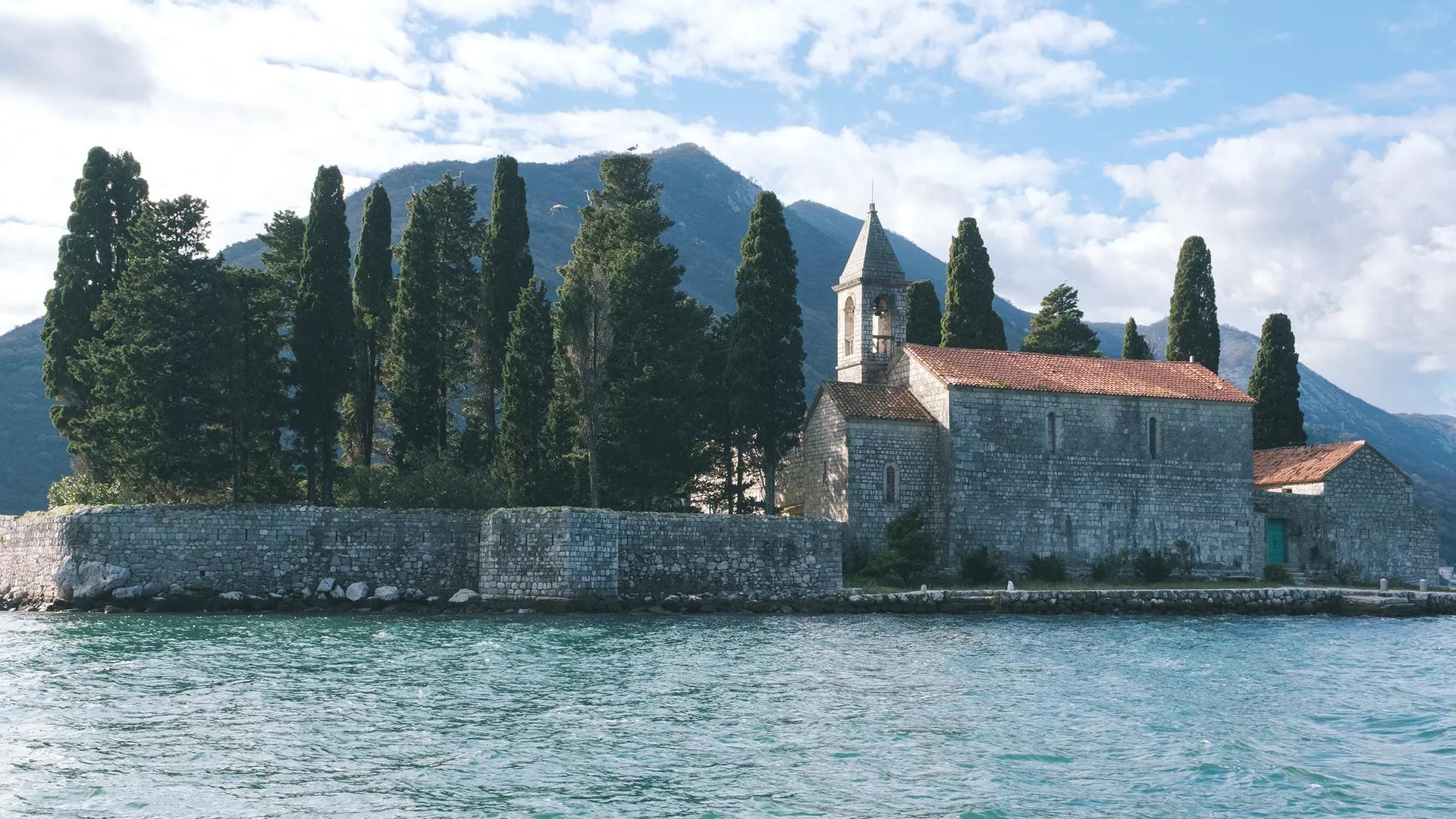
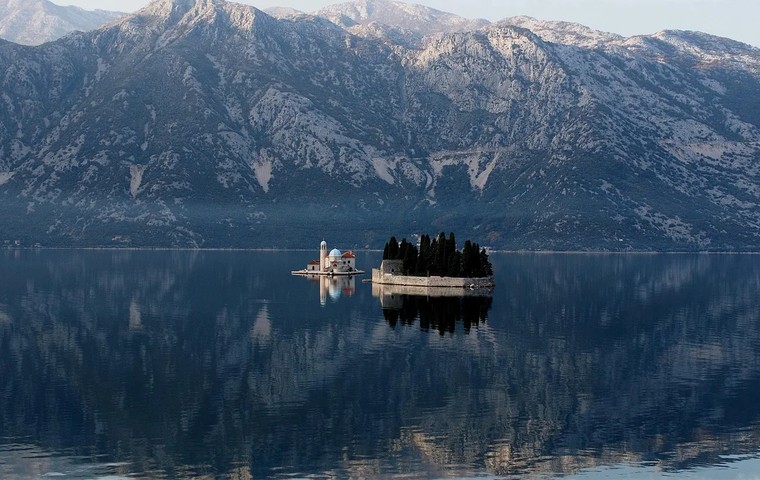
Unlike its neighbour, St George is closed to visitors. Behind the cypresses stand an 11th-century Benedictine monastery and the town’s historic cemetery. From the bay the island shows a sombre profile often described as Perast’s "romantic" view.
Transport
Travel time
On foot from Perast center1 min.600 m
By car from Perast2 min.810 m
From the airport Tivat · TIV37 min.11 km
On the map
Location
In detail
What's here
What is this place
St George Island (Sveti Đorđe) is one of the two small islets off Perast in the Bay of Kotor. It is a natural island with a Benedictine monastery and the historic cemetery of Perast’s noble families, enclosed by stone walls and tall cypresses.
Key features
- Located a few hundred metres off Perast, next to the artificial islet of Our Lady of the Rocks.
- A naturally formed island, unlike its man-made neighbour.
- A Benedictine abbey was established here in the 9th century, one of the earliest in the bay.
- Features defensive walls, the Church of St George and a dense cypress grove.
- Access is restricted – the island remains a closed monastic site and burial ground.
What to see
- The stone Church of St George and the fortified monastery walls.
- Tall cypresses shaping the island’s distinctive silhouette.
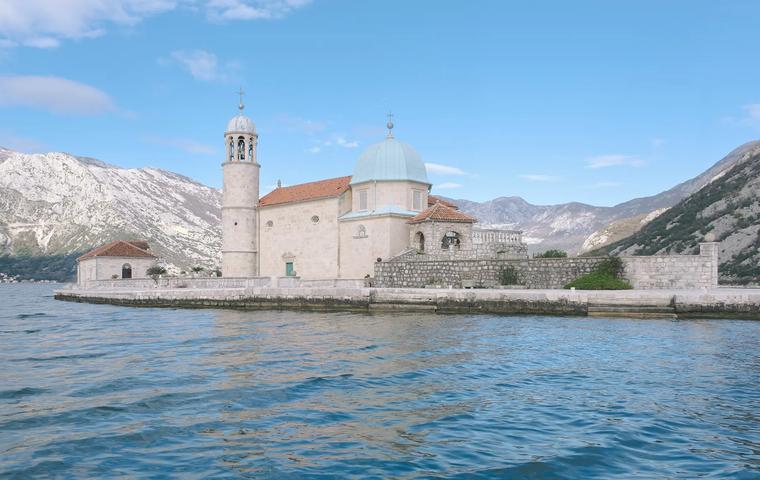
- Views of Perast and Our Lady of the Rocks nearby.
History
The monastery of St George was founded in the 9th century as a Benedictine settlement and soon became an important spiritual point in the bay. The islet served both as a religious retreat and as a fortified lookout near the strait.
Over the centuries the complex was rebuilt several times after earthquakes and raids. In the medieval period it held the cemetery of Perast’s patrician families, and the church took on a simple Romanesque form behind protective walls.
In modern times the island remained quiet and monastic, with limited access. Today it is one of Perast’s most recognisable landmarks, viewed mainly from boat tours.
Practical information
Location: opposite Perast in the central Bay of Kotor, a few minutes by boat from the waterfront.
Getting there: by boat or taxi-boat from Perast; most tours pass by the island without landing.
Access: landing is restricted and generally not allowed for tourists; the island is usually viewed from the water only.
Visiting hours: anytime during daylight as part of bay boat tours.
Visit duration: passing by takes 5–10 minutes; combined with a Perast and islands tour around 1 hour.
Best time: morning or late afternoon for softer light highlighting the cypress silhouette.
Notes: disembarkation is normally prohibited; expect splashes and movement on small boats, so protect cameras accordingly.
St. George Island
Articles about this place
Nearby