Hero background

Stalin Museum

სტალინის მუზეუმი

1957 memorial museum at Stalin's birthplace – 60,000 artefacts, childhood home, armoured carriage

The Stalin Museum is a memorial complex in central Gori, dedicated to Joseph Stalin (Dzhugashvili), who was born here in 1878. The complex has three parts: the main building in Stalinist Gothic style with six exhibition halls, the wooden house where Stalin spent his first four years, and his personal armoured railway carriage. The collection holds over 60,000 items.

The museum is on Stalin Avenue in the city centre, 500 m from Gori Fortress. From Tbilisi – 86 km, 1–1.5 hours by shared minibus (marshrutka) from Didube (5–7 GEL, ~$2) or by train (5–13 GEL).

Allow 1.5–2 hours for the visit. A full ticket with guide and train carriage costs 15 GEL (~$5.50). Open daily except Monday, 10:00–18:00.

Location

On the Map

About

What's Here

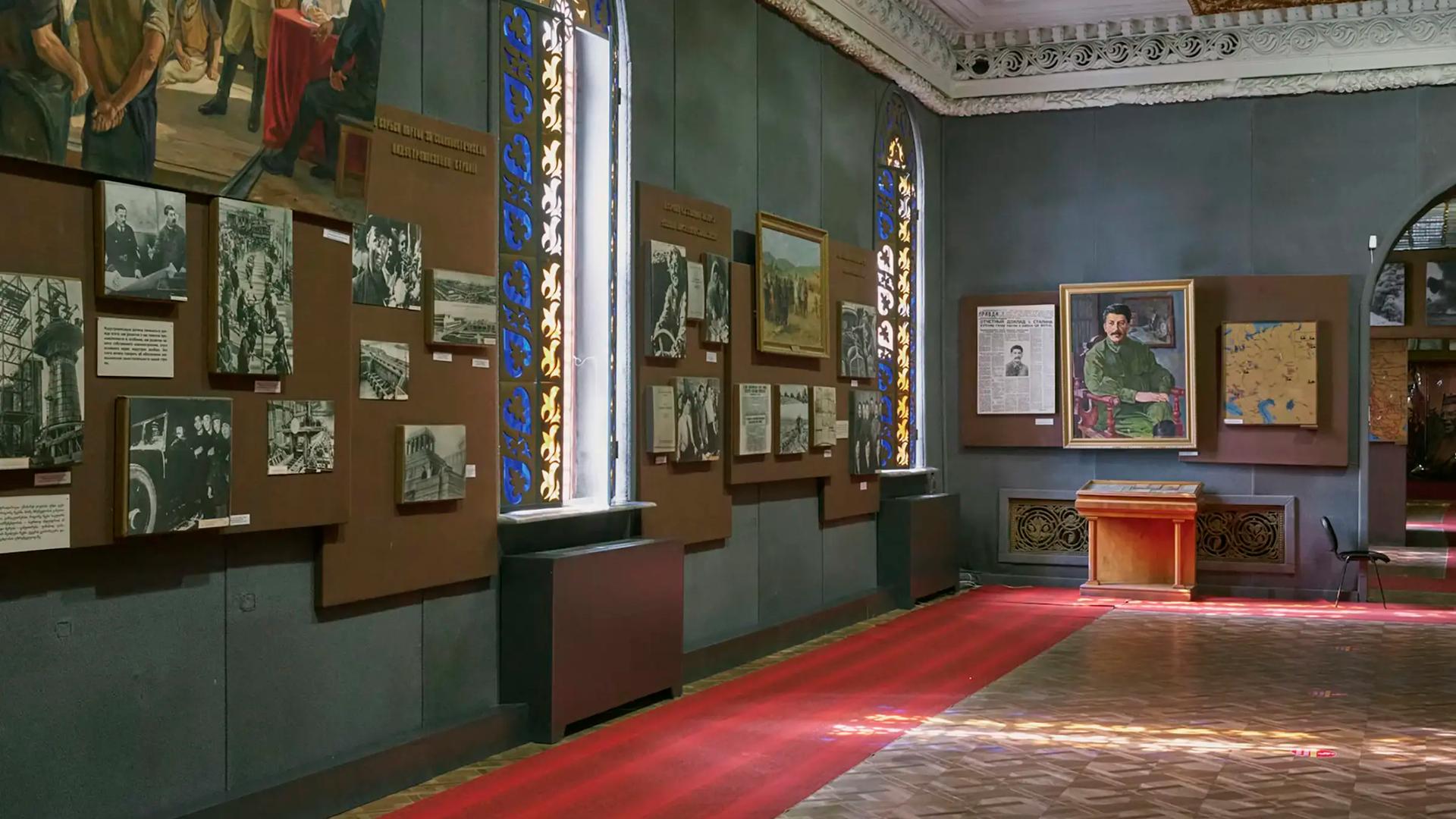
The main building is a two-storey palazzo in Stalinist Gothic style, faced with Eklar stone. The lobby features red marble, and a large full-length statue of Stalin stands on the marble staircase. The exhibition spans six halls in chronological order: childhood in Gori, revolutionary activities, rise to power, World War II (photos from the Tehran, Yalta, and Potsdam conferences), gifts from around the world, and personal belongings including his Kremlin office furniture. In the fourth hall, between marble columns, sits Stalin's death mask – one of twelve copies, by sculptor Manizer.

A separate hall opened in 2010 covers the repressions – the only section that departs from the heroic narrative. Descriptions are in Georgian and partially in English; a guide helps for full context.

In front of the building, under a Greco-Italianate glass pavilion, stands the Dzhugashvili family's wooden house – the father rented one room and ran a cobbler's workshop in the basement. To the right of the museum is a green armoured Pullman carriage weighing 83 tonnes, used by Stalin from 1941 onwards. Inside: his office, bedroom, and bathroom, all preserved as they were.

Why Visit

The Highlights

Collection – over 60,000 items including documents, photographs, personal effects, and Kremlin office furniture

Armoured carriage – an 83-tonne Pullman used by Stalin for trips to the Yalta and Tehran conferences

Childhood home – the original wooden house where Stalin was born and lived until age 4, under a protective pavilion

Death mask – one of 12 copies by sculptor Manizer, displayed between marble columns

Repressions hall – opened in 2010, the only part of the museum offering a critical view of the Stalin era

Architecture – 1951 building in Stalinist Gothic style with a red marble lobby

History

Past & Present

A memorial museum in Stalin's birth house opened in 1937, during his lifetime. In 1951, architect Archil Kurdiani began building the main structure – a two-storey palazzo with a tower, officially intended as a museum of socialism but clearly designed as a memorial to Stalin, who died in 1953. The museum officially opened in 1957. The exhibition followed standard Soviet memorial practice – a heroic narrative with no mention of repressions.

After the collapse of the USSR, the museum was closed in 1989 but soon reopened as a tourist attraction. A hall covering repressions was added in 2010. The Stalin monument on the central square was removed in June 2010. In 2012, Gori's municipal assembly rejected plans to transform the museum into a museum of Soviet occupation. The museum still largely retains its Soviet-era presentation style.

For Visitors

Visitor Information

Tickets & Prices

Full ticket (halls + house + carriage + guide): 15 GEL (~$5.50)

Halls + house (no carriage): 10 GEL (~$3.50)

Carriage only: 5 GEL (~$2)

Students (full complex): 10 GEL

Schoolchildren: 1 GEL

Students (halls + house): 3 GEL

Cash and card accepted. Personal photography free (no flash or tripods). Video and commercial photography by arrangement with the museum.
Rules & Restrictions

Photography in permanent exhibitions is allowed without flash or tripods. Photos and video are prohibited at temporary exhibitions. No dress code. A guide is included in the full ticket – tours are mostly in Georgian and Russian, less often in English. Waiting time for a guide – up to 20 minutes; you can explore independently.

On-Site Facilities

On site:

Small souvenir shop at the entrance

Toilets inside the museum building

Nearby:

Cafes and restaurants in central Gori – 5 minutes' walk

Accessibility: Ground floor and courtyard are accessible; second floor via stairs only. The carriage has steps.

Connectivity: Stable 4G coverage.

Getting There

Transport & Directions

In Gori (from bus/train station):

– The museum is at 32 Stalin Avenue – 10–15 minutes' walk from the bus station, 20 minutes from the railway station

– City taxi – 3–5 GEL

From Tbilisi (86 km, 1–1.5 hours):

– Shared minibus (marshrutka) from Didube – 5–7 GEL (~$2), every 20–30 minutes

– Train – 5–13 GEL (~$2–5), 1.5–2 hours

– Bolt taxi – 60–80 GEL (~$22–30)

– Day tour from Tbilisi (Mtskheta + Gori + Uplistsikhe) – from 80–120 GEL including transport and guide

When to go

Best time to visit

Season: Open year-round. Spring and autumn are best for combining with the fortress and Uplistsikhe.

Time: Arrive at opening (10:00) to avoid groups. Peak hours – 11:00–14:00.

Duration: 1.5–2 hours for the full complex (halls, house, carriage). Without a guide – about 1 hour.

Note: Closed on Mondays.

FAQ

Common Questions

Full ticket (halls + house + carriage + guide) – 15 GEL (~$5.50). Without the carriage – 10 GEL. Carriage only – 5 GEL. Schoolchildren – 1 GEL.

Tuesday–Sunday, 10:00–18:00. Closed on Mondays.

A guide is included in the full ticket (15 GEL). Tours are mainly in Georgian and Russian. English tours are available but less frequent – ask at the ticket counter. Wait time for a guide is up to 20 minutes. You can explore independently; key exhibits have English labels.

1.5–2 hours for the full complex with a guide. About 1 hour without. We recommend the full ticket with the carriage – it's only 5 GEL extra.

The exhibition largely follows the Soviet-era heroic narrative. The repressions hall (added in 2010) is the only critical section. For a balanced view, read up on the period before your visit.

Yes, in permanent exhibitions – no flash or tripods. Photography is prohibited at temporary exhibitions.

Children under 6 are free. The subject matter is complex and may be difficult for young children to understand. The armoured carriage tends to interest all ages.

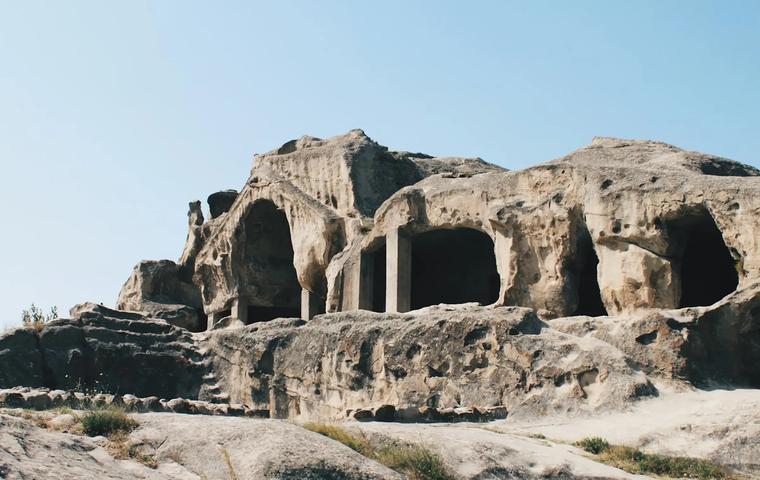
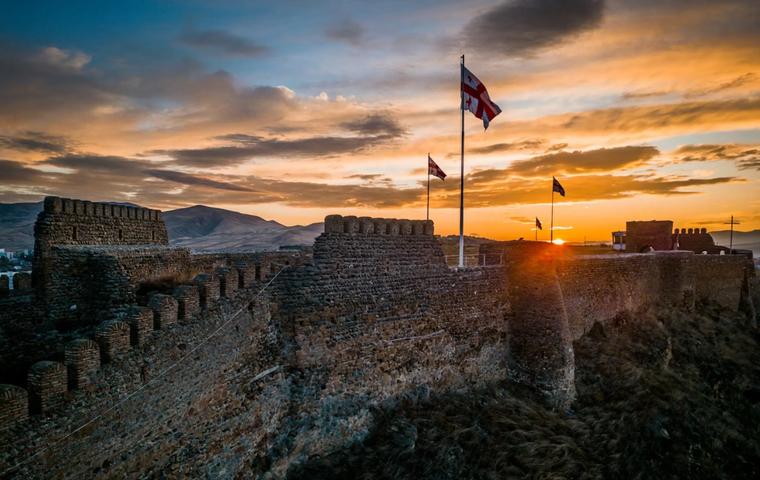
Gori Fortress – 500 m walk, free. Uplistsikhe – 15 km, taxi 30–35 GEL (~$11–13). Holy Archangels Church – at the fortress base.

Distance

Travel Time

On foot from Gori center 3-5 min.
From Borjomi by car ~1 h 15 min.
From Mtskheta by car ~1 h 18 min.
From TBS airport (Tbilisi Airport (TBS)) by car ~1 h 55 min.
From KUT airport (Kutaisi Airport (KUT)) by car ~3 h 21 min.
Social

Share