Blog · VPN
Internet for Digital Nomads in Doha: Coworking Spaces, Wi-Fi Cafés and VPN Requirements
 VPN
VPNIn this article
- 01Mobile Internet: SIM Card or eSIM
- 02What Is Blocked and How to Deal With It
- 03Coworking Spaces in Doha: Where to Work
- 04Wi-Fi Cafés: Free Spots to Work From
- 05Free Wi-Fi in Public Spaces
- 06Work Infrastructure Cost: Monthly Breakdown
- 07Where to Live for a Productive Workflow
- 08Practical Tips for Remote Work in Doha
- 09Frequently Asked Questions
Some links are affiliate links. You pay the same, and we may earn a commission.
Where to work remotely in Doha: coworking spaces with prices, cafés with fast Wi-Fi, 5G mobile internet, blocked services, and VPN setup for calls in Qatar.
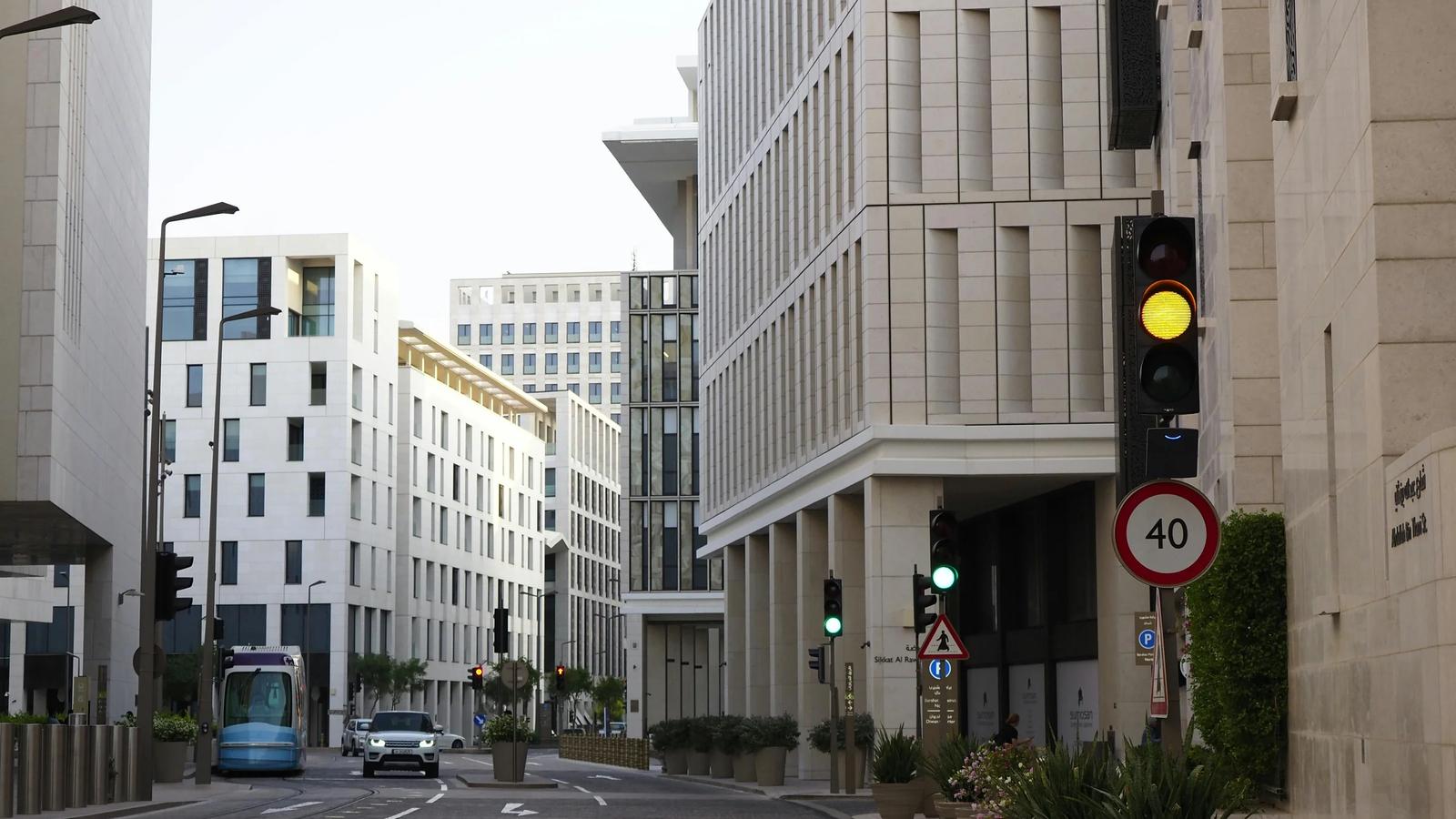
Doha ranks among the top three countries globally for mobile internet speed – median 5G download speeds exceed 500 Mbps. For a digital nomad, this translates into stable video calls, fast file uploads, and seamless remote work from virtually anywhere in the city. There is a catch, however: voice and video calls via WhatsApp, FaceTime, Skype, and Viber are blocked at the ISP level. Below is everything you need to set up a productive workspace in Doha without unpleasant surprises.
Key Takeaways
- Mobile internet speed – median download speed in Doha is approximately 510 Mbps on 5G, outperforming Dubai and Riyadh.
- Two operators – Ooredoo and Vodafone Qatar; both cover 95%+ of populated areas with 4G/5G.
- VoIP calls are blocked – voice and video calls on WhatsApp, FaceTime, Skype do not work on either Wi-Fi or mobile data.
- Text messaging works fine – chats, voice messages, and file sharing in messengers function without restrictions.
- VPN is technically legal – there is no explicit ban, but using one to access prohibited content may carry consequences.
- Coworking from $20/day – daily hot-desk passes cost $20-50, monthly subscriptions range from $170 to $350.
- Free Wi-Fi is widespread – available in malls, hotels, metro stations, and cafés; speeds range from 5 to 50 Mbps.
Mobile Internet: SIM Card or eSIM
A stable connection independent of café Wi-Fi is critical for remote work. Two options: a physical SIM card from a local operator or an eSIM that can be activated before departure.
Physical SIM card. Available for purchase at Hamad Airport upon arrival. Ooredoo and Vodafone offer tourist plans with 5-15 GB packages for $30-55 per month. A passport is required. On a 5G-compatible device, real-world speeds reach 300-500 Mbps in central Doha.
eSIM. A more convenient option for nomads: no need to find a store, activation takes 5-10 minutes via QR code. Providers like Airalo, Saily, and Yesim offer Qatar packages from $5 per 1 GB. For a 2-4 week working stay, a 10-20 GB plan at $15-35 is optimal. Detailed tariff comparisons are available in the Best eSIMs for Qatar guide.
Important: An eSIM does not bypass VoIP blocks. Data still travels through local networks, and voice call restrictions apply just as they do with a physical SIM card.
What Is Blocked and How to Deal With It
Qatar has blocked VoIP services at the ISP level since 2017. The reason is commercial: Ooredoo and Vodafone protect their revenue from international calling. Technically, deep packet inspection (DPI) is used to identify voice traffic patterns.
What works without restrictions:
- Messaging on WhatsApp, Telegram, Signal – text, photos, files, voice notes
- Email, cloud storage, messengers
- Regular web browsing and video streaming
- Zoom, Microsoft Teams, and Google Meet for scheduled conferences (with varying reliability depending on the network)
What is blocked:
- Voice and video calls on WhatsApp, FaceTime, Viber, Skype
- Discord voice channels
- Some VoIP features in Telegram and Messenger
A full list of restrictions is available in the What's Blocked in Qatar guide.
VPN: Legality and Practice
Using a VPN in Qatar is not explicitly prohibited by law. There is no direct mention of VPNs in the criminal code or the 2014 Cybersecurity Law. However, the law criminalizes access to content that "violates social values" – creating a grey area.
In practice, thousands of expats and tourists use VPNs daily for work calls, and there are no publicly reported cases of prosecution for this. That said, Qatari ISPs actively block VPN protocols – standard OpenVPN and IPSec often fail to pass through DPI filters. Free VPN services are virtually useless: their servers are blocked first.
For reliable operation, you need a provider with traffic obfuscation – protocols that disguise VPN connections as regular HTTPS. Proven options for Qatar include Surfshark, NordVPN, and ProtonVPN. More on choosing and setting up – in the Best VPNs for Qatar article.
Warning for remote workers: even with a VPN, VoIP call quality may be unstable – encryption adds latency, and ISPs periodically update their filters. For critical calls, use a backup: Wi-Fi Calling via your home carrier (if supported) or a regular roaming voice call.
Additional reading: Why You Need a VPN in Qatar, How to Use Public Wi-Fi Safely in Qatar.
Coworking Spaces in Doha: Where to Work
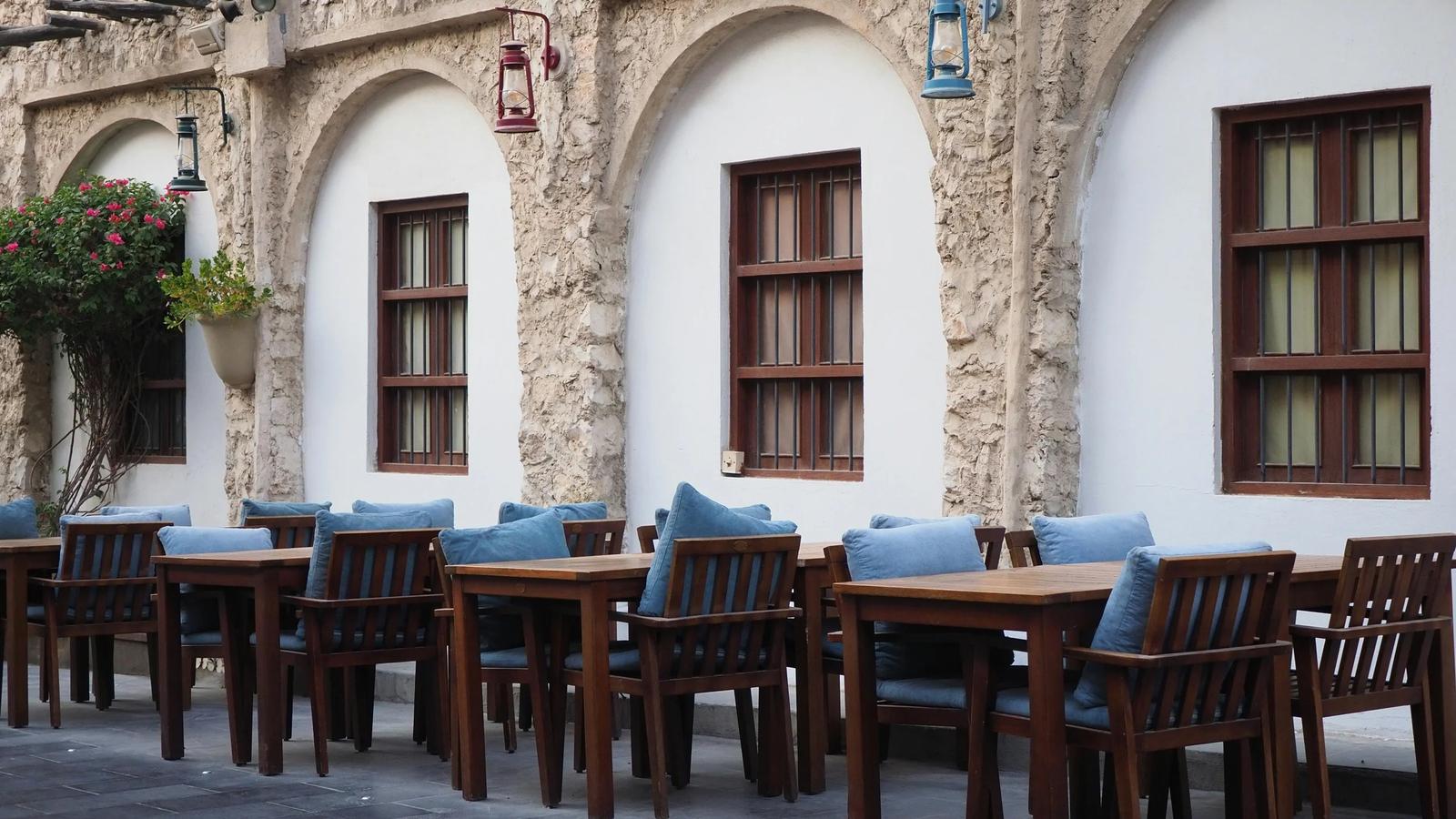
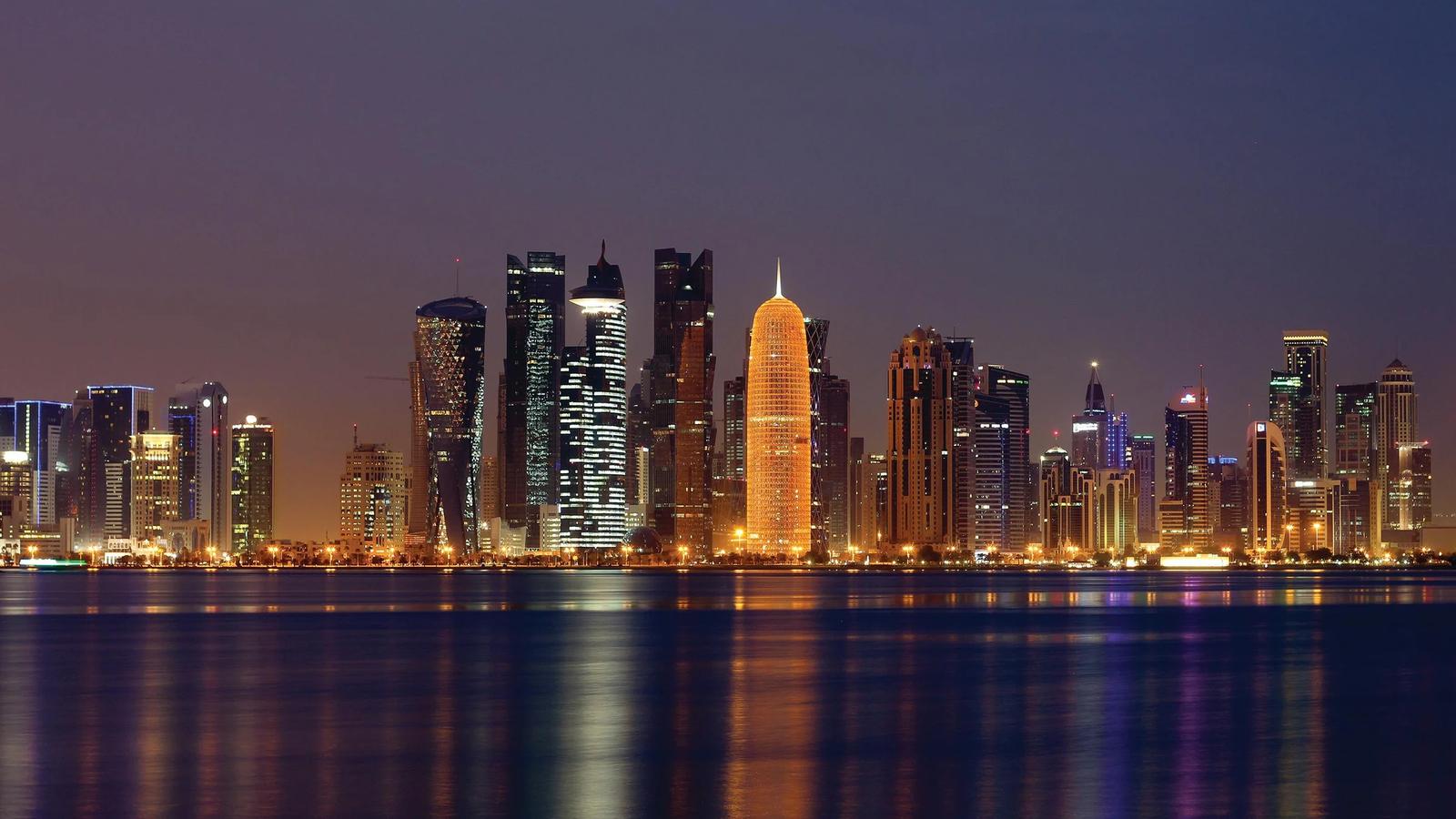
Doha's coworking industry grew significantly after 2022. Major clusters are located in the business district of West Bay, the new city of Lusail, and the heritage quarter of Msheireb Downtown.
Coworking Comparison
| Coworking Space | Area |
|---|---|
Day Pass | Monthly (Hot Desk) |
Highlights | Workinton |
| $25-30 | |
$250-350 | 450 m² common area, 40+ desks, regular networking events |
Regus | Msheireb, The Pearl, West Bay, Lusail |
$20-55 | $300-650 |
9 locations, global access with subscription, meeting rooms | Servcorp |
West Bay (Doha Tower) | $20-25 |
$170-250 | Premium interiors, bilingual reception, IT support |
Nestwork | Central Doha |
~$25 | $200-300 |
Startup community, mentorship programs, events | Flare Business Center |
| ~$20 | |
$400-420 | Views of Lusail, phone booths, pantry |
Alliance Business Centers | West Bay, Lusail |
~$22 | $270-280 |
Trade license support available | Digital Incubation Center |
Al Nasr |
Tip: Workinton and Regus are the most convenient networks for nomads as they offer multiple locations across the city. If you need to be near Msheireb in the morning and in Lusail after lunch, a single subscription covers both. Regus additionally provides global access to offices in 120+ countries – useful if your next stop after Doha is Bali or Lisbon.
Wi-Fi Cafés: Free Spots to Work From
Not every nomad wants to pay for coworking daily. Doha has plenty of cafés where you can comfortably spend 3-4 hours with a laptop.
Best neighbourhoods for café-surfing:
- The Pearl – a marina with dozens of waterfront cafés. Free Wi-Fi in most venues, power outlets are hit-or-miss. Latte – $5-7. Comfortable until noon, then it gets noisy.
- Katara Cultural Village – quiet coffee shops in a cultural setting. Wi-Fi speed is moderate (10-25 Mbps), but the atmosphere is ideal for focused work. Entry to the village is free.
- Msheireb Downtown – a modern quarter with air-conditioned galleries and cafés. Stable Wi-Fi, plenty of outlets in newer establishments. Average coffee – $4-6.
- Souq Waqif – picturesque but impractical for work: noisy, Wi-Fi is unreliable, power outlets are rare. Better to visit for lunch after working hours.
- Malls (Place Vendôme in Lusail, Villaggio, City Center) – free Wi-Fi throughout, food courts with outlets, reliable air conditioning. Speed typically 10-30 Mbps. Ideal during summer months when outdoor temperatures reach 45°C.
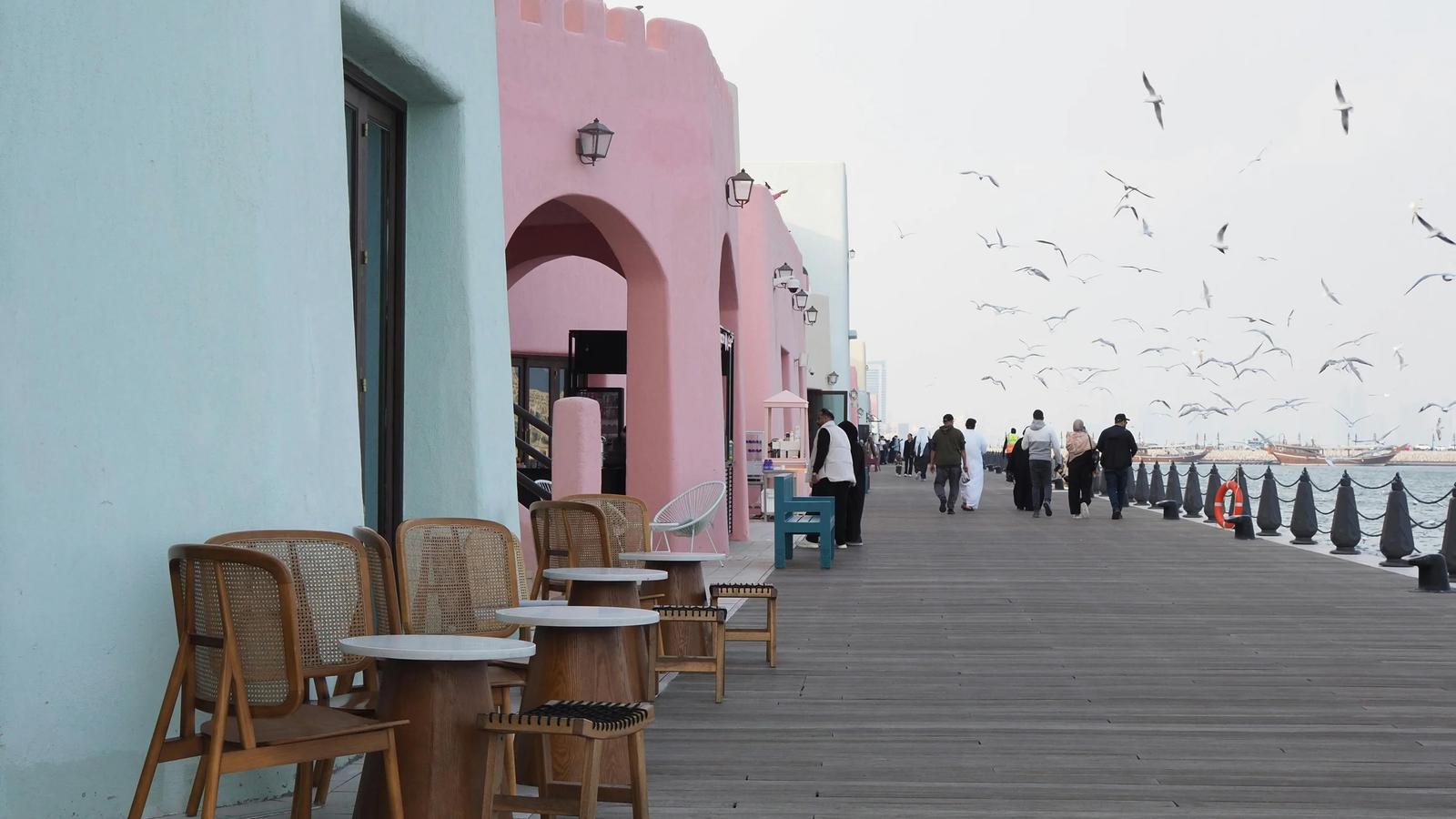
The reality of café-surfing in Doha: café Wi-Fi is fine for messaging and light tasks but not for uploading large files or stable video calls. For serious work, keep an eSIM with mobile data as a backup channel.
Free Wi-Fi in Public Spaces
Doha offers free Wi-Fi at several key locations:
- Doha Metro – free Wi-Fi at all stations and inside trains. Speed is sufficient for messaging but not for video calls.
- Hamad Airport – free high-speed Wi-Fi with no time limit. One of the best airport Wi-Fi networks in the world – real speeds of 30-80 Mbps.
- Doha Corniche – Wi-Fi hotspots exist but the signal is weak and inconsistent.
- Qatar National Library (Education City) – free Wi-Fi, quiet atmosphere, air conditioning, power outlets. Essentially a free coworking space – but far from the city centre.
Work Infrastructure Cost: Monthly Breakdown
| Expense | Budget Option | Comfortable Option |
|---|---|---|
Internet (eSIM, 10–20 GB/mo.) | $15-25 | $30-45 |
Coworking (monthly, hot desk) | $170-250 (Servcorp / DIC free) | $300-400 (Workinton / Regus) |
VPN service (monthly) | $3-5 | $10-13 |
Coffee at cafés (daily) | $100-150/mo. | $150-200/mo. |
Total per month | $290-430 | $490-660 |
For comparison, similar infrastructure in Bali costs $150-300, in Lisbon $250-500, and in Dubai $350-700. Doha is not the cheapest nomad hub, but Qatar has zero income tax, which more than compensates for higher-earning freelancers.
More on the cost of living in Moving to Qatar for Winter: Rental and Freelancer Budget.
Where to Live for a Productive Workflow
Choosing the right neighbourhood directly affects work comfort. Three optimal options:
- West Bay – the business centre with the highest concentration of coworking spaces. Studio rental from $1,200/mo. Metro within walking distance. Downside: a "glass towers" district with little street life.
- The Pearl – an artificial island with cafés, restaurants, and a waterfront. Studio from $1,400/mo. Regus is on-site. Upside: combine work with seaside lunches.
- Lusail – a brand-new city with modern architecture. Rent is lower than West Bay (from $900/mo.). Flare and Workinton are nearby. Downside: the district is still filling up, with infrastructure still maturing in places.
More on neighbourhoods in Doha Neighborhoods. Check accommodation options via Booking or Trip.com, and for longer stays consider serviced apartments (Apartments and Villas in Doha).
Practical Tips for Remote Work in Doha
1. Install your VPN before departure. Some VPN provider websites are blocked in Qatar – downloading the app on the ground can be problematic. Set up Surfshark or NordVPN beforehand and test the connection at home.
2. Prepare a backup calling method. Enable Wi-Fi Calling with your home carrier (if supported). This works over Wi-Fi bypassing VoIP blocks and does not require a VPN. Alternatively, purchase a local SIM for regular voice calls.
3. Plan your work schedule around the climate. From May to September, temperatures exceed 40°C. Working from an air-conditioned coworking space or mall is the only comfortable option. From November to March, you can work with a laptop on café terraces.
4. Adjust your call schedule. Doha's time zone is GMT+3. Convenient for working with Europe (1-2 hour difference) and workable for India (GMT+5:30). The US East Coast has an 8-hour gap – calls will need to be scheduled for evenings.
5. Carry a power adapter. Qatar uses Type G sockets (British three-pin). A universal adapter is essential if you have European or American devices.
6. Mind the dress code. Smart casual is standard in West Bay and Msheireb coworking spaces and cafés. In Souq Waqif and traditional areas, covered shoulders and knees are expected. Check visa requirements for your nationality before travelling. More details in Qatar for Tourists: What You Can and Cannot Do.
Frequently Asked Questions
1. Do Zoom and Google Meet work in Qatar?
Yes, enterprise video conferencing platforms (Zoom, Microsoft Teams, Google Meet) generally work in Doha, especially for scheduled meetings. Quality may be inconsistent – switching between Wi-Fi and mobile data sometimes helps. For critical calls, keep a VPN active as a safeguard.
2. How much does coworking cost in Doha per day?
Between $20 and $55 for a daily hot desk depending on the chain. Servcorp and Alliance start from around $20, Regus ranges $20-55, and Workinton charges approximately $25-30. A free alternative is the Digital Incubation Center under the Ministry of Communications, though availability is limited.
3. Is it legal to use a VPN in Qatar?
VPNs are not explicitly banned – there is no direct mention in legislation. Thousands of expats use VPNs daily for work without consequences. However, the law criminalizes access to content violating "social values," so a grey area technically remains. More details in VPN in Qatar: Safety, Legality and Prices.
4. What internet speeds can I expect in cafés and coworking spaces?
In coworking spaces – 50-200 Mbps (business line), in cafés – 5-50 Mbps (public Wi-Fi). Mobile 5G in central Doha delivers 300-500 Mbps, which is often faster than any Wi-Fi. For reliability, use an eSIM as your primary work channel and Wi-Fi as a backup.
5. Do digital nomads need a visa to work in Qatar?
Qatar does not offer a dedicated digital nomad visa. Citizens of 80+ countries (including EU, US, UK) receive visa-free entry for 30-90 days. For longer stays, a work or freelance visa with a local sponsor is required. Check visa requirements for your nationality before travelling. More in Qatar for Tourists: What You Can and Cannot Do.
Conclusion
Doha is not Bali with its bargain pricing, nor Lisbon with its nomad visa, but for freelancers earning above average, it is one of the most technologically advanced hubs in the world. Ultra-fast 5G, modern coworking spaces, zero income tax, and high safety standards are compelling arguments. The key is to prepare your VPN and eSIM in advance and adjust to the fact that familiar voice calls through messengers do not work out of the box here.
Read Also
- Internet in Qatar
- Where to Buy a SIM Card in Qatar
- How to Save on Mobile Data Roaming in Qatar
- Why eSIM Is Safer Than Public Wi-Fi
- How Much a Trip to Qatar Costs
Sources
- Communications Regulatory Authority Qatar – Qatar's telecom regulator
- Ookla Speedtest Global Index – internet speed rankings
- Opensignal Qatar Report – independent mobile network analysis
Places to see in Qatar

You may also like

How to Use Public Wi-Fi Safely in Qatar: A Practical Traveler Checklist
A clear, practical guide to staying safe on public Wi-Fi in Qatar: VPN basics, iPhone and Android settings, what to avoid on open networks, and safer alternatives like eSIM and tourist SIM plans.
January 10, 2026
Qatar Packing List: What to Pack for Doha, the Desert and the Beach
A practical Qatar packing list by season: modest clothing tips, essentials for heat and strong AC, meds and documents, adapters and tech, plus quick price benchmarks once you arrive.
January 09, 2026
What to Bring from Qatar: Souvenirs, Gifts and Smart Buys in Doha
Practical guide to Qatar souvenirs – oud perfume, spices, pearls, dates, gold and Arabic crafts. Prices, where to shop and how to avoid overpaying at Souq Waqif in Doha.
February 24, 2026
Is Telegram or WhatsApp Blocked in Qatar? What Actually Works
Telegram and WhatsApp messaging work in Qatar; it is the voice and video calling that is restricted, and it varies by network. Check the app-by-app matrix before you fly.
January 13, 2026
Moving to Qatar for Winter: How to Rent Housing for 1–3 Months and What Life Costs for Freelancers
Complete guide to wintering in Qatar for freelancers: finding apartments for 1–3 months, real prices for housing and living, visas, coworking spaces, and internet. Updated data for 2026.
February 10, 2026
Long Layover in Doha (8–24 Hours): Step-by-Step Plan to Visit the City and Return to the Airport
How to spend a long layover in Doha: free transit visa, metro to the city, Souq Waqif, Museum of Islamic Art, and getting back to Hamad Airport on time.
February 12, 2026