Blog · Tips
Qatar for tourists: what you can and cannot do (laws, fines and local rules)
 Tips
TipsIn this article
- 01Key takeaways for tourists in Qatar
- 02Why Qatar feels “stricter” than home
- 03Dress code and public behaviour
- 04Alcohol and drugs: the hard red line
- 05Relationships, sex and LGBT issues
- 06Photos, filming and social media rules
- 07Religion, Ramadan and cultural respect
- 08Driving in Qatar: rules and typical fines
- 09Other things you must not do
- 10What tourists can do comfortably
- 11Prices in Qatar: budget and context for fines (checked: September 2026)
- 12Practical tips to avoid trouble
- 13FAQ about what tourists can and cannot do in Qatar
- 14Summary
Some links are affiliate links. You pay the same, and we may earn a commission.
A clear guide to Qatar’s laws for visitors: dress code, alcohol, relationships, photos and social media, road fines, Ramadan rules – what is allowed and what can get you into serious trouble.
Qatar is one of the safest countries in the Middle East – and that safety is strongly backed by strict laws. Things that would just be “awkward” at home can lead to heavy fines, detention or even jail time here. As a visitor, you don’t need to know every article of the Penal Code, but you do need to understand the basic do’s and don’ts.
This guide walks through the main rules for tourists in Qatar: how to dress, where you can drink, what is illegal online, and which traffic fines are most common – so you can enjoy Doha without unpleasant surprises.
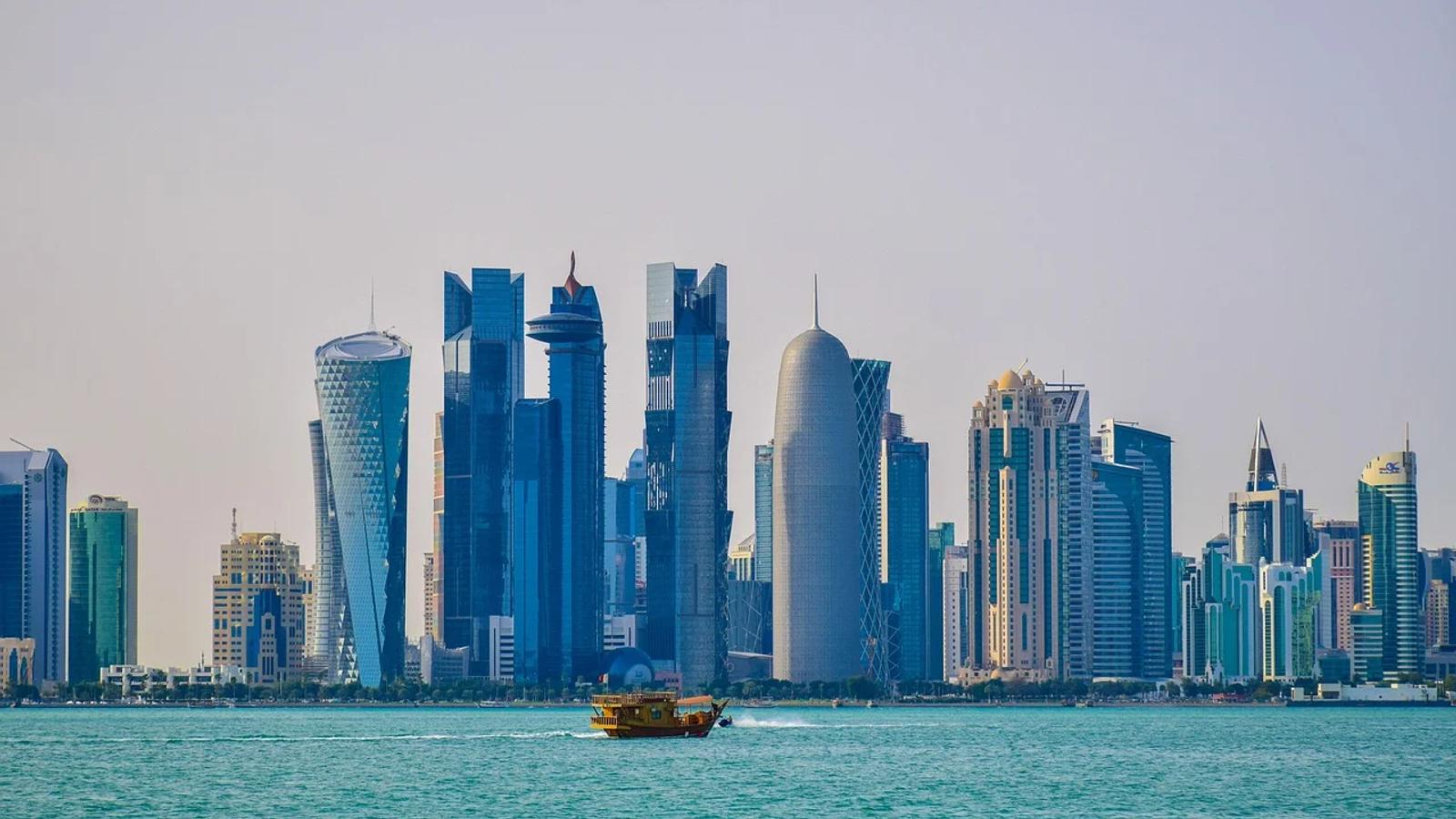
Key takeaways for tourists in Qatar
- Dress and public behaviour are regulated – cover shoulders and knees, avoid revealing outfits, skip hugging and kissing in public.
- Alcohol is tightly controlled – you can drink only in licensed venues, public drinking and being drunk in public are illegal.
- Sex and relationships are sensitive topics – sex outside marriage and same-sex relations are criminal offences under Qatari law.
- Photos and social media are risky – posting photos or videos of people without consent can now mean up to 1 year in jail and a fine up to 100,000 QAR.
- Traffic laws are strictly enforced – speeding, using a phone while driving and running red lights can cost hundreds or thousands of riyals plus black points.
- Religion and Ramadan must be respected – insulting Islam or the ruling family is a crime; during Ramadan you must not eat, drink or smoke in public in daytime.
- VPNs and the internet – using a VPN itself is not banned, but accessing illegal content or criticising the state online can still be prosecuted.
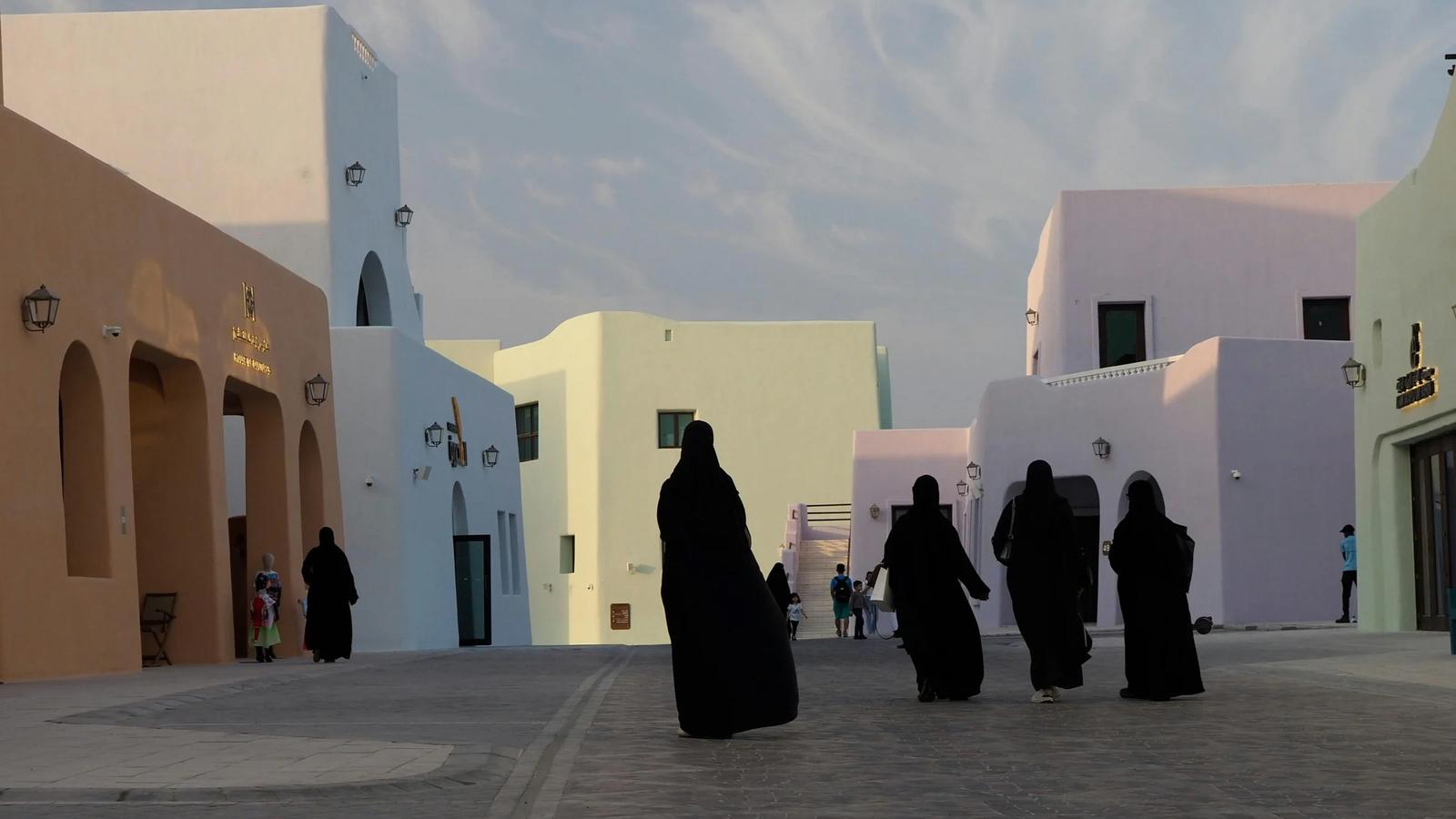
Why Qatar feels “stricter” than home
Qatar is a conservative Muslim country. Public morality, religious respect and social order are protected not only by social expectations but by criminal law. That means many things are regulated that may be considered private or harmless in Europe or North America – clothing, affection in public, what you post on Instagram and how you talk about religion or politics.
The safest mindset is simple: if you are not sure something is appropriate, do not do it in public.
Dress code and public behaviour
What to wear
Qatar’s public decency rules don’t list exact lengths, but the common standard is:
- both men and women should cover shoulders, chest and knees;
- avoid very tight, transparent or nightclub-style outfits in malls, on the street and in government buildings;
- on public beaches choose conservative swimwear; topless sunbathing is illegal.
Hotel and beach clubs are more relaxed, but you should still not walk outside the resort in swimwear or bare-chested.
Public affection
- married couples holding hands is usually tolerated;
- hugging, kissing or “making out” in public can be treated as an offence against public decency;
- shouting, insults and fights may quickly attract police attention.
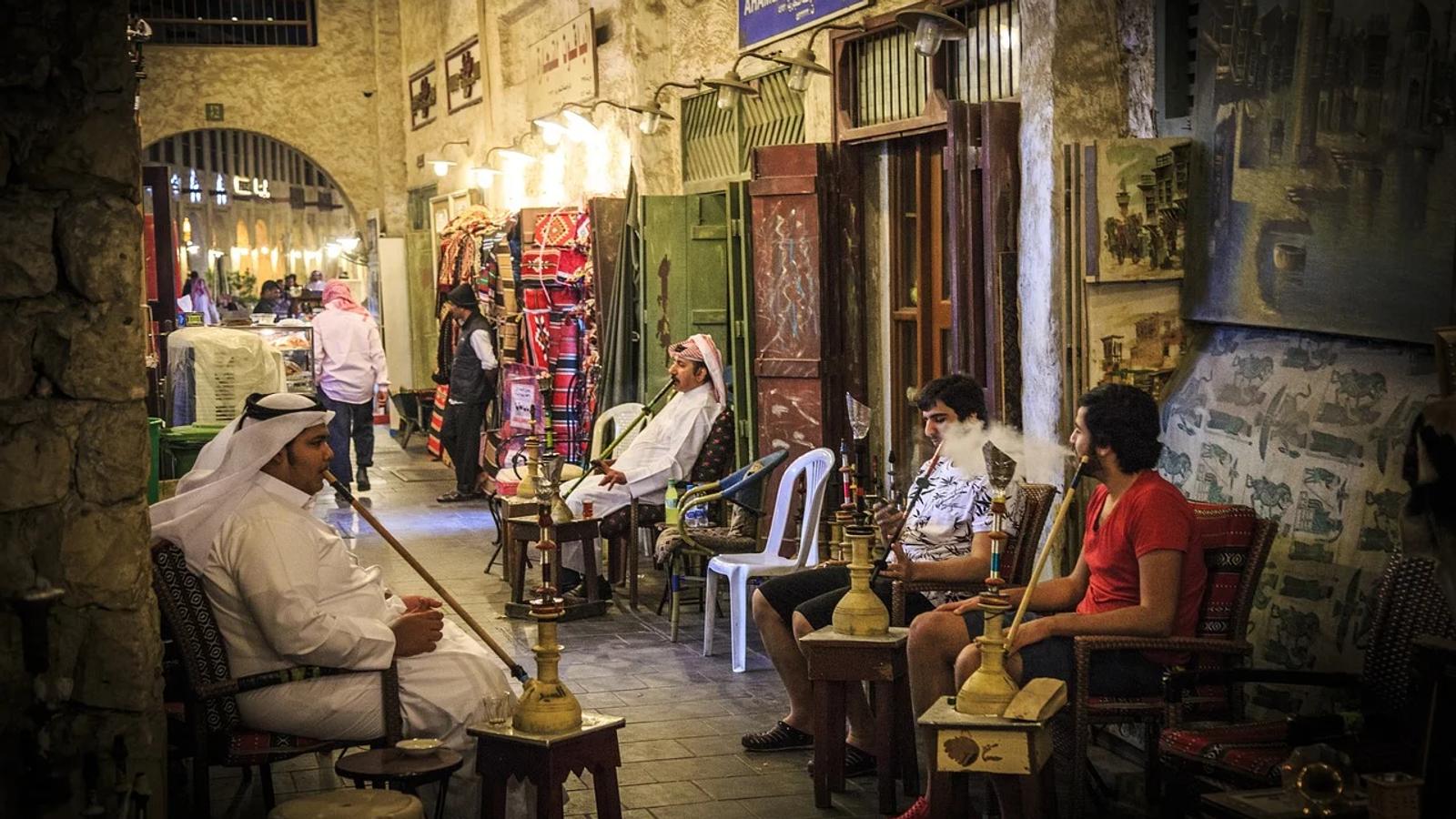
Alcohol and drugs: the hard red line
Alcohol
- Only residents with special permits can buy alcohol for home. Tourists may legally drink only in licensed bars, restaurants and hotel venues.
- Drinking in public spaces (street, park, car, public beach) is illegal.
- Being obviously drunk in public can lead to arrest, a fine and deportation.
- Drink-driving is a very serious offence and can lead to prison, heavy fines and a ban on entering the country again.
Drugs
- Possession, use, trafficking and smuggling of illegal drugs are treated as serious crimes.
- Penalties range from long prison terms up to life imprisonment; in law, the death penalty exists for some trafficking cases.
- Strong prescription medicines should be carried in original packaging together with an English-language prescription and ideally a doctor’s letter.
Relationships, sex and LGBT issues
Under Qatari law:
- sex outside marriage is a criminal offence;
- prostitution, brothels and related activities are strictly illegal;
- same-sex sexual relations are also criminalised.
In practice, hotels usually do not ask couples to prove they are married, and many tourists stay without issues. Problems tend to arise when a situation becomes public – a fight, a complaint, a police report or a medical emergency.
To stay safe, keep your private life private, avoid public displays of affection and never discuss intimate details with strangers or online while you are in the country.
Photos, filming and social media rules
In 2025 Qatar tightened its cybercrime law on privacy. Publishing or circulating photos or videos of people without their consent – even in public places – can now lead to up to 1 year in prison and/or a fine of up to QAR 100,000 (Law No. 11 of 2025, article 8 bis of the cybercrime law, in force since 4 August 2025).
Practical implications:
- do not film or photograph strangers’ faces close up unless they clearly agree;
- be especially careful with women and families – always ask first;
- avoid posting recognisable people in your stories and posts unless you are sure they are fine with it;
- never photograph military sites, security facilities, some government buildings or critical infrastructure.
Online behaviour
Qatar’s cybercrime and media laws also cover:
- defamation, insults and harassment online;
- spreading rumours and so-called “fake news” that might harm public order or state security;
- insulting religion, the Emir or other members of the ruling family.
These offences can carry heavy fines and custodial sentences. The safest approach is to avoid any online discussions of Qatari politics, religion or internal affairs while you are there.
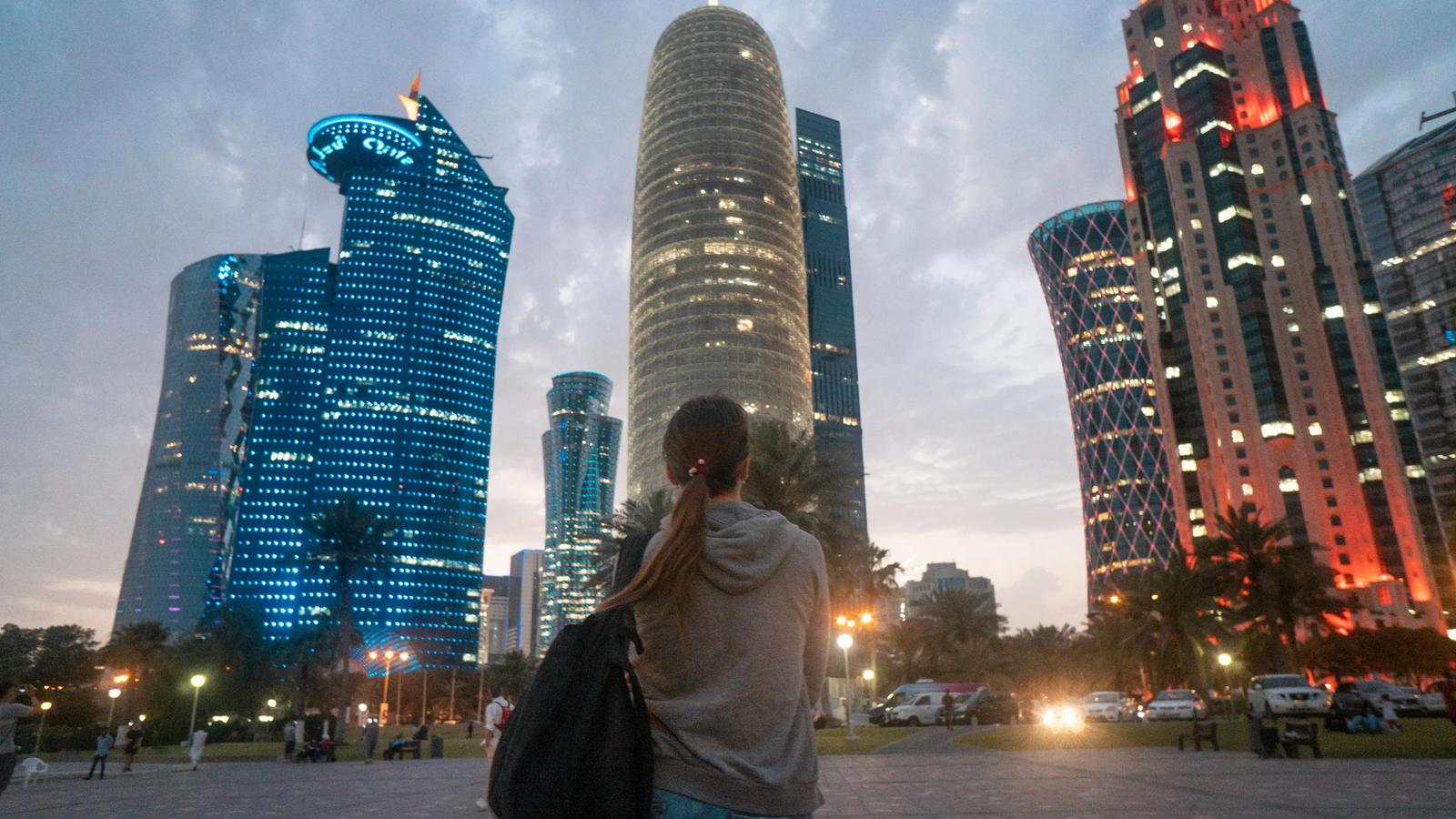
Religion, Ramadan and cultural respect
- Criticising or insulting Islam, religious symbols or clerics is a crime.
- Dress modestly near mosques and religious sites; non-Muslims should not enter prayer areas without permission and proper clothing.
- During Ramadan do not eat, drink or smoke in public places during daylight hours, even if you are not Muslim: the penalty is up to three months in prison and/or a fine of up to QAR 3,000 (Penal Code, article 267). Alcohol is not served and bars stay closed until Eid al-Fitr. Hotels usually provide screened-off areas where non-fasting guests can eat. In 2027 Ramadan is expected to run from about 8 February to 9 March; the moon-sighting committee confirms the exact dates.
Driving in Qatar: rules and typical fines
Qatar’s roads are full of speed cameras and smart radars. For visitors renting a car, traffic rules matter just as much as in any other Gulf country.
Key points to remember:
- seatbelts are compulsory for all passengers;
- children must use proper child seats;
- using or even touching a handheld or mounted phone while driving is an offence;
- speed limits change frequently – always watch the signs;
- running a red light is one of the most heavily punished violations.
Typical fine levels (figures can change, but this is the general order of magnitude):
- speeding – usually from 500 to 1000 QAR depending on how far over the limit you are, plus black points;
- using a mobile phone while driving – QAR 500 and 3 black points;
- not wearing a seatbelt – QAR 500;
- running a red light – QAR 6,000 and 7 black points (14 points means losing your licence);
- illegal parking – QAR 300 for most violations, QAR 1,000 and 3 black points for a disabled bay; in sensitive locations your car may also be towed.
Fines are linked to the car and/or driver’s licence. Unpaid fines can block you from leaving the country or returning a rental car until everything is settled.

Other things you must not do
A short “never ever” list:
- Illegal drugs in any amount;
- Weapons and ammunition without specific permits;
- Pornography in any format – paper or digital;
- Gambling and betting – officially illegal;
- Rude gestures and aggressive insults – a street argument can easily escalate into a legal case;
- Demonstrations and protests without permission – participation can bring serious consequences.
What tourists can do comfortably
Despite the strict laws, Qatar is very visitor-friendly if you respect local norms:
- walking around Doha late at night is generally safe;
- solo female travellers can get around by metro and taxi if they dress modestly and use official services;
- families enjoy clean beaches, parks and modern malls;
- hotel staff, guides and taxi drivers are used to foreign guests and will usually help you navigate local customs.
If you behave a bit more conservatively than at home and remember that you are a guest in a traditional Muslim society, you are very unlikely to have any problems.
Prices in Qatar: budget and context for fines (checked: September 2026)
To understand how painful a fine can be, it helps to know the general price level.
According to cost-of-living data:
- Average monthly expenses for a single person (without rent) are around 880 USD (about 800 EUR).
- A family of four spends around 3200 USD per month (about 2900 EUR), excluding rent.
Typical everyday costs for visitors:
- Meal in an inexpensive restaurant – about 4–19 USD (QAR 15–70) per person, roughly QAR 30 on average.
- Three-course dinner for two in a mid-range restaurant (without alcohol) – around 68 USD on average (≈QAR 250), typically 41–198 USD.
- Regular cappuccino – roughly 2–8 USD (2–7 EUR).
- Single metro or bus ride – QAR 2 (≈0.55 USD) on the metro, with a daily cap of QAR 6 (≈1.65 USD).
- Taxi start plus 1–3 km in the city – Karwa charges QAR 4 flag fall plus QAR 1.6–1.9 per km, so a short city ride hits the ≈QAR 11 minimum (≈3 USD).
- Small bottle of water (0.33 l) – QAR 1–3 (≈0.3–0.8 USD) in a supermarket.
Travel insurance
Ready-made 7-day worldwide policies are easy to buy online – for example from EKTA. Typical prices:
- basic “quiet rest” coverage – roughly 7–13 USD (6–12 EUR);
- extended and sports coverage – from around 35–40 USD (32–37 EUR) and up.
Put side by side with this, a fine of 500–1000 QAR (around 135–275 USD) for a single mistake looks very noticeable – and a 6000 QAR red-light ticket can eat a big part of a holiday budget.
Practical tips to avoid trouble
- Dress so that shoulders and knees are covered in public places.
- Keep your passport and visa/entry code handy but not visible in open pockets.
- Never argue with the police or security staff; stay polite and comply with requests.
- Avoid filming or photographing people’s faces and do not post strangers in your stories unless you have their consent.
- Steer clear of conversations about politics, religion and the royal family – both offline and online.
- If you rent a car, read about speed limits and traffic fines in advance and drive defensively.
- Always have health insurance that covers treatment and hospitalisation in private clinics.
FAQ about what tourists can and cannot do in Qatar
Can men wear shorts in Qatar?
Yes, but they should be at least knee-length. In malls, restaurants and government offices long trousers are safer. For women, short shorts and mini-skirts are strongly discouraged; choose midi skirts, dresses or loose trousers instead.
Will an unmarried couple be allowed to share one hotel room?
In most international hotels, yes. Staff usually don’t ask for a marriage certificate. Legally, however, sex outside marriage is an offence, so avoid drama, loud arguments and anything that could trigger a police report.
Can I drink alcohol if I stay in an apartment or Airbnb?
Officially tourists cannot buy alcohol in shops, and drinking outside licensed venues is risky. It is safest to drink only in hotel bars and restaurants that have a licence.
Is it safe for a woman to use taxis and the metro alone?
Generally yes – Qatar is considered very safe. Use official taxis or reputable ride-hailing apps, sit in the back seat, dress modestly and keep conversations with drivers polite and neutral.
What happens if I accidentally post someone’s photo on social media?
If no one complains, nothing may happen. But under the new privacy rules, sharing recognisable photos or videos of people without their consent is technically an offence that can bring heavy fines and even jail. It’s smarter to blur faces or frame your shots to avoid showing people clearly.
Is using a VPN legal in Qatar?
Using a VPN to secure your connection is not prohibited, but accessing content that is illegal in Qatar (pornography, gambling sites, calls for unrest, etc.) is still illegal even through a VPN. For securing your connection on public Wi-Fi, a reputable paid VPN such as NordVPN is a common choice. And to stay online without roaming charges, it is convenient to set up an eSIM in advance – Voye, for example, starts at $15 for 3 GB over 7 days.
Can I vape or smoke e-cigarettes in public?
No: importing, selling and using vapes, e-liquids and electronic shisha is banned in Qatar, and devices are confiscated at customs in any quantity — leave your vape at home. Ordinary cigarettes are allowed, but not in enclosed public places; respect “no smoking” signs and avoid smoking near mosques, playgrounds and crowded locations.
Summary
Qatar offers a very safe and comfortable travel experience – as long as you play by local rules. Dress modestly, be discreet with affection, drink only where it’s allowed, drive carefully, stay quiet on politics and religion, and think twice before posting anything online. Follow these simple principles and Qatar will likely feel welcoming, orderly and surprisingly easy to enjoy.
You may also like

Safety in Qatar: rules, cameras, and fines travelers should know
A practical guide to staying out of trouble in Qatar: public conduct rules, privacy and filming, traffic cameras and radars, common fines, and smart habits for tourists.
January 13, 2026
Qatar Packing List: What to Pack for Doha, the Desert and the Beach
A practical Qatar packing list by season: modest clothing tips, essentials for heat and strong AC, meds and documents, adapters and tech, plus quick price benchmarks once you arrive.
January 09, 2026
What to Bring from Qatar: Souvenirs, Gifts and Smart Buys in Doha
Practical guide to Qatar souvenirs – oud perfume, spices, pearls, dates, gold and Arabic crafts. Prices, where to shop and how to avoid overpaying at Souq Waqif in Doha.
February 24, 2026
Doha Neighborhoods: Where Tourists Should Stay
A practical guide to Doha’s best areas for visitors: West Bay, Msheireb, Souq Waqif, The Pearl, Katara and Lusail. Pros and cons, transport tips, budget ranges and updated price benchmarks.
January 05, 2026
Alcohol in Qatar for Tourists: What’s Allowed, What’s Not, and How to Stay Out of Trouble
A practical guide to alcohol rules in Qatar for tourists: where you can legally drink, what gets you in trouble, whether you can bring alcohol in, and what to expect price-wise in licensed venues.
January 23, 2026
Internet for Digital Nomads in Doha: Coworking Spaces, Wi-Fi Cafés and VPN Requirements
Where to work remotely in Doha: coworking spaces with prices, cafés with fast Wi-Fi, 5G mobile internet, blocked services, and VPN setup for calls in Qatar.
February 14, 2026