Hero background

Rozafa Castle

Kalaja e Rozafës

Illyrian fortress from the 3rd century BC on a hilltop above the confluence of three rivers – Shkodër's main panoramic viewpoint

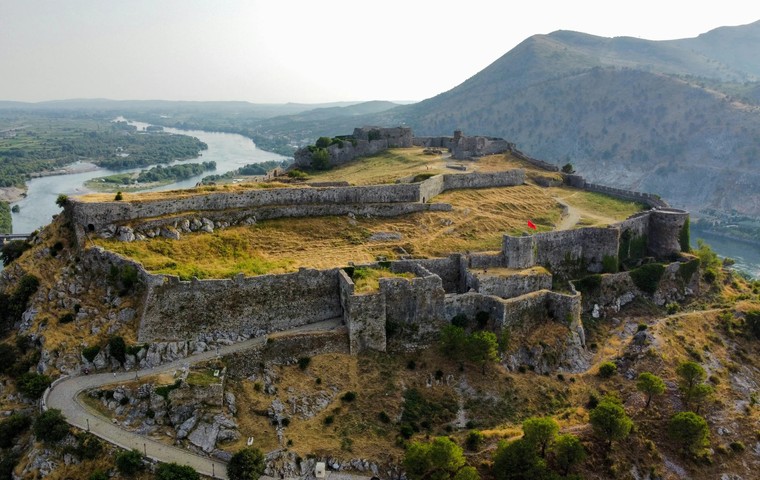
Rozafa Castle is a fortified complex on a rocky hill 130 m above sea level, 3 km south of central Shkodër. The walls were built by the Illyrians and rebuilt by Romans, Venetians, and Ottomans. From the ramparts, there is a 360° panorama of Lake Shkodër, the Buna, Drin, and Kir rivers, and the mountains of northern Albania.

From the city centre, it takes 10 minutes by car or local bus (30 ALL / ~€0.30). Parking is available at the top gate, but fills up early in summer. Walking from the base of the hill to the entrance takes 15–20 minutes along a cobblestone road.

Allow 1–1.5 hours for a visit. Inside you'll find the ruins of a mosque, a church, cisterns, and a small museum with archaeological finds. The castle is suitable for all ages, but the climb is steep and slippery – wear sturdy shoes.

Location

On the Map

About

What's Here

The castle occupies the top of a rocky hill surrounded on three sides by water – the Buna and Drin rivers converge below. The defensive walls stretch several hundred metres, forming three courtyards: lower, middle, and upper. The masonry consists of large stone blocks; Venetian towers and Ottoman additions are still visible in places. In the upper courtyard, there are ruins of a mosque with a partially standing minaret and remains of water cisterns.

Near the museum entrance stands a sculpture of Rozafa – the woman from the legend who was walled into the fortress to ensure its stability. The museum occupies a single room: the collection includes pottery, weapons, and models illustrating the castle's history from the Illyrian period to the 20th century. Information panels are in Albanian and English.

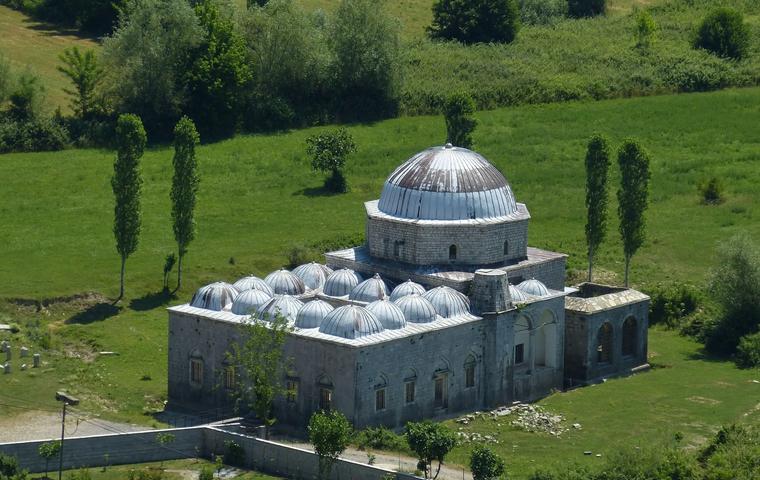
From the highest point, the view covers 360°: the city of Shkodër to the north, Lake Shkodër and the Montenegro border to the west, the river floodplain and the Lead Mosque to the south, and the Kir valley to the east. In July–August the walls are fully exposed to the sun with no shade – bring water and a hat.

Why Visit

The Highlights

Age – founded by the Illyrians over 2,500 years ago, rebuilt by Romans (167 BC), Venetians (14th–15th c.), and Ottomans (1478)

Elevation – 130 m above sea level, approximately 80 m above river level

Panorama – 360° views of Lake Shkodër, three rivers, mountains, and the city

Legend – named after Rozafa, a woman walled into the ramparts to ensure the fortress would stand; sculpture at the museum entrance

Museum – archaeological finds from the Neolithic to the Ottoman period, separate entry 200 ALL (~€2)

Wildlife – land tortoises live on the castle grounds

History

Past & Present

The first fortifications on the hill were built by Illyrian tribes in the 3rd century BC. In 167 BC the Romans captured the fortress. During the Middle Ages, it passed between Byzantium, Serbian, and Albanian rulers, and in the 14th–15th centuries the Venetians carried out a major reconstruction – building the walls and towers still visible today. The castle was a key outpost on the border of the Venetian Republic.

In 1478, the Ottomans took the fortress after a prolonged siege, adding a mosque, utility buildings, and water cisterns. In 1912, Montenegrin forces besieged the castle during the First Balkan War. During the 20th century, the complex gradually fell into disrepair but was granted cultural monument status. Today the castle is open to visitors year-round, a museum operates inside, and restoration work continues.

For Visitors

Visitor Information

Tickets & Prices

Entry tickets:

– Adults: 400 ALL (~€4 / ~$4.50)

– Children 12–18 and students: 120 ALL (~€1.20)

– Children under 12: free

Castle museum:

– Additional 200 ALL (~€2) per adult

– Children: 50 ALL

Cash only (ALL or EUR). Cards are not accepted.

Rules & Restrictions

The cobblestone road up is slippery, especially after rain. Sturdy closed-toe shoes are essential. Guardrails on the walls are minimal – watch children carefully. Summer temperatures on the exposed walls can exceed 35°C – bring water and a hat. Photography is allowed without restrictions.

On-Site Facilities

A small café and souvenir shops are at the entrance. Toilets available. Free parking at the top gate, but spaces are limited. Lower parking along the road is an alternative. Mobile signal is stable. No Wi-Fi. The castle is NOT wheelchair accessible – cobblestone roads and stairs throughout. The museum has Braille information panels.

Getting There

Transport & Directions

From central Shkodër (3 km, 10 min):

– Taxi: 300–500 ALL (~€3–5)

– City bus: 30 ALL (~€0.30), stops at the castle turn-off, then 10 min walk uphill

– Bicycle: many hotels offer rentals, flat road to the base

– On foot: 30–40 minutes from the centre

From Tirana (100 km, 2 hours):

– Bus to Shkodër: from 400 ALL (~€4), departures every 30 min from the bus station

– Direct bus from Tirana Airport: 1,000 ALL (~€10), 2 hours

Car rental: from €25/day

On-site:

From the entrance gate to the upper courtyard is a 10–15 minute walk up a cobblestone road. Cars can be parked at the top gate.

When to go

Best time to visit

Season: April–June and September–October offer comfortable temperatures and fewer visitors. July–August is very hot with no shade on the walls.

Time of day: early morning (before 10:00) or 1.5 hours before closing – soft light and fewer people. Sunset from the walls is one of the best photo spots in Shkodër.

Duration: 1–1.5 hours for the castle and museum.

Avoid: midday in July–August (heat); the castle closes at 7:00 PM. From November 1 to May 14, it is closed on Mondays.

FAQ

Common Questions

Adults pay 400 ALL (~€4), children aged 12–18 pay 120 ALL, and under 12 is free. The museum inside costs an extra 200 ALL. Cash only.

1–1.5 hours for the castle and museum. If you plan to photograph the sunset, allow 2 hours.

A city bus from central Shkodër costs 30 ALL and drops you at the castle turn-off, then it's a 10-minute walk uphill. Alternatively, take a taxi for 300–500 ALL or rent a bicycle.

Yes, children over 5 usually manage the climb. However, guardrails on the walls are minimal – supervise small children closely. Under 12 enter free.

Sturdy, closed-toe shoes with non-slip soles. The stones on the road and walls are smooth and slippery, especially after rain. Flip-flops and sandals are not recommended.

April–June or September–October. In summer the walls are very hot (35°C+) with no shade. Best time of day: early morning or 1.5 hours before closing.

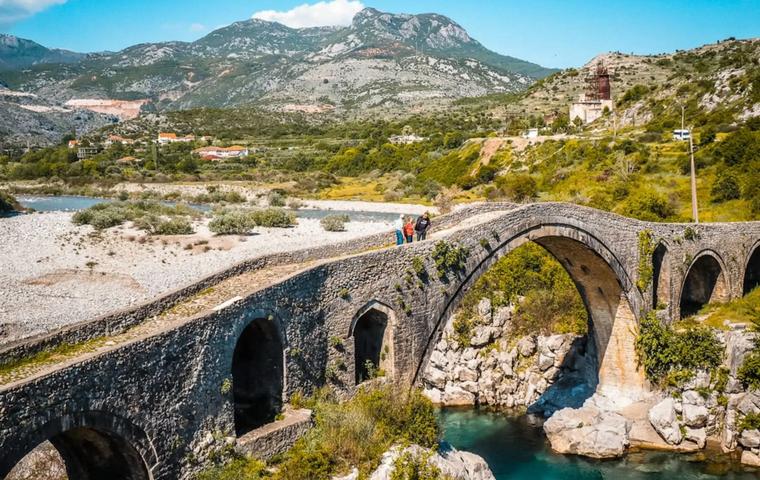
Yes. The Lead Mosque is at the foot of the hill (5 min by car). Mes Bridge is 8 km northeast (15 min by car). All three fit easily into one route.

A small café and drink stalls are at the entrance. There are no food outlets inside the castle walls. Bring your own water, especially in summer.

Distance

Travel Time

From Shkoder by taxi or transfer ~11 min.
From Kruja by car ~1 h 35 min.
From Durres by car ~1 h 58 min.
From TIA airport (Tirana Airport (TIA) ) by car ~1 h 47 min.
From VLO airport (Vlora Airport (VLO)) by car ~3 h 56 min.
Social

Share