Tickets & prices
Free entry. Donations welcome.
Xhamia e Plumbit
Mosque from 1773 in Classical Ottoman style – Albania's largest historic mosque, fully restored in 2025
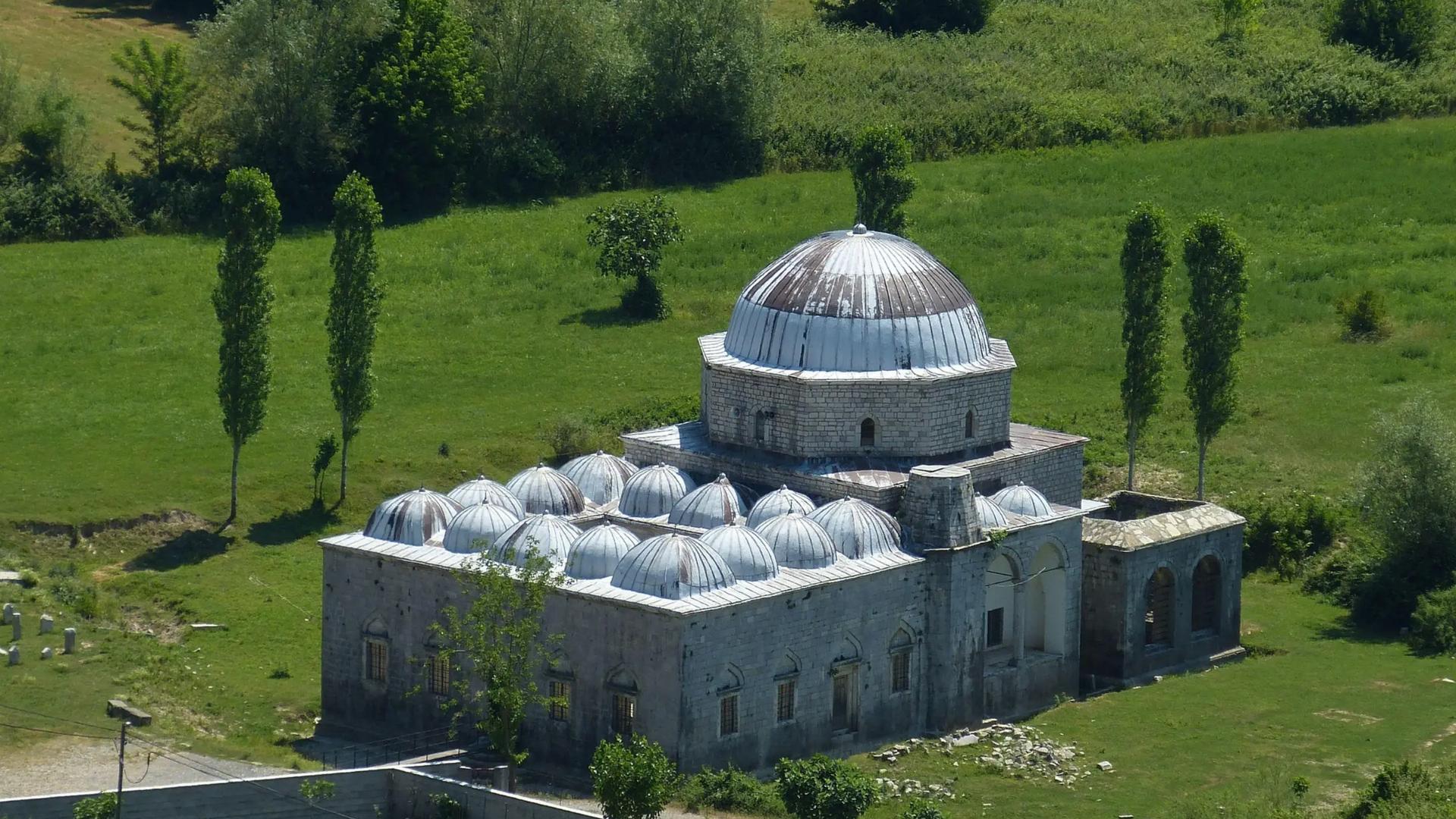
The Lead Mosque (Xhamia e Plumbit) is the only Classical Ottoman-style mosque in Albania, built in 1773 by Pasha Mehmed Bushati. It stands on the southern outskirts of Shkodër, at the foot of Rozafa Castle, on the bank of the Buna River. The name comes from the lead plates that once covered its domes.
From the city centre, it's 2 km – 5 minutes by car or 20 minutes on foot along Rruga e Tabakëve. After a full restoration funded by Turkey, the mosque reopened to visitors in May 2025. A park has been laid out around it, which also serves as a flood barrier.
Entry is free. Allow 15–30 minutes for a visit. The mosque is active – access is restricted during prayer times.
The mosque is built from hewn stones of uniform size, transported from the village of Gur i Zi by a human chain passing blocks hand to hand over several kilometres. The architecture follows the Classical Istanbul style developed by architect Mimar Sinan in the 16th century: a central dome, semi-domes, and an arched portico. It is the only mosque of this type in Albania.
After the 2021–2025 restoration funded by the Albanian and Turkish governments, the mosque looks much as it did in the 18th century: domes restored with new lead covering, the minaret reconstructed (the original was destroyed by lightning in 1967), and inside – calligraphy and decorative motifs from the Ottoman era. The spacious courtyard with wide columns is a rarity for mosques in the region.
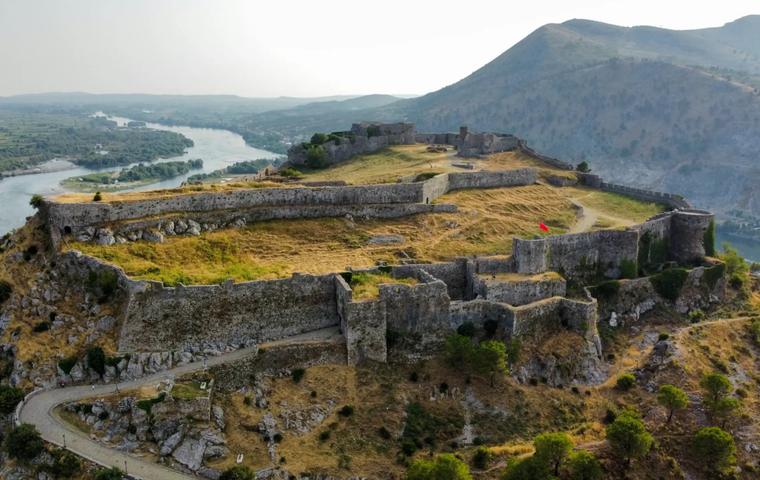
The surrounding area has been transformed into a park with paths that also functions as a flood protection embankment. From the grounds near the mosque, Rozafa Castle is visible on the hill above.
Style – the only Classical Ottoman (Istanbul-type) mosque in Albania, modelled on architect Mimar Sinan's designs
Date – built in 1773 by Pasha Mehmed Bushati, governor of Shkodër
Name – from the lead plates on the domes; the lead was stolen in the early 20th century and restored during renovation
Historic role – the first mosque in Albania to resume prayers after the end of state atheism (16 November 1990)
Restoration – full reconstruction 2021–2025 with Turkish support, ceremonial reopening May 2025
The mosque was built in 1773 by Mehmed Pasha Bushati, Ottoman vizier of Shkodër from the influential Bushati family. He aimed to give his city the feel of a capital. Stone was transported from the village of Gur i Zi, and the first imam was Haxhi Ahmet Misria, of Egyptian origin. The domes were covered with lead plates, giving the mosque its name.
In the early 20th century, the lead roofing was gradually stolen, and in 1916 the Austrian army removed the remaining lead. A descendant of the founder, Xhelal Bushati, rebuilt the minaret in 1920, but lightning destroyed it again in 1967. That same year, the communist regime closed the mosque. Thanks to its cultural monument designation (since 1948), the building survived. On 16 November 1990, the first religious service in 23 years of state atheism was held here. After extensive restoration in 2021–2025, supported by Turkey, the mosque was fully restored and reopened in May 2025.
Free entry. Donations welcome.
This is an active mosque – remove shoes at the entrance. Dress code: shoulders and knees must be covered. Women are advised to cover their heads (scarves may be available at the entrance). Tourist visits are restricted during prayer times. Photography is permitted outside; inside, ask permission.
Toilets on the grounds. Parking is limited – access streets are narrow; it's better to walk from the castle or the centre. The park around the mosque is accessible for wheelchairs, but there are steps into the mosque itself.
From central Shkodër (2 km, 5–7 min):
– On foot: 20 minutes via Rruga Kolë Idromeno, then Rruga e Tabakëve
– Taxi: 200–400 ALL (~€2–4)
From Rozafa Castle (800 m, 3 min):
– The mosque sits at the foot of the castle hill. Easy to combine: castle first (1–1.5 hours), then walk down to the mosque
From Tirana (100 km, 2 hours):
– Bus to Shkodër: from 400 ALL (~€4), then walk or taxi
– Car rental: parking near the mosque is difficult
On-site:
The mosque is surrounded by a park. Enter from Rruga e Tabakëve.
Season: year-round. The mosque is an indoor space, so weather is not critical.
Time of day: early morning or late afternoon – fewer visitors and good light for façade photos. Avoid prayer times if you want to view the interior.
Duration: 15–30 minutes.
Tip: conveniently visited together with Rozafa Castle – the mosque is at the foot of the same hill.
Practical answers about visiting, routes and time on site.
No, entry is free. Donations are welcome.
Yes, outside of prayer times the mosque is open to tourists. Remove your shoes at the entrance. Dress code: shoulders and knees covered.
A full restoration was carried out in 2021–2025, funded by the Albanian and Turkish governments. The ceremonial reopening took place in May 2025.
15–30 minutes for the mosque and the surrounding park.
The mosque is at the foot of Rozafa Castle's hill – 800 m apart. A good plan: castle first (1–1.5 hours), then walk down to the mosque (15–30 min).
The domes were covered with lead plates that gleamed in the sunlight. The lead was stolen in the early 20th century but restored during the 2021–2025 renovation.
Outside – no restrictions. Inside – ask permission first. Photography is not recommended during prayer times.
Parking near the mosque is limited due to narrow access streets. It's better to walk from the centre (20 min) or from the Rozafa Castle parking area.
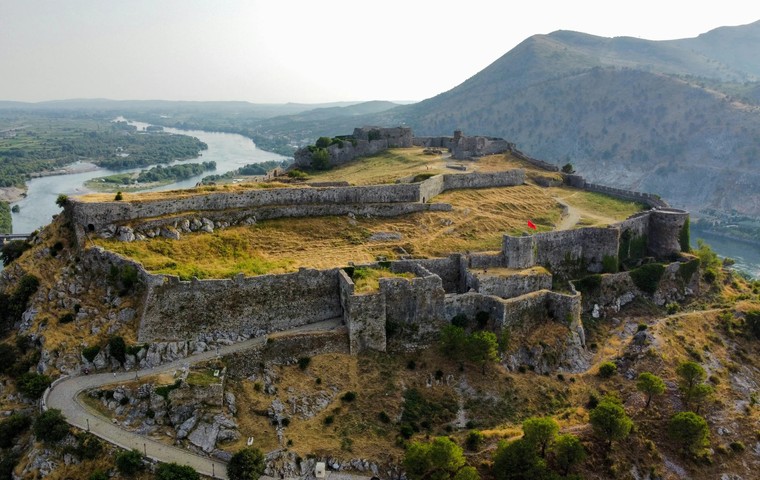
Shkodër is northern Albania's largest city, home to Rozafa Castle, Lake Shkodër and the trailhead to Theth and Valbona. A practical 1–2 day plan with prices, transport and insider tips.
March 09, 2026
How to drive from Ulcinj, Montenegro to Shkodër, Albania – Sukobin-Muriqan border crossing, rental car documents, Green Card insurance, what to see, and trip costs in 2026
February 24, 2026