Tickets & prices
Admission is free. The mosque is active and open to visitors at no charge outside prayer times.
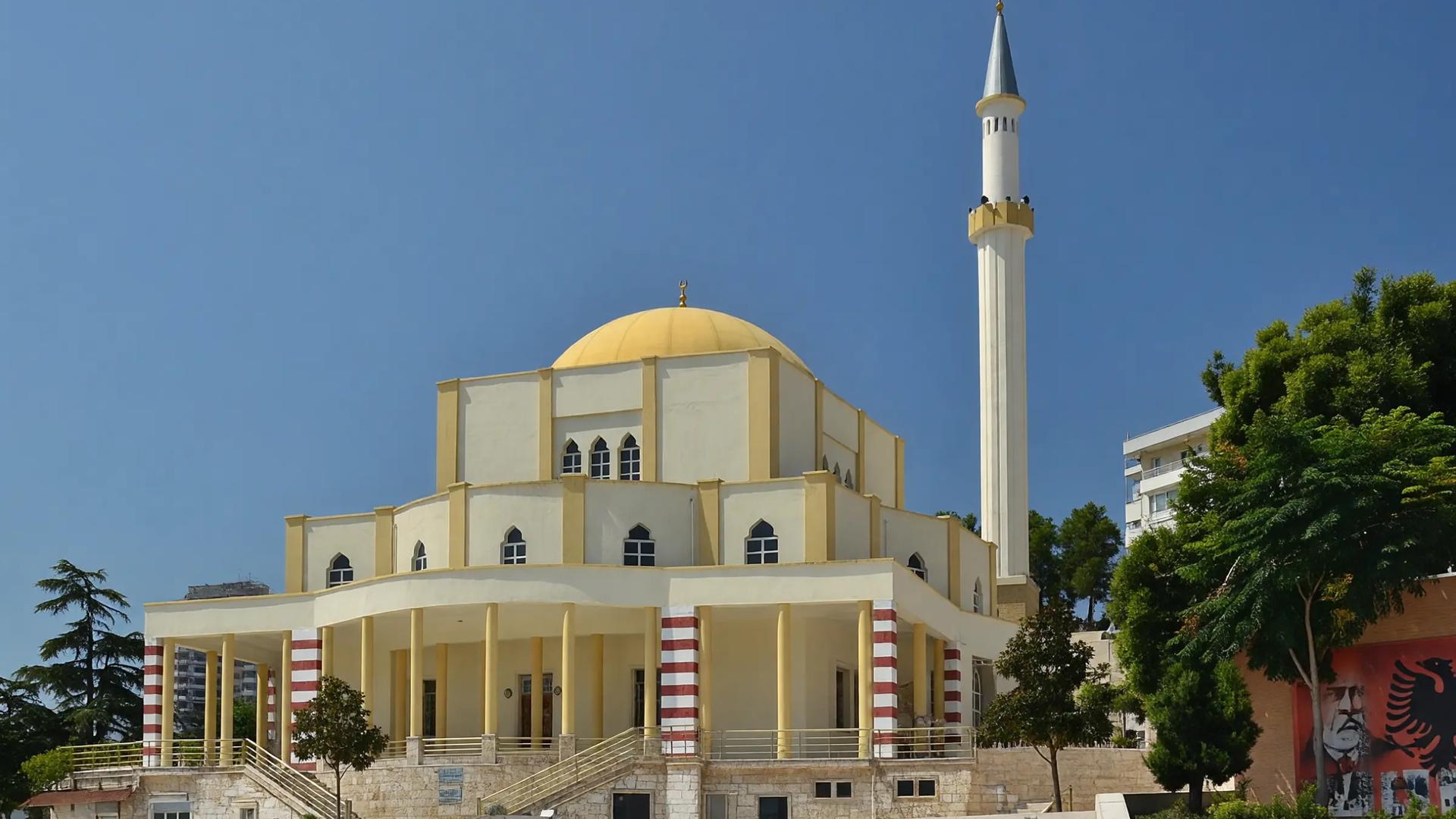
Xhamia e Fatihut
Durrës' oldest mosque from 1502, built on the ruins of an early Christian basilica
The Fatih Mosque (Xhamia e Fatihut) is one of Albania's oldest Islamic monuments and the third-oldest mosque in the country, after those in Berat and Korçë. Built in 1502–1503 on the ruins of an 11th-century Christian basilica, it was erected immediately after the Ottoman conquest of Durrës and named after Sultan Mehmed the Conqueror (Fatih).
The mosque stands in the historic center of Durrës, a 3-minute walk from the Amphitheatre and 5 minutes from the bus terminal. From Tirana, it's a 35–40 minute bus ride (200 ALL / ≈ €2 / $2.50).
Admission is free. The mosque is active and open to visitors outside prayer times. Allow 15–20 minutes.
The Fatih Mosque stands out among Ottoman mosques for its unusual architecture: instead of a traditional dome, it has a tiled roof, giving it a silhouette more reminiscent of a medieval chapel. The walls combine different eras: the northern side preserves brick arcades from the original basilica, while the western wall features cloisonné masonry (decorative brickwork) dating to the 13th–14th centuries. This layering – Christian foundations, Ottoman walls, rebuilt minaret – illustrates the multi-era history of Durrës in a single structure.
The interior is compact: a prayer hall with understated decoration, no lavish paintings. The chief interest lies in fragments of medieval masonry visible in the walls. The minaret, demolished by the communist regime in 1967, was rebuilt in a simplified style after 1991. Despite its simplicity, the mosque draws attention with the colors of its façade and the preservation of original elements.
The mosque sits on narrow Rruga Xhamia in the dense city center. Its minaret rises above surrounding rooftops. Nearby: the Byzantine Forum, city walls, and the ethnographic museum.
Age – built in 1502–1503, one of Albania's three oldest mosques
Foundation – stands on ruins of an 11th-century Christian basilica, original masonry visible in the walls
Architecture – tiled roof instead of a traditional dome, unique among Ottoman mosques
Cloisonné – western wall features decorative brickwork from the 13th–14th centuries
Status – Cultural Monument of Albania since 1973, active place of worship
The mosque was built in 1502–1503, immediately after the Ottoman conquest of Durrës, on the ruins of an 11th-century Christian basilica. It was named after Sultan Mehmed the Conqueror (Mehmet Fatih), one of the central figures in Ottoman history. The building incorporated elements of the earlier basilica: brick walls, northern arcades, and a western wall with distinctive cloisonné masonry from the 13th–14th centuries.
In 1967, under Enver Hoxha's state-imposed atheism, the minaret was demolished. The mosque was closed and used as a temporary warehouse. In 1973, the building was designated a Cultural Monument of Albania, which saved it from complete destruction. After the fall of the communist regime in 1991, the mosque was returned to worshippers and the minaret rebuilt in a simplified style. Today it remains an active mosque open to visitors.
Admission is free. The mosque is active and open to visitors at no charge outside prayer times.
Dress code: covered shoulders and knees. Women are advised to cover their heads. Remove shoes at the entrance. Photography is allowed without flash – do not photograph worshippers. The mosque is closed to tourists during prayer times; Friday prayer (around 12:30–2:00 PM) is the busiest. Keep quiet and be respectful.
Minimal facilities. No toilets at the mosque – the nearest are in cafés on adjacent streets. No parking – streets are narrow; leave your car near the Amphitheatre or the waterfront. 4G coverage is stable.
Accessibility: Step-free entrance, but the interior space is tight.
From Tirana (38 km, 35–45 min):
– Bus from South & North terminal – 200 ALL (≈ €2 / $2.50), every 30 min
– Taxi – 2,200–2,700 ALL (≈ €20–25)
– Car rental – park on the waterfront, 10 min walk
Within Durrës:
5-minute walk from the bus terminal along Rruga Xhamia. The mosque is in the historic center, next to the Amphitheatre (3 min) and city hall.
Season: Year-round. The mosque is open daily.
Time of day: Morning (9:00–11:00 AM) or afternoon (2:00–4:00 PM) – between prayer times. Avoid Friday prayer (12:30–2:00 PM).
Duration: 15–20 minutes. Easy to include in a walking tour of Durrës' historic center with the Amphitheatre, Byzantine Forum, and Venetian Tower.
Practical answers about visiting, routes and time on site.
Yes, the mosque is open to visitors outside prayer times. Free entry. Remove your shoes and dress modestly – covered shoulders and knees.
15–20 minutes. It's a small mosque. The main interest is the façade architecture and medieval masonry fragments in the walls.
The Fatih Mosque (1502) is the Ottoman original – small, with a tiled roof and medieval walls. The Great Mosque (1931) was built under King Zog I – larger, with a dome, located on Iliria Square. They are two different buildings in different parts of the center.
Morning 9:00–11:00 AM or afternoon 2:00–4:00 PM, between prayer times. Avoid Friday prayer (12:30–2:00 PM), when the mosque is closed to tourists.
Yes, without flash. Do not photograph people at prayer. No restrictions outside.
Look for the minaret rising above the rooftops. The mosque is on Rruga Xhamia, 3 minutes from the Amphitheatre. Don't confuse it with the Great Mosque on Iliria Square – that's a different building.
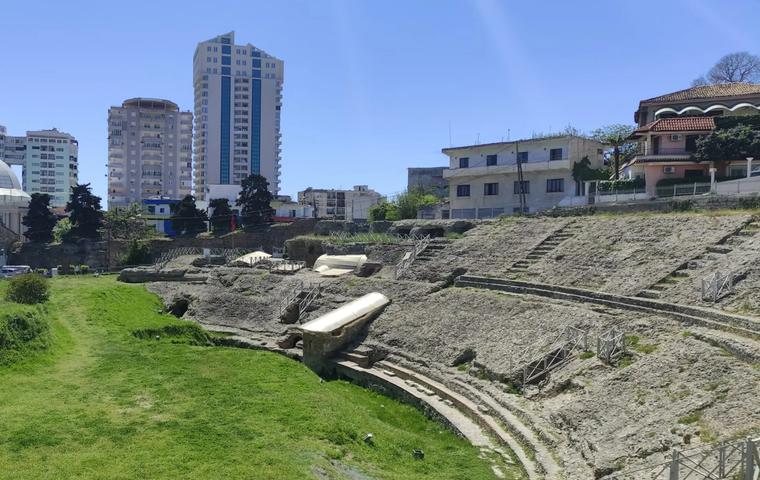
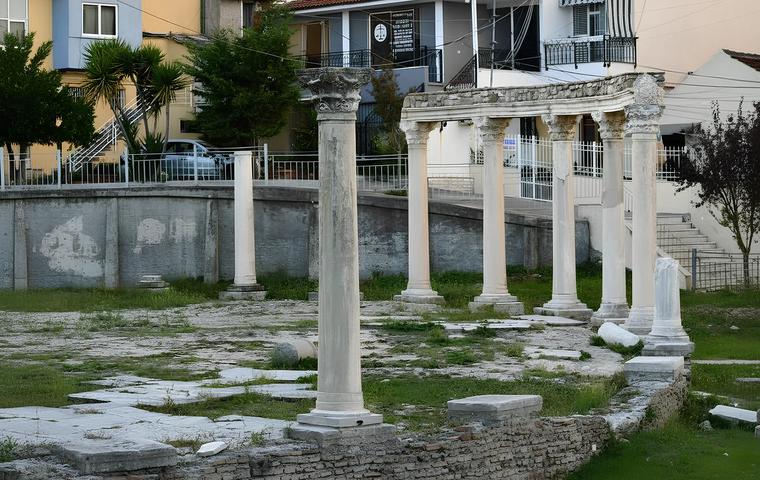
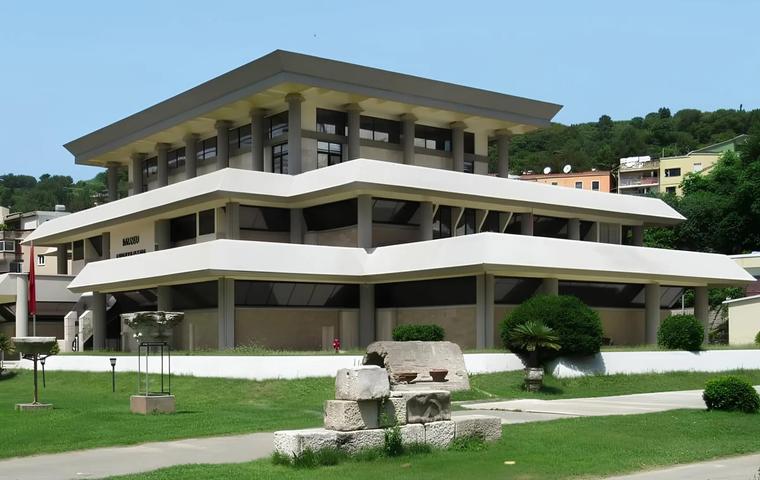
The Amphitheatre – 3 minutes on foot. The Byzantine Forum – 5 minutes. The Archaeological Museum – 8 minutes (check if it has reopened after restoration).