Tickets & prices
Admission:
Adults: 300 ALL (~€3 / ~$3)
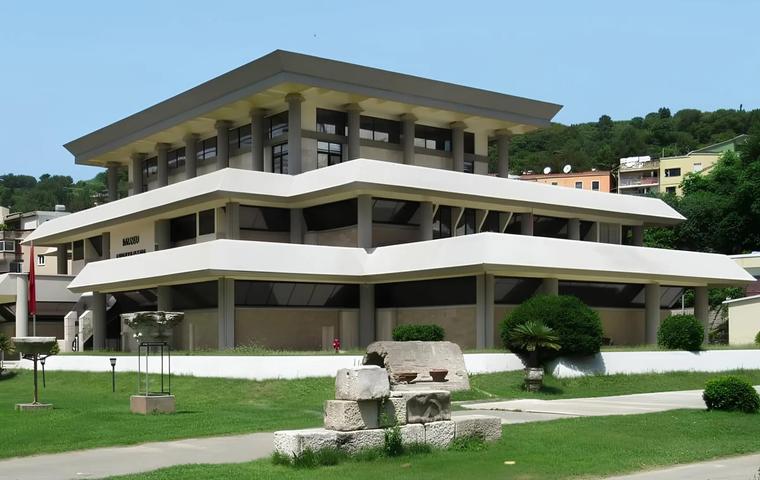
The ticket also covers entry to Durrës Archaeological Museum
Payment in cash at the ticket office by the entrance. Euros are not accepted – Albanian lek only.
No online ticket sales available.
Amfiteatri i Durrësit
The largest Roman amphitheatre in the Balkans, dating to the 2nd century – a UNESCO tentative site
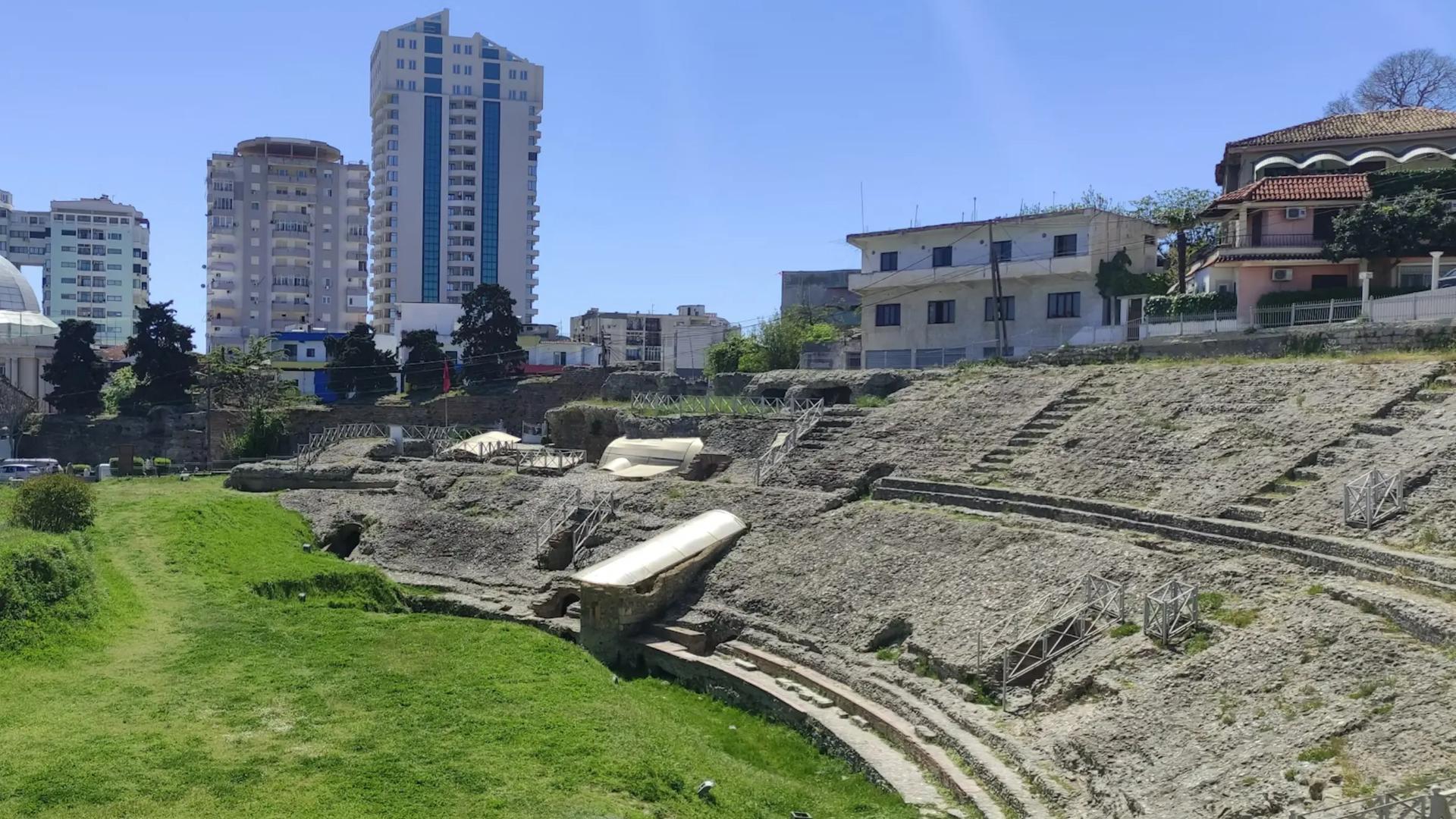
The Durrës Amphitheatre is a 2nd-century AD Roman arena built under Emperor Trajan in the centre of ancient Dyrrachium. The elliptical structure measures 132 × 113 metres, held 15,000 to 20,000 spectators, and was used for gladiatorial combat until the 4th century. It is the largest amphitheatre on the Balkan Peninsula.
The amphitheatre sits in central Durrës, 350 metres from the Adriatic coast. From Tirana it's 34 km via the SH2 highway – buses run every 5–10 minutes, tickets 180–250 ALL (€2–3 / ~$2–3). Nearby: Durrës Archaeological Museum and the Venetian Tower.
Admission is 300 ALL (~€3 / ~$3), valid for the Archaeological Museum too. Allow 30–60 minutes for a visit. The arena is open daily and suitable for independent exploration.
The amphitheatre is carved into a hillside within a residential neighbourhood. From street level, the upper rows of stonework are visible – the arena floor sits below the modern city. Entering through a narrow corridor, you reach the outer ring galleries: stone arches, passageways, and staircases across multiple levels. Walls are built using a Roman technique of mixed stone and mortar designed to withstand earthquakes. Some seating rows are well preserved; others remain buried under residential buildings whose owners have resisted demolition.
The main discovery inside the amphitheatre is a 5th-century early Christian chapel with wall mosaics, established after gladiatorial games were banned and the arena was converted into a burial ground. The mosaics depict saints and biblical scenes. Adjacent to the chapel are preserved animal holding cells and underground tunnels through which gladiators entered the arena.
The site is compact: the main route follows the outer ring galleries, then descends to the arena floor and chapel. Information boards near the entrance display excavation history and reconstructions of the original appearance. English-speaking guides work on-site until 3 PM (tip-based). The arena gets good sunlight during the day; in summer it can be hot with limited shade.
Scale – ellipse of 132.4 × 113.2 m, arena 61.4 × 42.2 m, height 20 m – the largest Roman amphitheatre in the Balkans
Capacity – 15,000 to 20,000 spectators during its 2nd–4th century heyday
Mosaics – a 5th-century early Christian chapel with preserved wall mosaics inside the arena
Discovery – the amphitheatre was hidden under the city and only uncovered by archaeologists in 1966
UNESCO status – included on Albania's tentative list of World Heritage Sites
Underground – preserved tunnels, animal cells, and gladiator entrance passages beneath the arena
The amphitheatre was constructed in the early 2nd century AD under Emperor Trajan, when Dyrrachium (the ancient name for Durrës) was a major port on the Via Egnatia – the main Roman road connecting the Adriatic to Constantinople. The arena hosted gladiatorial games and public spectacles until the 4th century. An earthquake in 345–346 damaged the structure and ended the games. In the second half of the 4th century, an early Christian chapel was built inside, and the arena became a burial ground.
After the fall of Rome, the amphitheatre gradually deteriorated. A second earthquake in the 10th century caused further damage. By the 20th century, residential buildings had been constructed above the arena, and its existence was forgotten. In 1966, Albanian archaeologists rediscovered the structure during an international expedition – finding 40 skeletons with broken necks beneath the surface. Excavation continues, but a significant portion remains under housing. In 2008, $5 million was allocated for conservation. In 2013, Europa Nostra listed the amphitheatre among Europe's most endangered cultural heritage sites.
Admission:
Adults: 300 ALL (~€3 / ~$3)
The ticket also covers entry to Durrës Archaeological Museum
Payment in cash at the ticket office by the entrance. Euros are not accepted – Albanian lek only.
No online ticket sales available.
No special restrictions. Photography is allowed without limitations. The surface is uneven – wear comfortable non-slip footwear. Stairs are steep with no handrails. Keep children close. Bring water in summer – shade is limited on-site.
On-site:
Information boards at the entrance (in English and Albanian)
English-speaking guides until 3 PM (tip-based)
Nearby:
Cafés and restaurants on surrounding streets
Toilets – available in nearby restaurants
Parking: Street parking on adjacent roads. No dedicated parking lot.
Connectivity: 4G works well. Consider getting an eSIM for data. No free Wi-Fi.
Accessibility: The site is not adapted for visitors with limited mobility – steep stairs and uneven stone surfaces throughout.
From Tirana (34 km, 40–50 minutes):
– Bus from Terminali i Autobusave të Jugut dhe Veriut – 180–250 ALL (~€2–3 / ~$2–3), every 5–10 minutes from 6:00 AM to 9:00 PM
– Taxi – 2,200–3,000 ALL (~€20–25 / ~$22–27)
– Car rental – SH2 highway, street parking in town
From Tirana Airport:
– Direct airport–Durrës bus – 600 ALL (~€6 / ~$6.50), departures at 10:00, 12:00, 14:00, 15:30, 17:00, 19:00, 21:00
Within Durrës:
The amphitheatre is on Rruga Kalase, a 5-minute walk from Freedom Square (Sheshi Liria). From the Durrës bus terminal – 10–15 minutes on foot.
Season: April–October for comfortable weather. Summer can be hot on the exposed arena floor.
Time of day: Before 10 AM for fewer visitors and cooler temperatures. Late afternoon offers softer light for photos.
Duration: 30–60 minutes for the amphitheatre. Add the Archaeological Museum for a 1.5–2 hour visit.
Avoid: Summer weekends (July–August) – school groups and tour buses. Stone surfaces are slippery when wet.
Practical answers about visiting, routes and time on site.
300 ALL (~€3 / ~$3). The ticket also covers the Durrës Archaeological Museum. Cash only, Albanian lek.
30–60 minutes for the amphitheatre itself. With the Archaeological Museum nearby, allow 1.5–2 hours.
Buses from the Tirana bus terminal run every 5–10 minutes – 180–250 ALL (~€2–3), 40 minutes. From the Durrës bus terminal, it's a 10-minute walk to the amphitheatre.
Yes, English-speaking guides work on-site daily until 3 PM. They operate on a tip basis – no fixed fee.
Yes, but supervise children closely on the stairs – no handrails, steep stone steps. Strollers cannot navigate the uneven terrain.
Yes, year-round. Summer hours: 9:00 AM–7:00 PM daily. Winter hours are reduced to 9:00 AM–4:00 PM, closed weekends.
The Byzantine Forum is 200 m away, the Venetian Tower and Fatih Mosque within 500 m. All central Durrës sights are walkable in half a day.
Yes, photography and video are permitted without restrictions or additional charge.
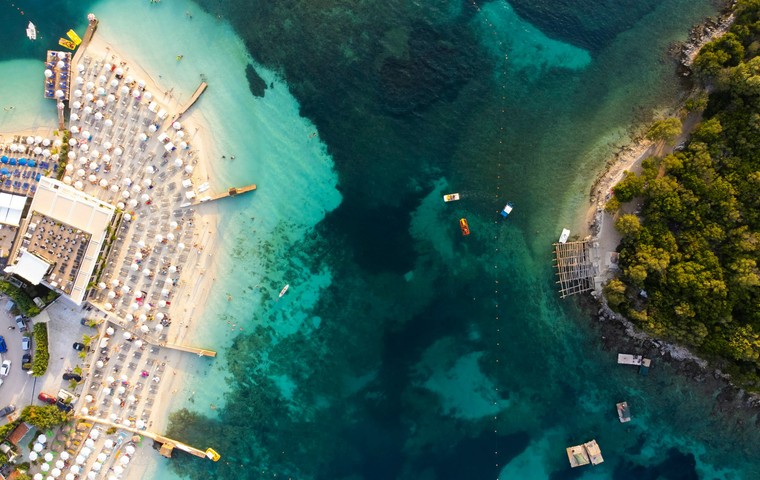
Durres is closer to the airport and cheaper; Vlora has cleaner water and wilder nature. The honest breakdown: beaches, logistics, prices and who should go where.
April 24, 2026
Guide to Albania's top luxury hotels with 2026 prices. Where to stay in Tirana, Saranda, Durrës and Berat – 5-star resorts, boutique hotels and spas.
March 01, 2026