Sveti Stefan Beach
Plaža Sveti Stefan
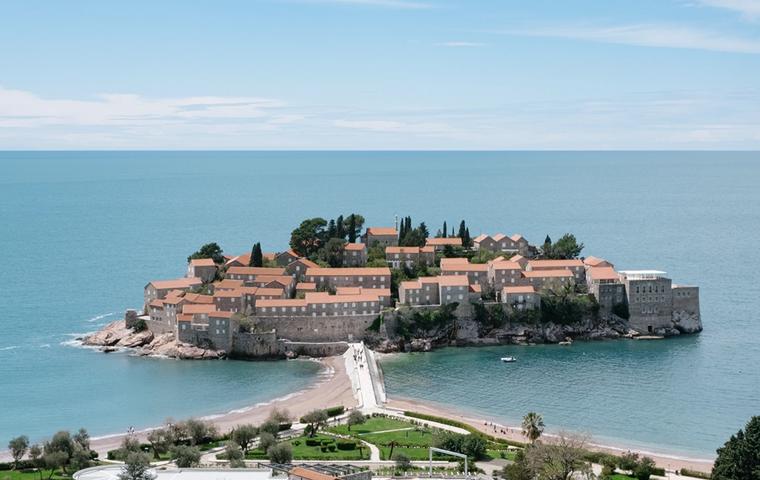
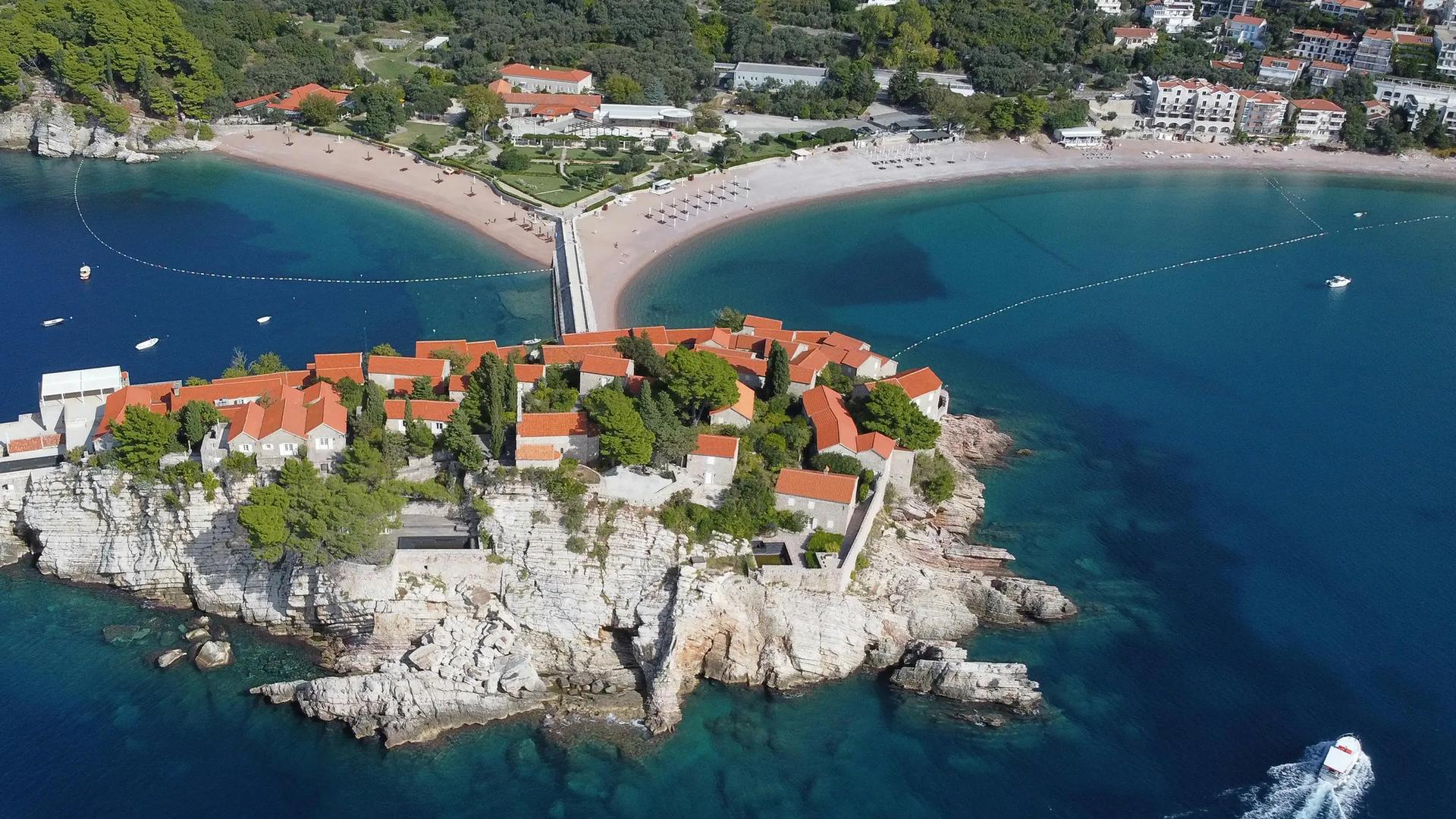
Twin pebble crescents on either side of the causeway to the islet.
About
he beach frames Sveti Stefan’s classic postcard view as the causeway links land and islet. Pebbles are fine and the seabed deepens quickly.
Transport
Travel time
On foot from Sveti Stefan center11–17 min.600 m
By car from Sveti Stefan2 min.810 m
From the airport Tivat · TIV53 min.31 km
On the map
Location
In detail
What's here
What is this place
Sveti Stefan Beach consists of two sand-and-pebble coves flanking a narrow natural tombolo that links the mainland to the namesake islet. As of 2025 the beaches are open to the public, while the islet itself remains closed.
Key features
- Twin coves on either side of the tombolo, with fine pebbles, some sand, clear water and a gentle entry.
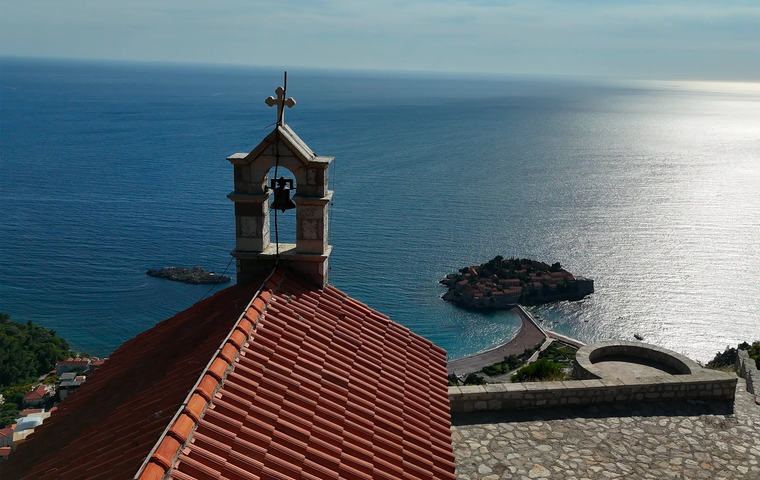
- Strong visual highlight – the islet’s terracotta skyline, best viewed from the causeway.
- Walkable link to Miločer Park and the royal beaches along the coast path.
- Reduced amenities: minimal services on the open sections, seasonal chair and umbrella rentals.
- 2025 status: beaches open and free to access, islet closed due to an ongoing operator–state dispute.
What to see
- Classic views of the islet and the slender causeway from both beach arcs.
- Two curved coves with smooth pebbles and calm water on light-wind days.
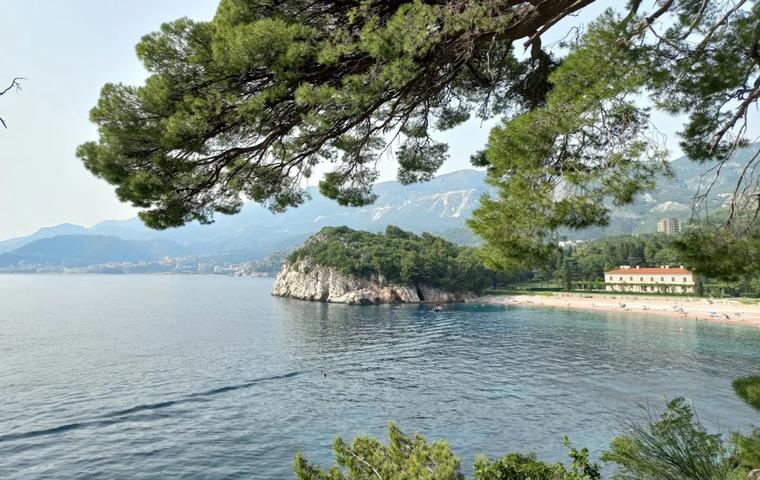
- Budva Riviera vistas and the footpath through Miločer Park to Queen’s Beach.
History
The wave-built tombolo created two beaches on either side of the causeway. In 1960, the islet was turned into a “hotel-town”, and much of the shoreline had restricted access for decades.
Since 2021, the beaches have been reopened as public coastal domain, but due to a dispute over operating terms the islet complex remains closed. As of 2025, beach services are limited, and the best views of the islet are still from the causeway and seafront.
Practical information
Location: Sveti Stefan village on the Budva Riviera, about 9 km south of Budva on the Adriatic highway, between Pržno and Petrovac.
Getting there: drive along the E65/E80 coastal road and park in paid or free roadside bays above the village, then walk down by stairs and paths; frequent local buses between Budva and Petrovac and private minibuses stop on the main road above Sveti Stefan, from where it is a short downhill walk.
Access: the public side of the beach is free to enter; the hotel side may operate as a paid serviced beach with sunbeds and umbrellas, with conditions and prices varying depending on the hotel’s status and the season, so check locally for current rules.
Visiting hours: effectively accessible throughout daylight hours in summer; at peak season around midday it can get very crowded, especially on the public side.
Visit duration: 1–2 hours are enough for a swim and photos with the island backdrop, but many visitors stay for half a day and combine beach time with a walk through Miločer park and along neighbouring beaches.
Best time: late spring to early summer and September to early October, when the sea is warm enough but crowds are thinner; in high summer, mornings and late afternoons are more comfortable and the low light enhances the pink tones of the pebbles.
Notes: the seabed slopes away fairly quickly and waves can be strong in windy conditions, so extra care is needed with children; the pebbles are quite coarse, so water shoes make entry more comfortable; as of recent years the island itself is not freely accessible, with entry limited to hotel guests or special guided visits, if available at all.
Sveti Stefan Beach
Articles about this place

Accommodation
Aman Sveti Stefan Is Open Again: From $2 512 a Night and Why the Waitlist Is Real
Montenegro's iconic island resort is back after five years. 57 rooms in restored 15th-century stone cottages, a private beach in an emerald lagoon, and a 2 500 m² spa – what's inside and when to book.
July 08, 2026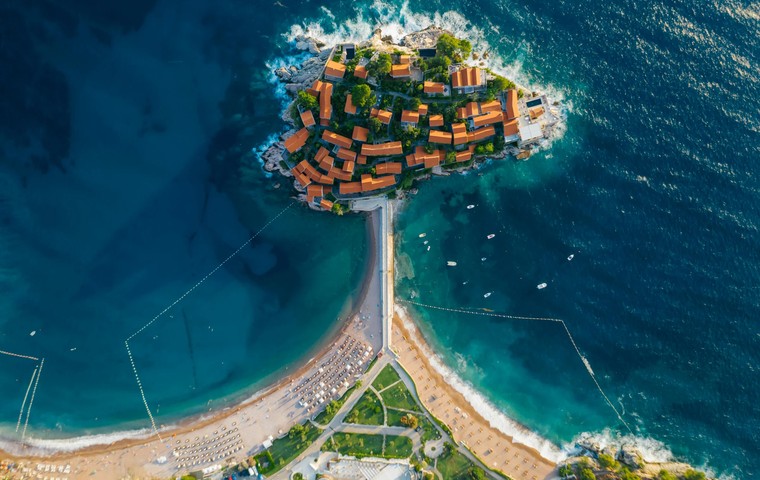
Tours
Sveti Stefan: How to Visit the Island & Best Beaches Nearby
The island is completely closed – no entry allowed. But it's still worth the trip: a free beach with the view, three coves within walking distance, and one of the best coastal walks in the Adriatic.
March 09, 2026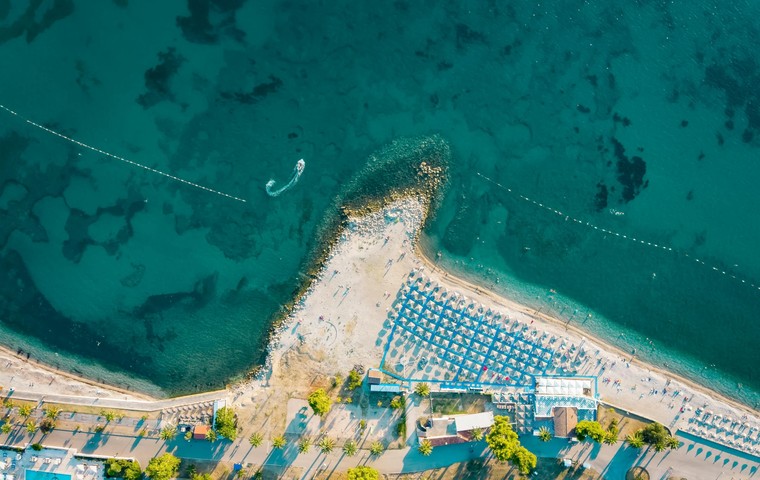
Tips
Montenegro in June: Weather, Beaches, Prices and What to Do
Montenegro in June 2026 – warm weather before peak crowds. Sea temperature, hotel prices, best beaches and itineraries for a perfect early-summer trip.
March 06, 2026Nearby