Bar Aqueduct
Barski akvadukt
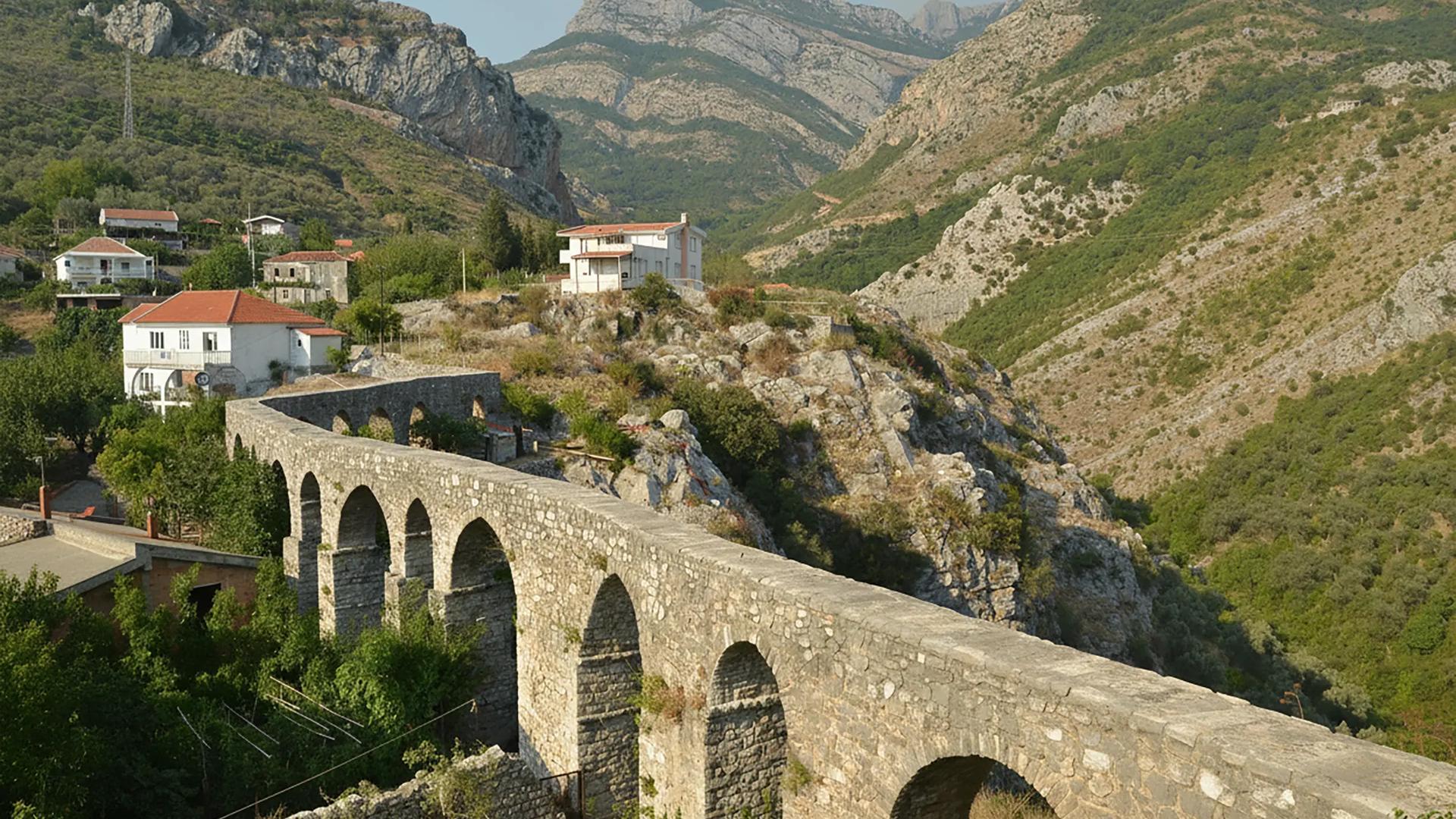
A stone aqueduct on the northern side of Stari Bar.
About
The aqueduct once brought spring water from the hills to the fortress. Today it forms a striking feature of the approach to Stari Bar.
Transport
Travel time
On foot from Bar center42 min. – 1 h 4 min.3 km
By car from Bar9 min.4 km
From the airport Tivat · TIV1 h 35 min.67 km
On the map
Location
In detail
What's here
What is this place
The Bar Aqueduct is a stone water supply structure on the northern side of Stari Bar, about 4 km from modern Bar. It was built in the 16th century under Ottoman rule to bring water from Mount Rumija to the fortified town.
Key features
- The only surviving aqueduct in Montenegro – a rare Adriatic hydraulic monument.
- Ottoman 16th-century construction – integral to Stari Bar’s water system.
- Main bridge with 17 arches on 18 piers – spans of varying widths adapted to the terrain.
- Water channel formed by stoneware pipes (~12 cm diameter, ~30 cm length) laid along the crown.
- Destroyed by the 15 April 1979 earthquake, later fully rebuilt and back in service.
What to see
- The arcade below the fortress with viewpoints over the ravine.
- The upper channel bed with fragments of ceramic pipes.
- Vistas of Stari Bar and Mount Rumija from the path along the piers.
History
Built in the 16th century, the aqueduct carried water roughly 3 km from a spring on Mount Rumija, crossing a valley by a multi-arched bridge of rough-hewn stone, with the conduit formed by ceramic pipes.
In 1979, a powerful earthquake leveled the structure; it was subsequently reconstructed in full. Today it again operates and stands as one of Stari Bar’s signature landmarks.
Practical information
Location: on the northern side of Stari Bar, at the foot of Mount Rumija, about 4 km from modern Bar and roughly 400–500 m uphill from the entrance to Stari Bar.
Getting there: drive, take a taxi or bus from Bar to Stari Bar (about 10 minutes), then walk along the road towards the valley and aqueduct; the structure is clearly visible from the road and nearby parking areas.
Access: open site with free access and practically no fencing or ticket office; you can view it from the roadside and along small paths around the pillars.
Visiting hours: best visited in daylight; most people stop by on the way to or from Stari Bar.
Visit duration: 15–30 minutes are usually enough for a look around and photos, often combined with a 1.5–2 hour visit to Stari Bar.
Best time: spring and autumn with mild temperatures; in summer, mornings and late afternoons are more comfortable and give good light on the arches.
Notes: approaches run partly along the edge of a road and uneven ground, so sturdy footwear and care with children are important; after rain the soil and stones can be slippery, and there is little shade, so in summer a hat and water are useful.
Bar Aqueduct
Articles about this place
Tips
Bar or Ulcinj: Which Southern Montenegro Town Should You Pick?
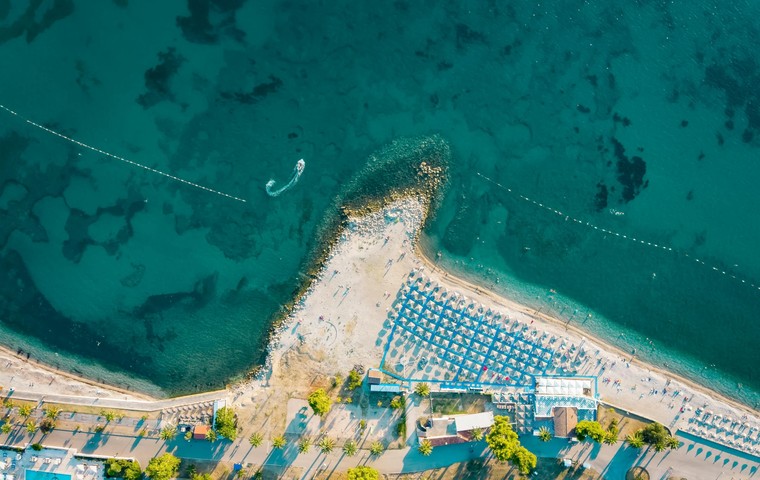
Bar costs 20% less, but Ulcinj has Montenegro's best sandy beaches. An honest comparison of accommodation, food, sights, and vibe – so you don't regret your choice.
March 28, 2026
Tours
Bar, Montenegro: Ancient Ruins, 2 000-Year-Old Olives & a Working Port
Bar is Montenegro's only ferry port to Italy and the terminus of the Belgrade–Bar railway. Stari Bar fortress, a 2 000-year-old olive tree, quiet beaches, and prices 30% below Budva.
March 21, 2026Nearby