Hero background

Butrint National Park

Parku Kombëtar i Butrintit

A 2,500-year-old archaeological park and Albania's first UNESCO World Heritage Site

Butrint National Park is Albania's largest archaeological complex, located on a peninsula between Lake Butrint and the Vivari Channel, 18 km south of Saranda. Across 94 km², ruins span from a 3rd-century BC Greek theatre to a 15th-century Venetian fortress. In 1992, Butrint became Albania's first UNESCO World Heritage Site.

From Saranda, take a bus for 200 ALL (≈ €2) – a 30–40 minute ride, with departures every 30–60 minutes in summer. From Ksamil it's just 4 km – 100 ALL by bus or 10 minutes by taxi. Combines well with a trip to Ksamil Beach.

Allow 2–3 hours for a visit. Entry is 1,000 ALL (≈ $10/€10). Open daily from 8:00 AM until sunset. Suitable for all ages; children under 12 enter free.

Location

On the Map

About

What's Here

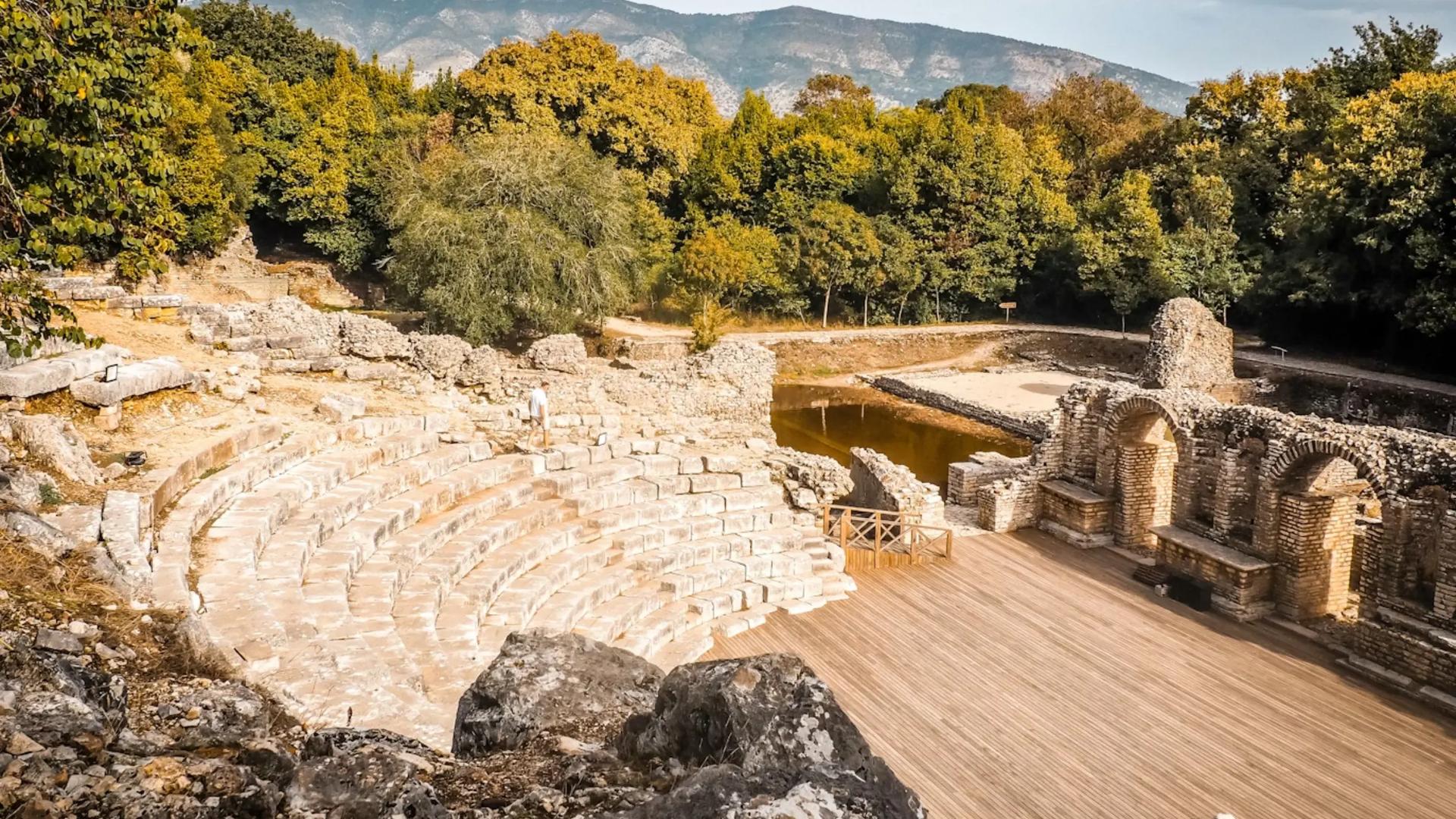
The archaeological trail starts from the ticket office and leads through a shaded forest path into the heart of the ancient city. The first major structure is the Hellenistic theatre from the 3rd century BC, carved into the Acropolis hillside. Its stone seating rows held around 2,500 spectators and remain well-preserved enough to host the annual Butrinti Summer Festival each July. Nearby stand the remains of the Asclepius sanctuary, a Roman forum from the Augustan era, and thermal baths with a visible hypocaust (underfloor heating) system.

Further along, the trail passes the 6th-century baptistery with its mosaic floor – one of Butrint's most prized artifacts. The mosaic features medallions with animal and plant motifs, protected by a canopy and open to viewing. Climbing the Acropolis hill brings you to the 14th–15th century Venetian fortress, now housing a museum with artefacts from different periods. From the tower, views extend across the Vivari Channel, Lake Butrint, and the Greek border mountains.

The park encompasses far more than archaeology – its wetlands support over 1,200 plant and animal species. Turtles, herons, and other birds are common sights along the trails. The entire zone is shaded by trees, making walks comfortable even in summer heat. Picnic benches and tables are scattered along the route.

Why Visit

The Highlights

Age – earliest settlements date to the 10th–8th centuries BC; the city developed over 2,500 years

UNESCO status – Albania's first World Heritage Site (1992), designated a National Park in 2000

Theatre – 3rd-century BC Hellenistic theatre for 2,500 spectators, among the best-preserved in the region

Baptistery – 6th-century early Christian baptistery with original floor mosaics

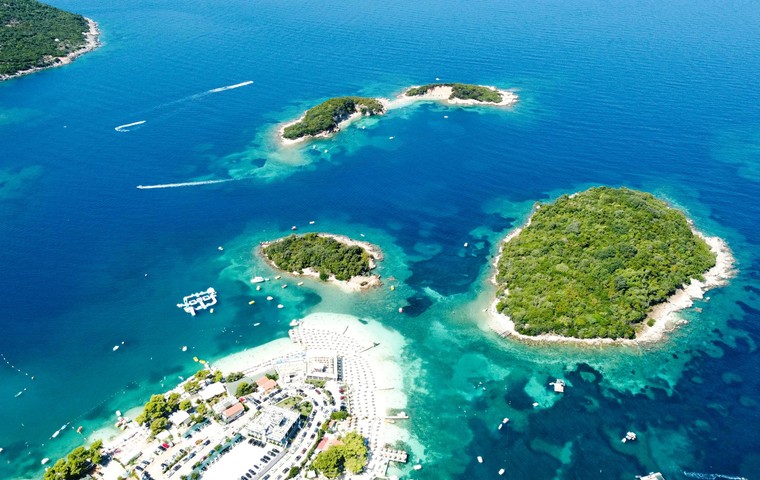
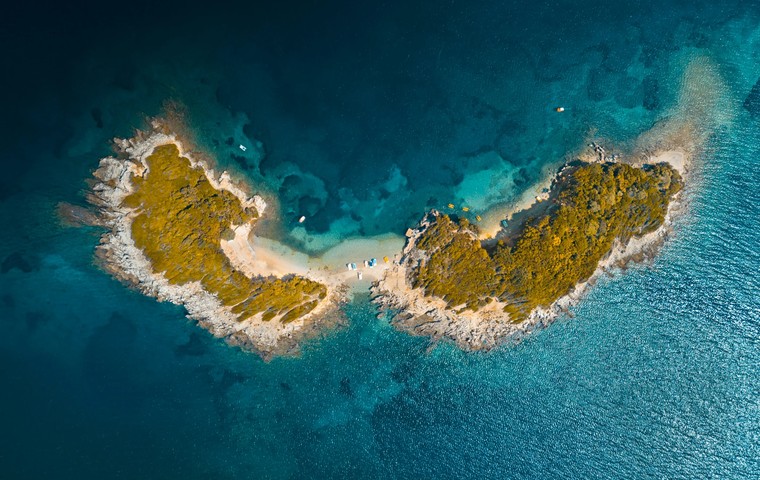
Area – 94 km² encompassing the archaeological zone, lake, wetlands, and Ksamil Islands

Biodiversity – over 1,200 animal and plant species, including rare and endemic species

History

Past & Present

Butrint was founded as a Greek colony no later than the 8th–7th centuries BC on a strategic site near the Strait of Corfu. By the 4th century BC, it had become a major centre with a theatre and Asclepius sanctuary. In the 1st century BC, it entered the Roman Empire – Emperor Augustus designated it a veterans' colony in 31 BC. The Roman period brought a forum, aqueduct, baths, and residential villas. In the 6th century under Byzantine rule, the baptistery with its mosaic floor and the Great Basilica were constructed.

Following Angevin and Venetian rule (13th–15th centuries), during which the Acropolis fortress was built, the city gradually declined. By the late Middle Ages, marshland encroachment and malaria forced residents to abandon Butrint. The city remained forgotten until the 1920s, when Italian archaeologists began the first excavations. Large-scale research resumed in the 1990s with support from the Butrint Foundation. In 1992, the ruins were inscribed on the UNESCO list; in 2000, the national park was established.

For Visitors

Visitor Information

Tickets & Prices

Entry tickets:

Adults (foreigners): 1,000 ALL (≈ $10/€10)

Groups of 12+: 800 ALL (≈ $8/€8)

Children 12–18: 500 ALL (≈ $5/€5)

Children under 12: free

Albanian citizens: 300 ALL

Payment in cash (ALL or EUR). Card payments are unreliable – bring cash. Guidebooks available at the ticket booth; guides can be hired at the entrance. The Acropolis fortress museum is included in the ticket price.
Rules & Restrictions

No specific restrictions. Photography is allowed throughout the site. Comfortable closed-toe shoes recommended – paths are rocky and uneven in places. Swimming within the park is prohibited. Food and drinks can be brought in; take your rubbish with you. In summer, bring water and a hat – open sections are hot.

On-Site Facilities

On-site:

Toilets at the entrance (free)

Souvenir shop at the ticket booth

Picnic benches and tables along the trail

Café/food vendors not always operational – bring snacks

Parking: Free lot at the entrance (fills up by midday in summer).

Connectivity: 4G mobile signal works. No Wi-Fi.

Accessibility: The main trail crosses hilly terrain with climbs and steps. Not suitable for visitors with limited mobility. Wheelchairs and pushchairs cannot navigate the paths.

Getting There

Transport & Directions

From Saranda (18 km, 30–40 min):

– Bus from the stop near Friendship Park – 200 ALL, every 30–60 min in summer (less frequent in winter), last return bus around 5:00 PM

– Taxi – 3,000 ALL (≈ €30/$30), agree on the price beforehand

Rental car – free parking at the entrance

From Ksamil (4 km, 10–15 min):

– Bus – 100 ALL, same Saranda–Butrint route passes through Ksamil

– Taxi – 700–1,000 ALL

– On foot/bicycle – 4 km along the SH81 road (no pavement; not recommended in heat)

From Corfu, Greece:

– Ferry Corfu–Saranda (25–30 min, from €25), then bus or taxi to Butrint

– Organised day trips from Corfu with a guide – from €40–50

When to go

Best time to visit

Season: April–June and September–October offer comfortable weather (20–28°C) and fewer tourists. July–August is hot (up to 40°C) and crowded.

Time of day: Morning (8:00–10:00 AM) – the park is nearly empty and cool. Tour groups arrive by midday. After 3:00 PM it quietens again.

Duration: 2–3 hours for the full trail including the museum. Minimum 1.5 hours for the main ruins.

Avoid: Midday in summer (11:00 AM – 2:00 PM) – peak tour group arrivals and heat. The last return bus departs around 5:00 PM – keep track of time.

FAQ

Common Questions

Adult tickets are 1,000 ALL (≈ $10/€10), children 12–18 pay 500 ALL, and under-12s enter free. Pay in cash – card machines are unreliable.

2–3 hours for the full trail including the Acropolis museum. If short on time, the main ruins (theatre, baptistery, forum) can be covered in 1.5 hours.

Bus from the stop near Friendship Park – 200 ALL, 30–40 minutes. Runs every 30 minutes in summer, hourly in winter. The last return bus is around 5:00 PM – check with the driver.

Yes. Under-12s enter free. The site is shaded with seating areas. Paths are rocky – comfortable shoes needed. Pushchairs won't work. Kids enjoy spotting turtles and birds in the park.

English-speaking guides can be hired at the entrance. Guidebooks are sold at the ticket booth. Information panels throughout the site are in English and Albanian. For organised tours from Saranda, book through local agencies.

Ksamil Beach is 4 km from Butrint. A popular itinerary: visit the ruins in the morning, head to the beach for the afternoon. The same bus passes through Ksamil.

Yes, Butrint is open year-round. Winter hours are shorter (8:00 AM – 4:00/5:00 PM) and buses run less frequently. The upside: almost no tourists and comfortable walking temperatures.

Food on-site is limited – bring water and snacks. The nearest restaurants are in Ksamil (4 km) serving seafood, and in Saranda. A fish lunch in Ksamil runs 800–1,500 ALL (€8–15).

Distance

Travel Time

From Saranda by taxi or transfer ~21 min.
From Gjirokastra by car ~57 min.
From Himara by car ~1 h 8 min.
From VLO airport (Vlora Airport (VLO)) by car ~2 h 40 min.
From TIA airport (Tirana Airport (TIA) ) by car ~4 h 36 min.
Social

Share